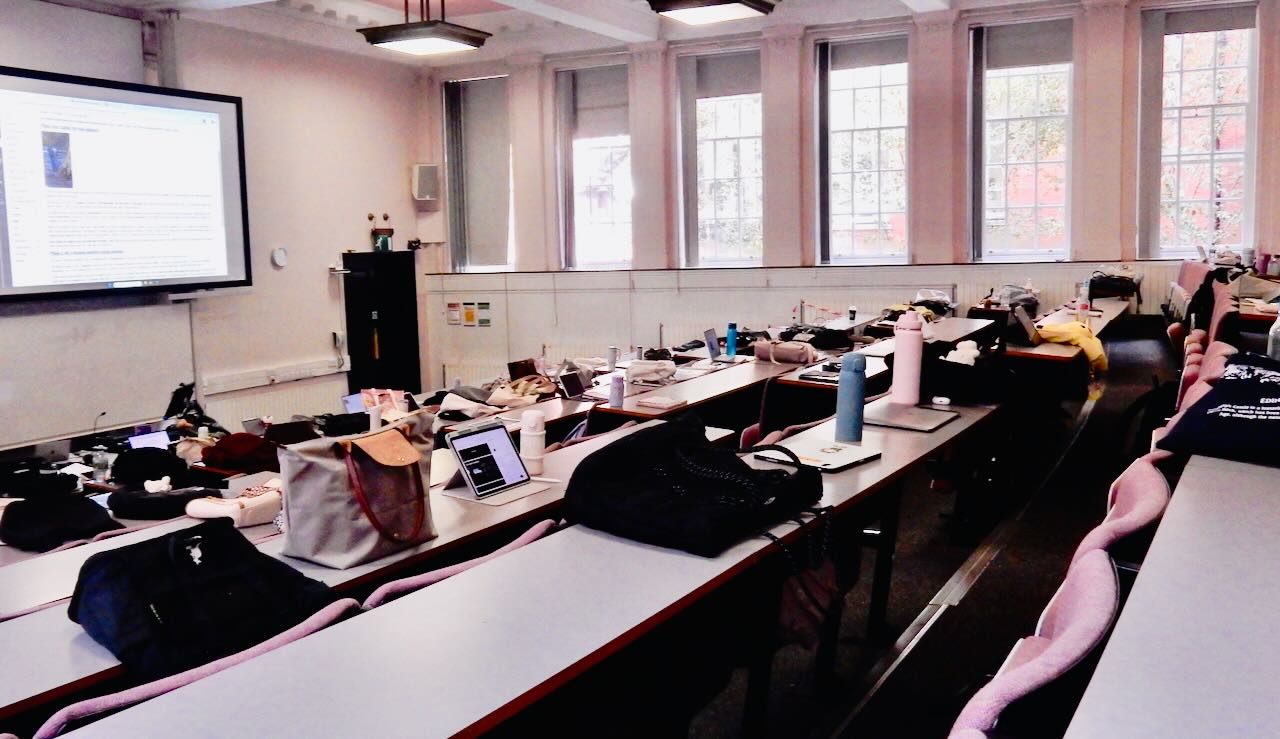
A protest about being given a Friday afternoon lecture slot (don’t worry guys — it’s not every week)? The payoff from that Student Disintegrator Ray that I have been secretly developing? No, I just sent them out to take some photos of stuff. All part of the thinking process…
I am led to believe that the amount of loose change kicking around under sofas, in forgotten jars and, as here, on window sills is an aspect of the money supply on which economists are obliged to keep at least half an eye. After all, here is around €3.70 in currency which has been exported from the economy of the Eurozone, specifically Luxembourg, and if I forget it’s there the next time I head across the Channel it may never be used again. Have tens of millions of people leaving their loose change around and you are draining capital that might have build a school or two. Though not, of course, as much as your average tax-avoiding billionaire.
Broke off work early today to go to a movie with a 4pm start: this was The Incomer, which was OK I suppose, though the claim on the Picture House’s advertising blurb that it was set in Orkney (this being the main reason I went) was a falsehood. In fact it was filmed in Ireland and in the movie itself the exact location was never mentioned.
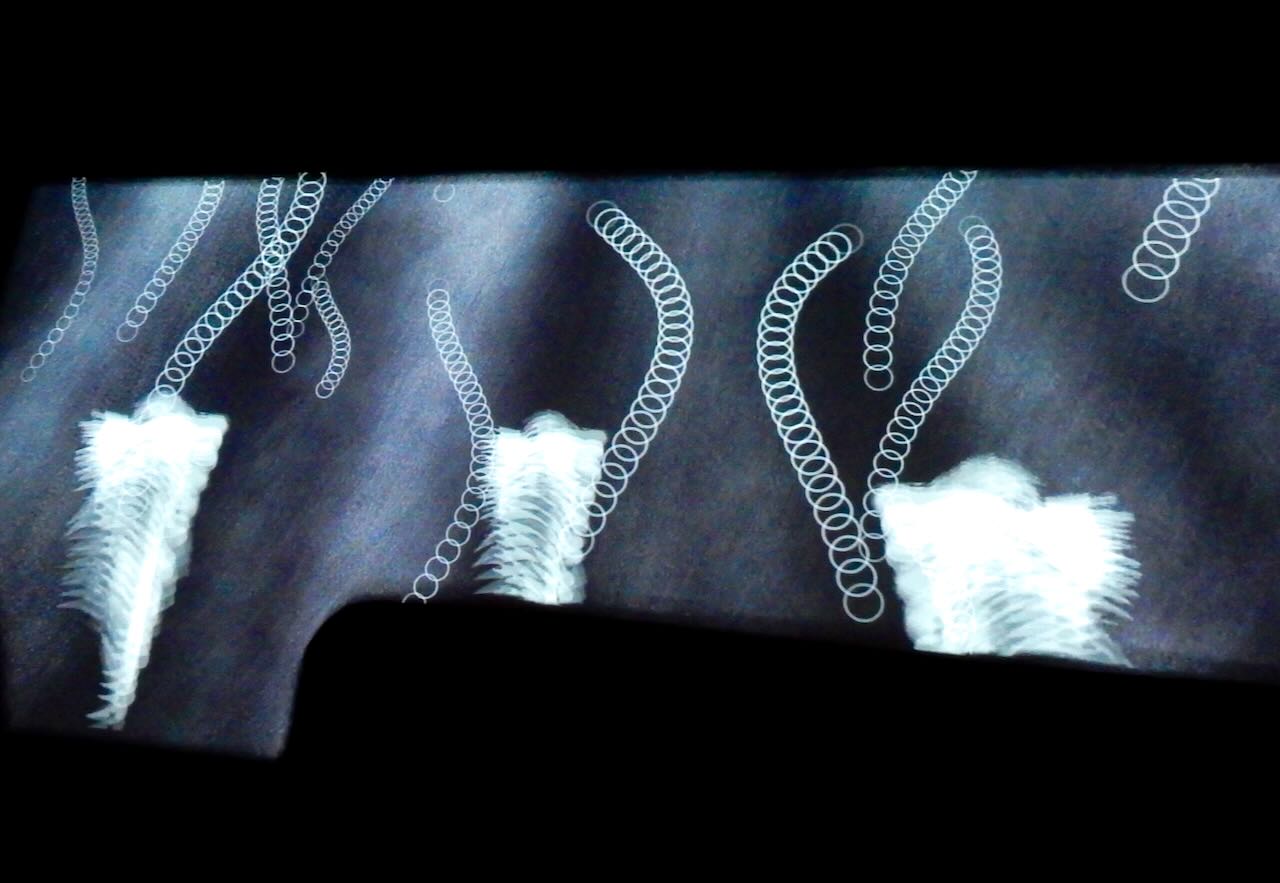
There were some animated sequences in the film and, as I sometimes do, I tried capturing shots without much hope of getting anything of much quality, but I like this one, firstly just because of the image but also the technicalities. For what you see here is evidence that the ‘motion’ element of ‘motion picture’ is an illusion. What we actually see on a cinema screen are a large number of still pictures, shown so quickly that our eyes are tricked into seeing movement — and even in the digital age this is still true of animation. But the camera is not fooled.
It’s been a busy week, and this morning I started work at 7.30, so there was no guilt at all about being in the pub, and on at least my second pint, by half past four. It was a little too early to get started on the shots…. OK, maybe I had one. But someone else bought it for me.
One of the main halls of Manchester’s Arndale Centre has recently been filled with these large, soft, Cluedo-style busts of famous Mancunians, and Emmeline Pankhurst definitely counts as one of those. People say that nowadays we’d have called the suffragettes ‘terrorists’ but that was also true at the time. They got what was right, though. In case this all seems too radical for a shopping centre, rest assured that to my right at this point are similar busts of, amongst others, Noel Gallagher, Marcus Rashford and Caroline Aherne.
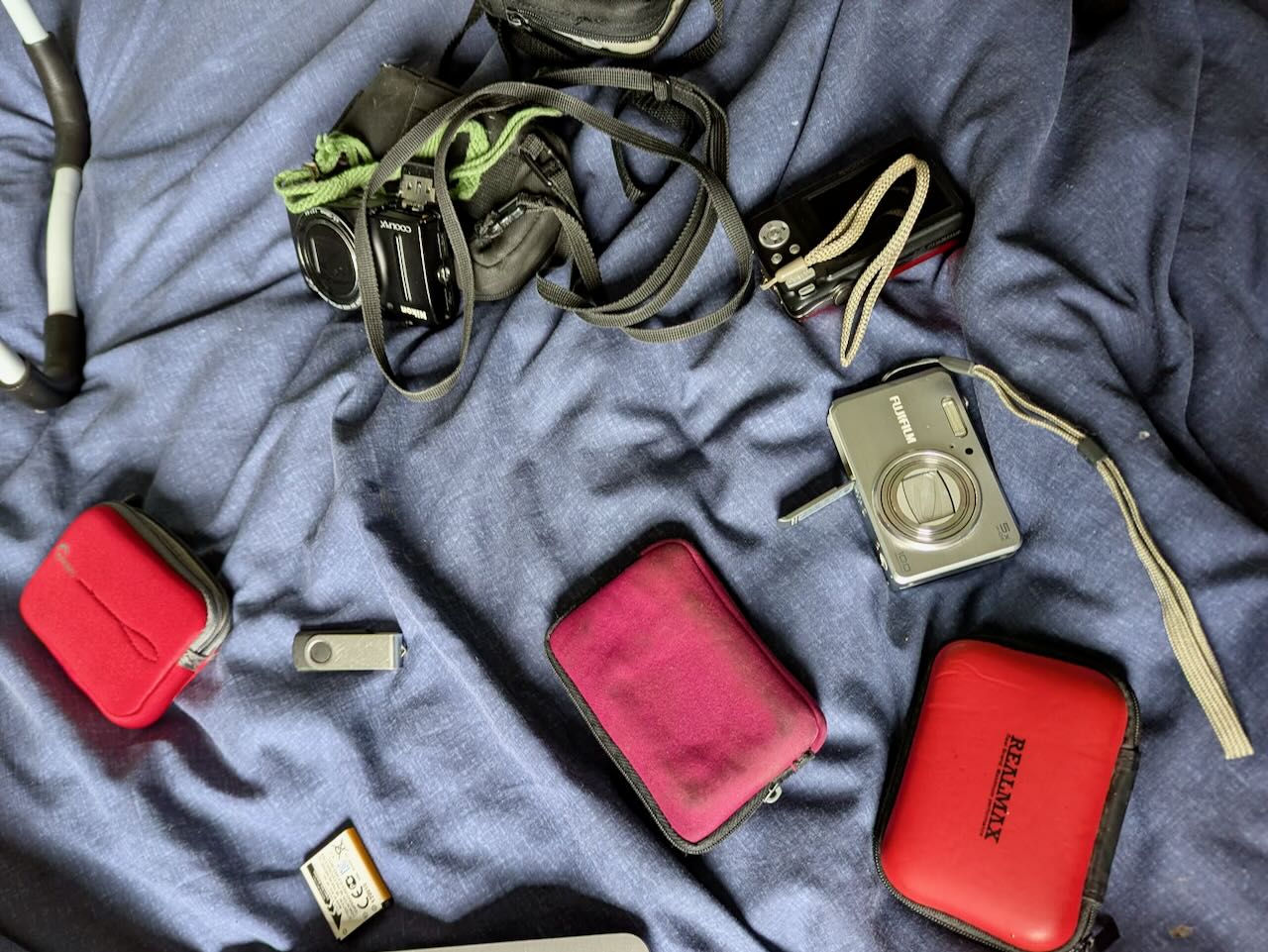
With the current main camera definitely out of action unless and until I can source a replacement battery, it was time to dig around in the deepest corners of the house for a possible replacement — and old pieces of kit, twenty, twenty-five years old maybe, kept turning up. Whether any of these, and their respective batteries, actually work or not remains to be established, though the silver one to the right is looking like the best bet. I am going to buy a new one (and I mean a new one, not second-hand again) but that will have to wait until payday.
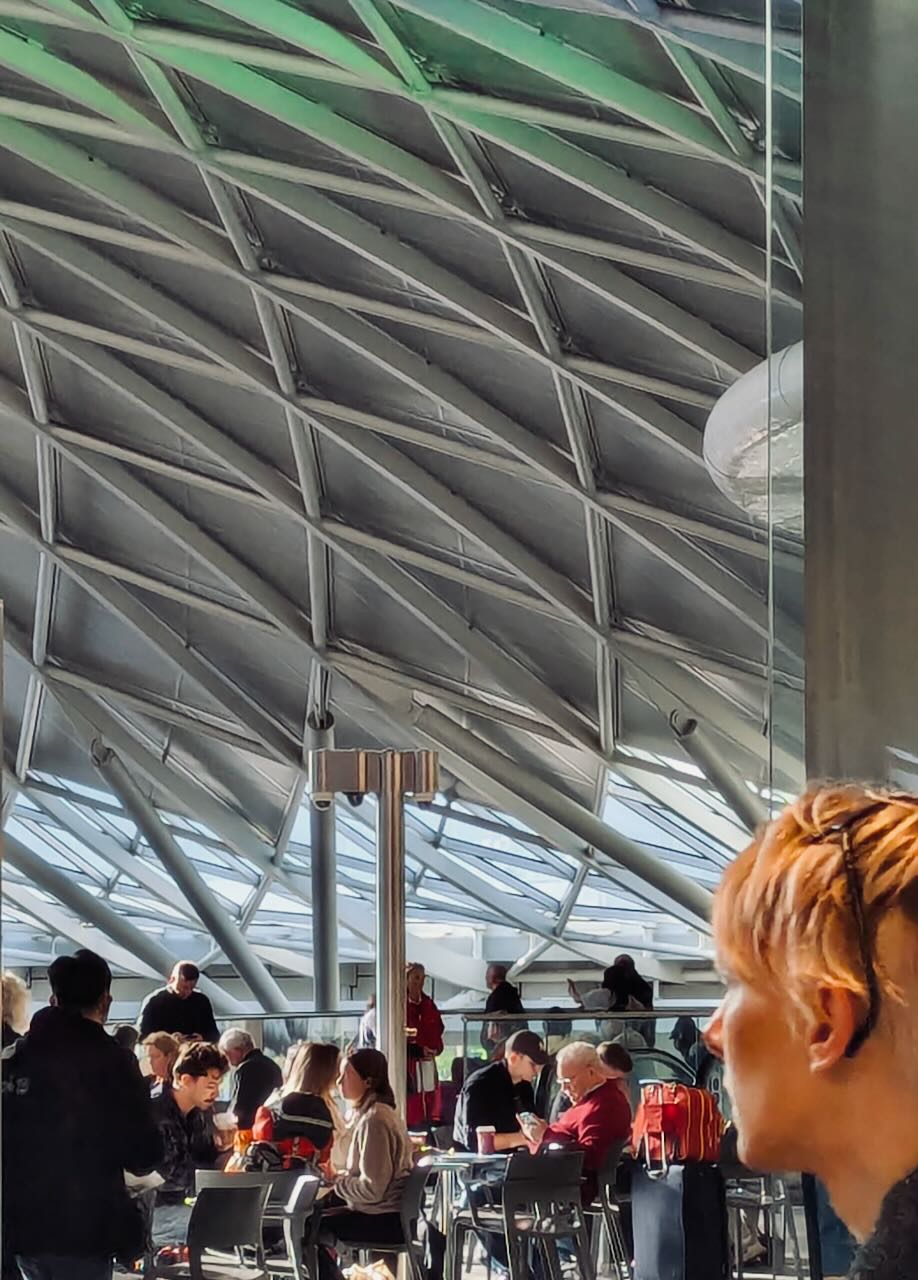
The roof is immediately recognisable for, yet again, I am at King’s Cross station for the final leg of a journey home. Still, as railway stations go, it’s decent enough, and infinitely better than Euston, down the road. That really is it for the holidays however. Quite a number of fellow passengers on the 10.30 train were obviously international students making their way north.
Our journey yesterday ended in Luxembourg, which thereby has the honour of being the 50th country to appear on this blog in its fifteen-and-a-bit years. Admittedly this number has been achieved partly by splitting up the various bits of the UK and adding a few airport stopovers and flyovers but nevertheless I suppose it’s a reasonable number. (See the stats for the full list if you like.)
Like a lot of places in Europe, Luxembourg, the city, grew up where it did because it was a very fortifiable spot, and was getting along quite well until the late 18th century when — again, like a lot of places in Europe — Napoleon decided to roll his armies over it. It was decades until the place truly recovered, losing its fortifications along the way but becoming the capital of an independent state and, nowadays, one of the most affluent cities in the world. But the prices in the restaurants remain reasonable (somewhat against my expectations, I must admit) and it seems a rather agreeable spot. There will be more shots over the next few days. For now, a display in the city’s historical museum — because I always gravitate to them first, usually they are the best way of finding out about a new place. Hence, this photograph, and indeed this paragraph.
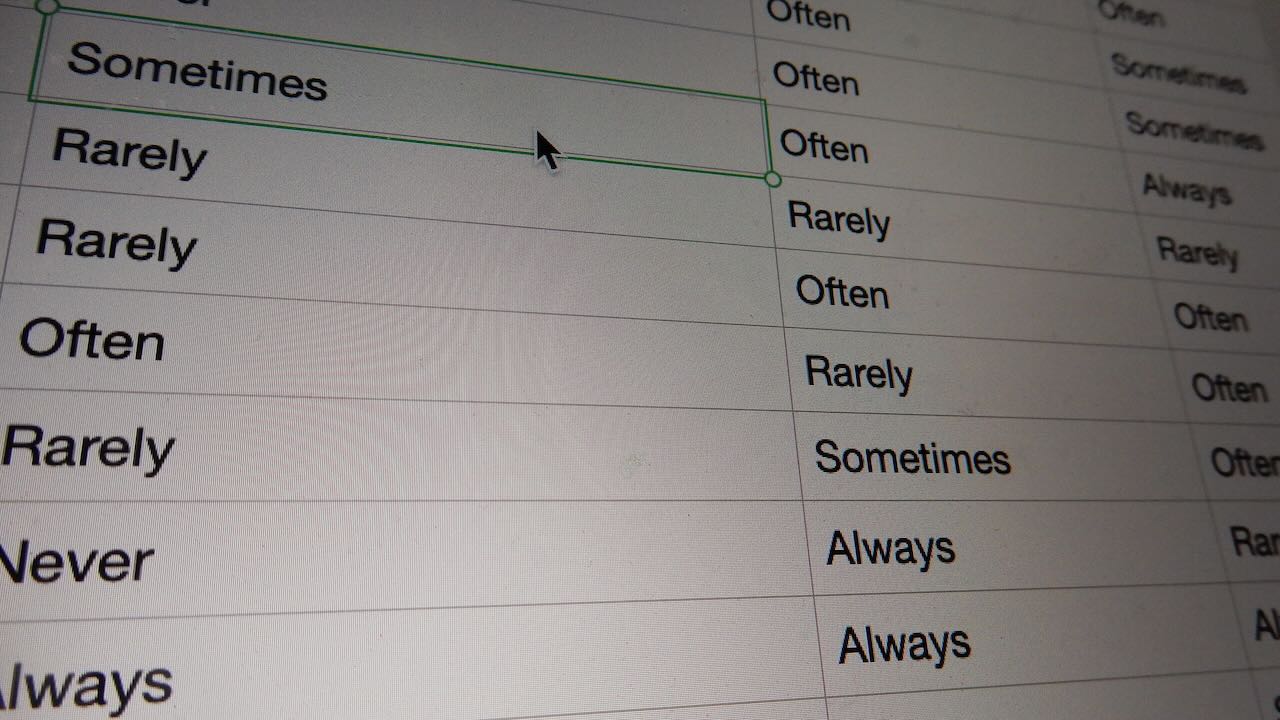
There are still students writing their dissertations and still some needing to battle through their data. I try to help. AI might be quicker but it will always be worse at discerning meaning than people are because it doesn’t understand the context and never will. Trust me.
Either way, the last two photos indicate that it really is time to leave the house.
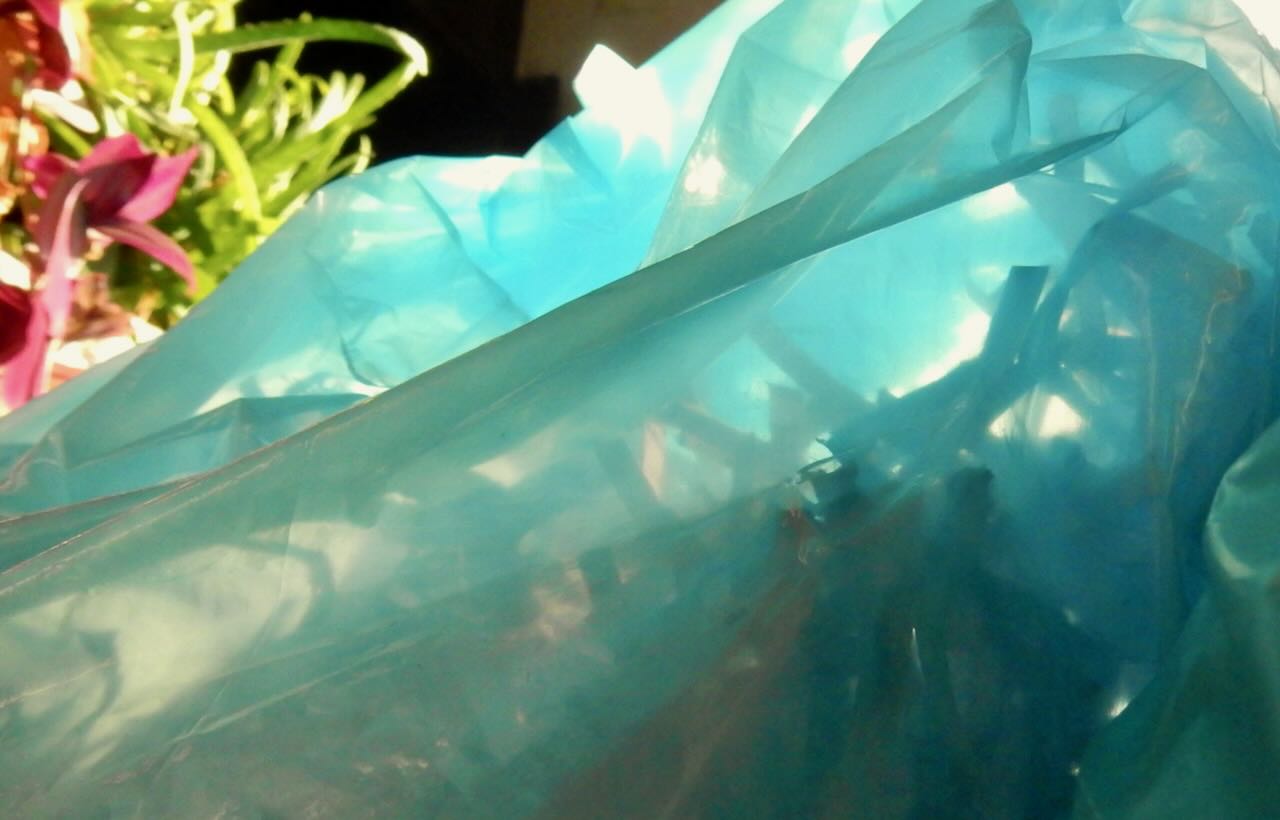
Today was one of those days mentioned on Tuesday; inspiration had to be found from indoors. Fortunately the wife has recently engaged in one of her shredding binges. There is a whole landscape of information contained within half-a-dozen blue waste bags, ready to be recycled into…. well, toilet roll quite possibly. But not by us.