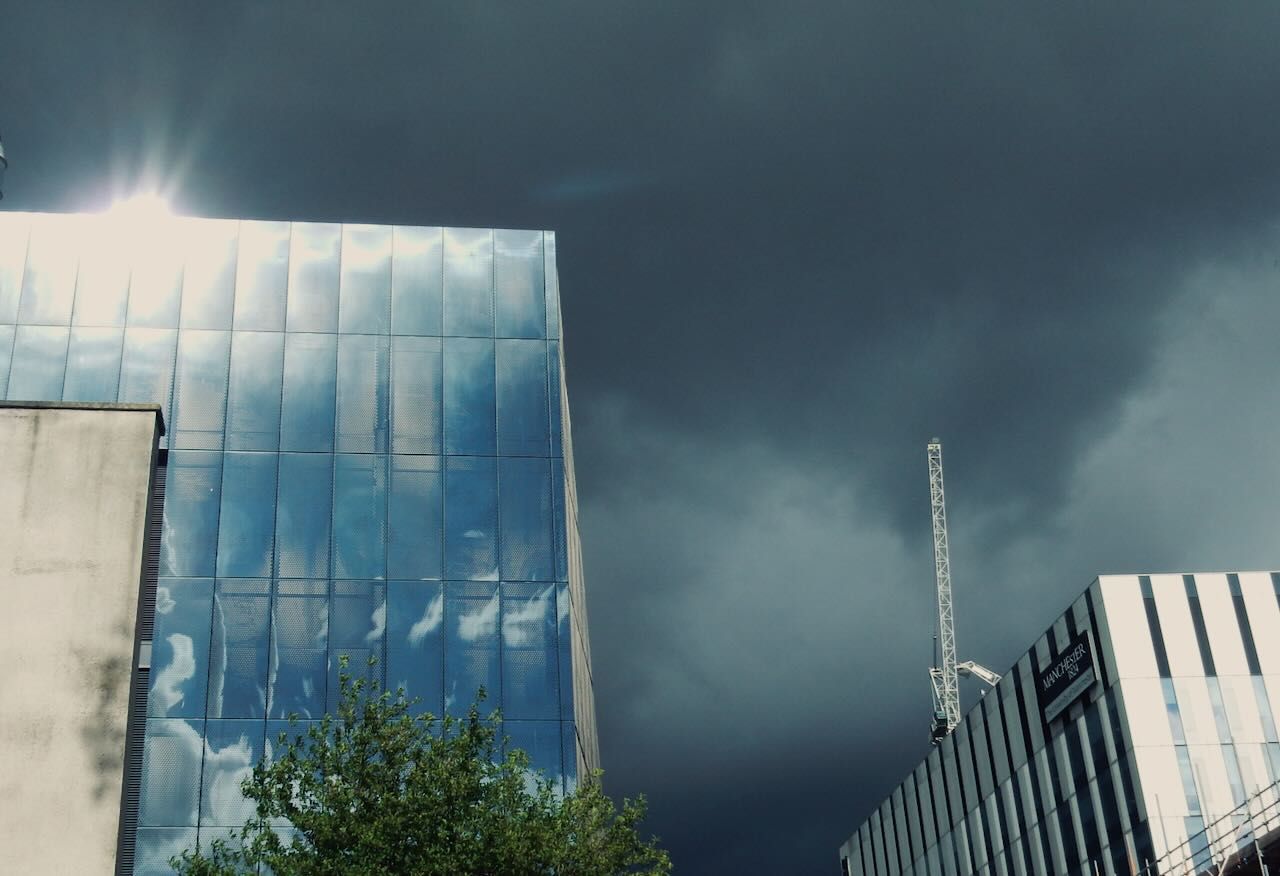
This collage, featuring the Graphene Institute on the left, indicates quite clearly why I and much of the rest of Manchester city centre got very wet about twenty minutes later. But, yes, I had packed an umbrella, fortunately.
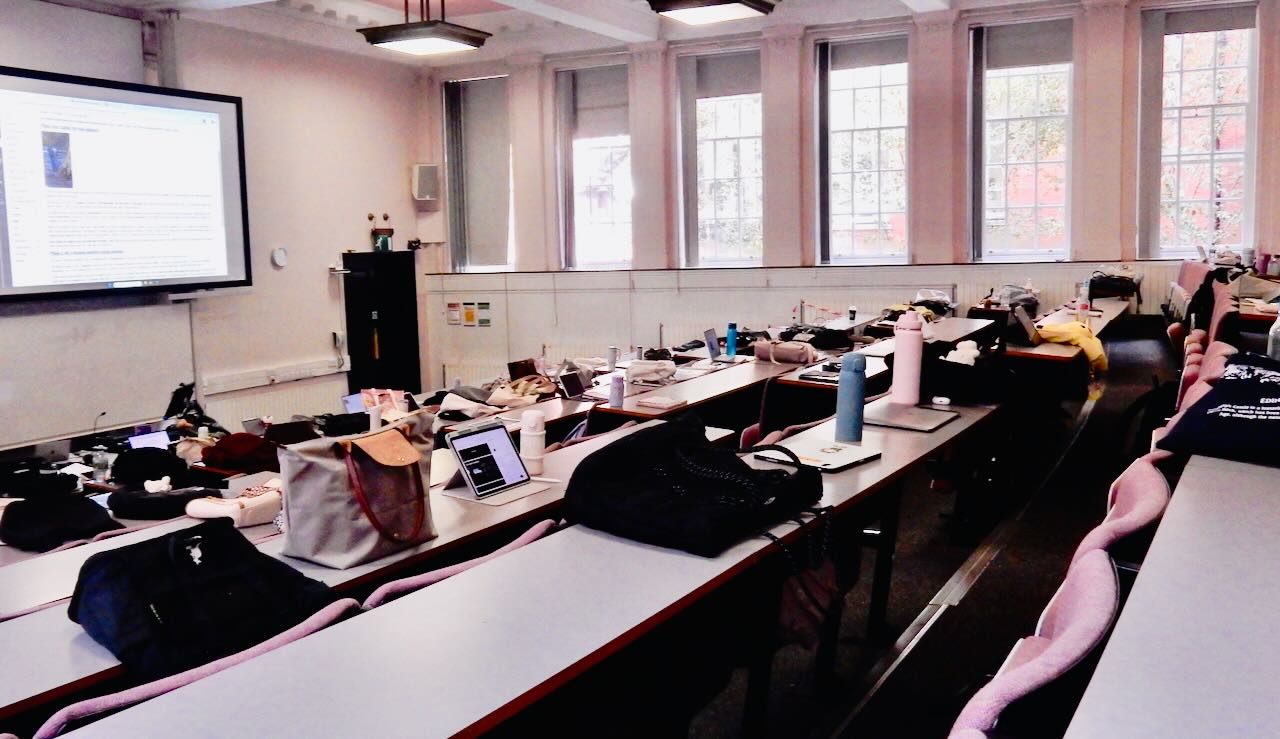
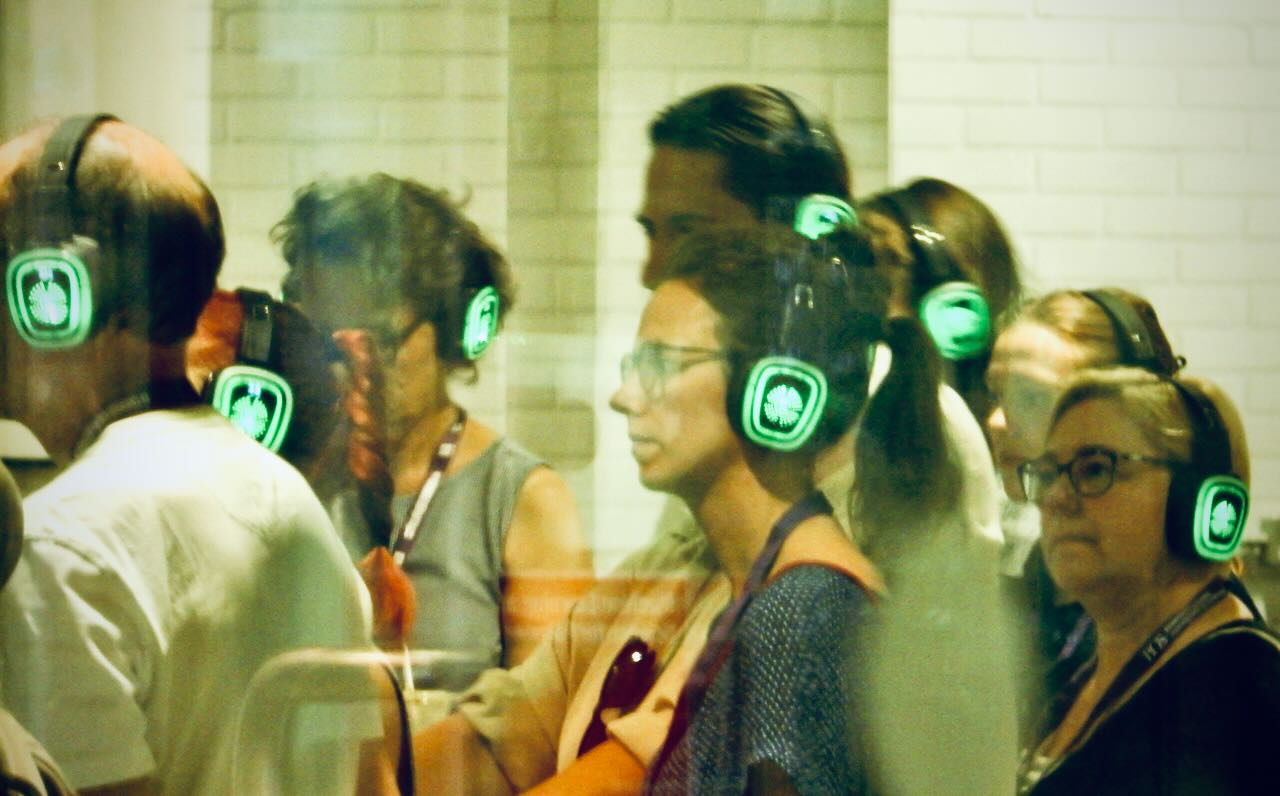
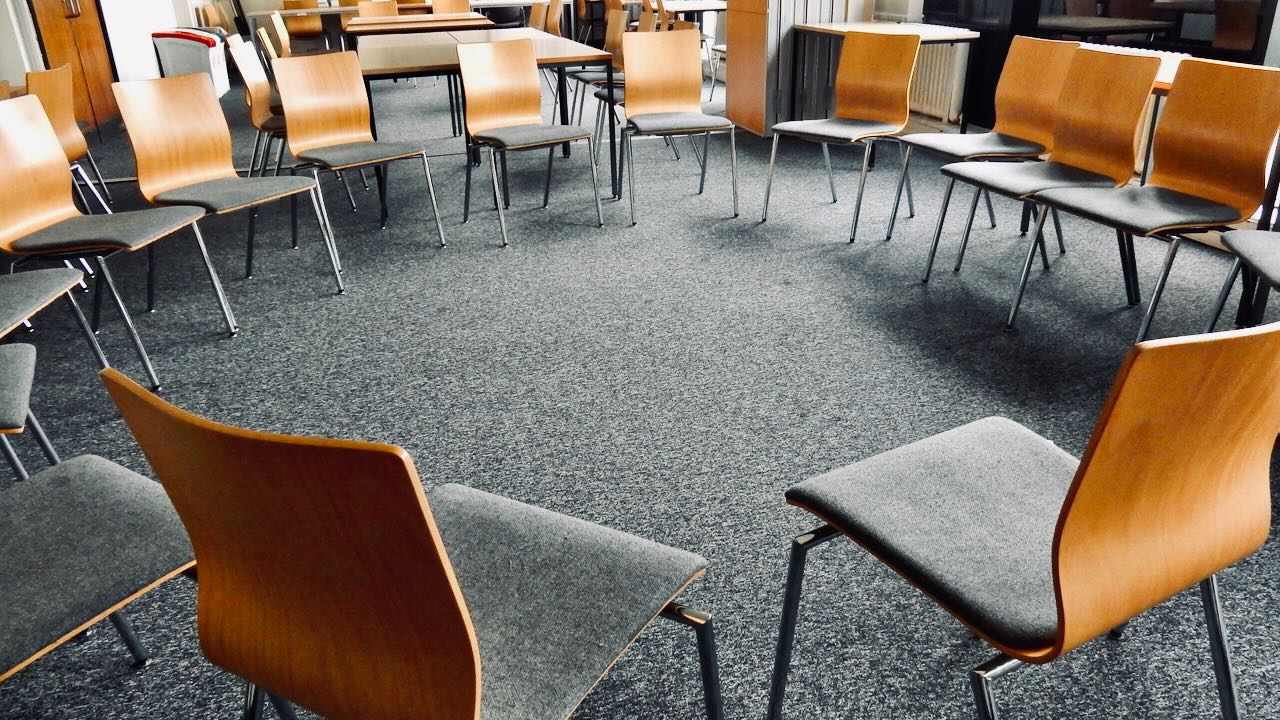
More teaching, though of a different sort. To celebrate the last active (for me, anyway) week of the semester, just for once I thought it would be nice to try to get them to do a bit of talking. You know, to each other. I guess it worked, more or less.
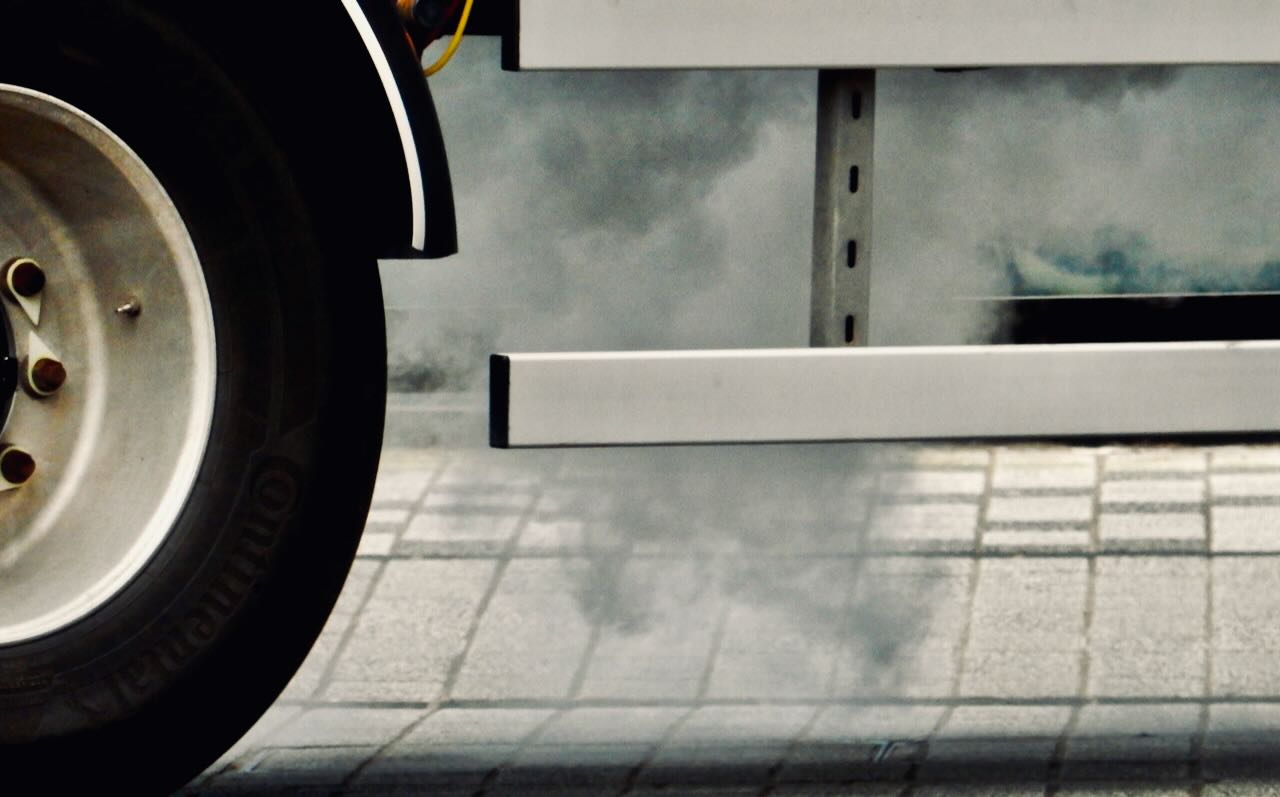
This is definitely liquid nitrogen (or was, until a second or two previously), as it’s going into the Air Liquide tank next to the Engineering building. All sorts of things might be going on in there, with applications for liquid nitrogen ranging from the preservation of human remains through the digging of tunnels to the making of ice cream. As uni doesn’t have a cookery department, though, it’s probably not the last one. I can’t discount the first.
Going on the gig posters that still sit, forlornly, behind a metal screen just to the right of this shot, the Retro Bar, on the corner of Sackville and Charles Streets in Manchester, closed in summer 2025. The reason? Because there are no longer any students up at this end of the campus. Whatever is being planned for the acreage of the old UMIST buildings, it has involved gradually emptying them over the last decade or so, and accumulating what must amount to real estate value of tens, perhaps even hundreds, of millions of pounds. I’m sure my employer is well aware of this.
Meanwhile — it was loud and peaceful, so Mark attests. Note the train heading over the viaduct.
Professor Ernest Rutherford, originally from New Zealand, was awarded the Nobel Prize in 1908 even before he conducted, with Hans Geiger and Ernest Marsden, the famous experiment where a bunch of alpha particles were fired at a sheet of gold and some of them bounced back, which Rutherford allegedly said was like firing a missile at a sheet of tissue paper and having it come back and hit you. From this was established the existence of the atomic nucleus, not to mention the original Geiger counter. For this reason Prof Rutherford is one of those former ‘Employees of the Month’ that the University of Manchester likes to big up. But in this case, why not? (Incidentally the room in which this experiment took place is still there, although no longer a laboratory — last time I looked it could be booked as a meeting room.)
More flowers. Then again, it is spring: a sunny, but chilly day today. If this is taken to represent my spending time today frolicking in the countryside, it shouldn’t be — teaching has restarted and I spent the whole day on campus. These bluebells sprout outside the entrance to the Chemistry building, in which, most of the semester, I have had the late afternoon slot in theatre G54.
I can’t really complain about the lack of activity on campus today — I was putting in my first appearance there in 19 days so have no leg to stand on. In the Ellen Wilkinson building’s ‘learning commons’ there may have been someone skulking at the back but they do not appear on the shot. On the left, the mural is of the building’s eponym: Britain’s first female Minister of Education and someone of the general kind of good reputation and worthy history that means they have buildings named after them. She died in 1947 aged 55, so is another person I have outlived.
Typical behaviour for the British climate — balmy weather on Saturday, revolting wintry crap the following Wednesday. I have to wipe off a layer of hail each time I come inside today. The blossoms bear it stoically.
This was just seen in passing this morning: my walk to work is so familiar after more than twenty years that even minor alterations are easy to notice. At some point in the last couple of weeks this has appeared in a window near the Old Quadrangle. Information searching reveals that this is a new ‘Infected Blood Inquiry Memorial’, which will be officially dedicated in a couple of weeks’ time.
The inquiry into how more than 30,000 people in the UK were given blood infected with HIV or hepatitis prior to 1996 (3,000 of them have subsequently died) reported its findings in 2024. Amongst the recommendations in the report were that “there should be a memorial”. As it is declared, so it shall be — so here is that memorial. I get the point: as you can see here and there, these specimen bottles are each filled with a little scroll of paper, with handwritten inscriptions — and that one little kiss, which makes the photo, I guess. But a memorial like, say, your average Cenotaph, this is not: and it doesn’t help that it’s inside a building that will only be open some of the time. (This is not a criticism of the University of Manchester by the way.)
This would all be of only passing interest were it not that one of my friends is represented in here. When I first moved to Yorkshire in 1991 I got to know Dave Chamberlain, of Low Row in Swaledale, who was a haemophiliac and was infected with HIV thanks to infected Factor 8. Dave was one of the people who was very friendly to me, a new ‘offcumdun’ arrival into the community, and did not have to be — it is because of these people I remained in Yorkshire and never went back down South. When I heard he had died, in the late 2000s sometime, I was very upset. Whatever ‘compensation’ this inquiry determined was just, imposing this two decades after his death, and nearly 35 years after the fact of his avoidable infection, seems more of a cynical and meaningless gesture rather than any acknowledgement of true culpability. Sticking a bunch of little bottles in a window in a university building, one that is off the main road and which passers-by don’t have a lot of reason to notice, is probably much the same.
I have noticed down the years that one thing that can be guaranteed to astonish foreigners about Britons is the ability of some of them to walk around in clothing that is, manifestly, inadequate for the temperature. I have to say that in this, I agree with them. I could not believe that this guy was wearing only a T-shirt today. It was, to put it bluntly, frigging freezing this afternoon. I was in two T-shirts — a jumper — a big coat — and a scarf, and it was still chilly. Is his blood formed of antifreeze? How does he tolerate this? Words fail me.