One wouldn’t think Burnley would be on a direct route from Leeds to Liverpool but the canal bearing that name does take a rather roundabout course. It’s a pastoral spot in a town that doesn’t have a reputation for rural charm. The rule of thirds works well enough on this shot.
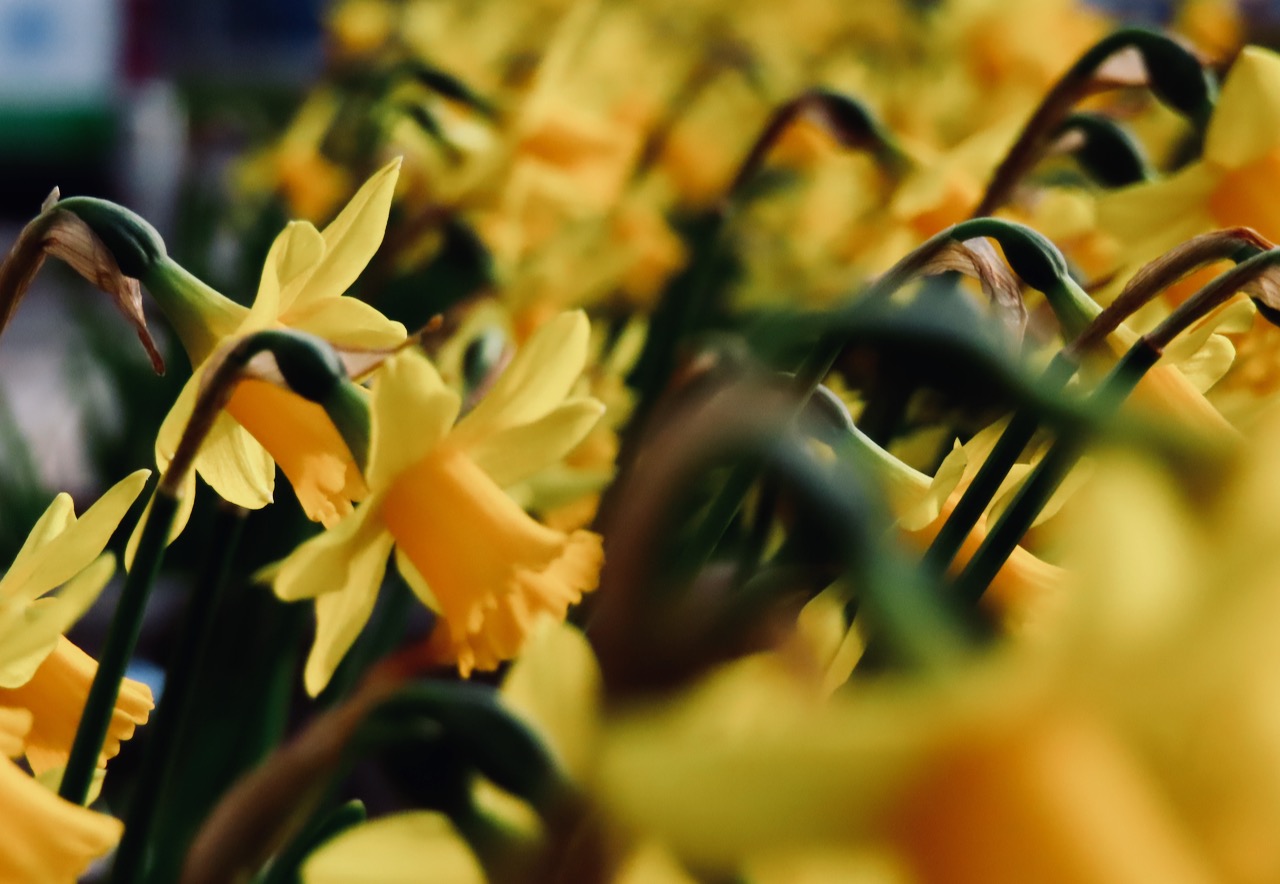
Not quite Wordsworth’s multitude but there are certainly a lot of these sprouting outside the Ellen Wilkinson Building on campus at the moment, something the rather random focus point of this shot is intended to capture. This is the 700th Manchester shot to feature on here, by the way.
It’s early in the year to see one of these outside, but here one is, scaling what to it is a substantial crag: actually it’s the capstone of a wall next to a car park. We’re both out and about fairly early, in different ways.
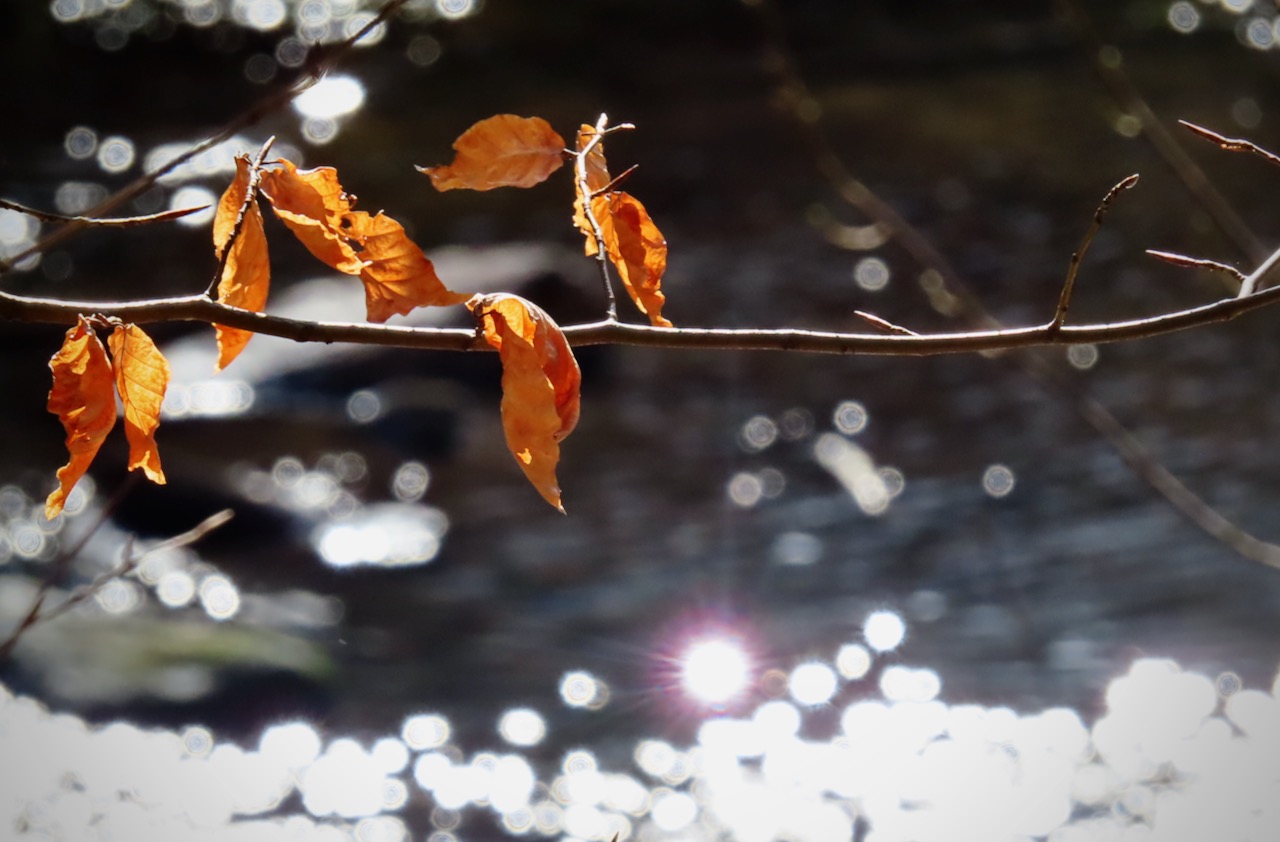
Even the recent run of storms has not blown off this little clump of last year’s leaves. Today, on the other hand, was a first real inkling of spring sunshine and relative warmth. I already know it doesn’t last, though. But there’ll be more, eventually.
As reliable an early signifier of spring as anything else — and the crocuses are early this year. Nor has their February arrival diminished them in number, certainly not on this lawn in front of Lancaster Castle, anyway.
An early start for me on this Sunday morning, for a walk that bagged me the County Tops of Kent and Greater London (which are very close together in case that sounds like a more significant expedition than it was). Not a great walk scenically, but redeemed by the sight of four deer in the woods. You try capturing these guys on camera, particularly if they know you’re there, which this one clearly does — but he tolerated my efforts for just long enough before scooting away to rejoin his gang.
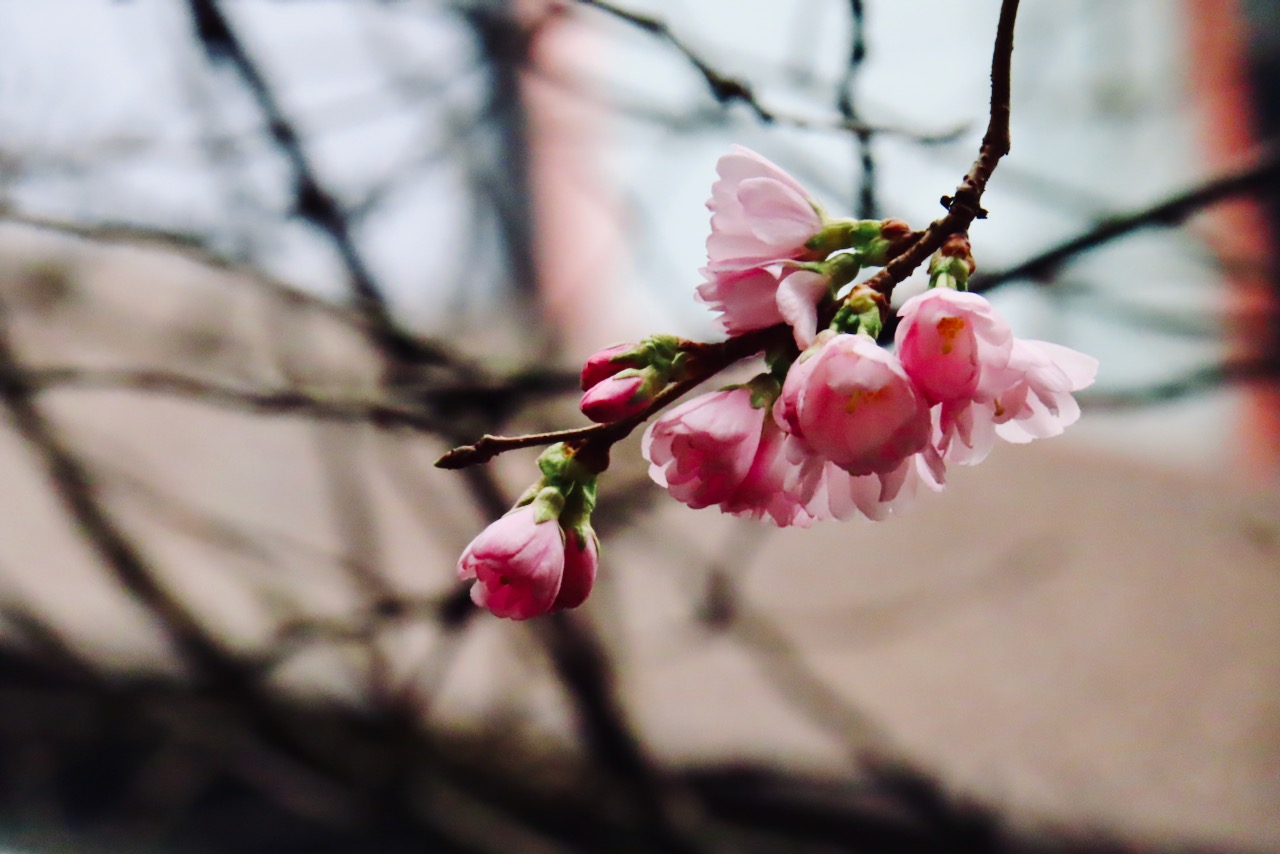
Somewhat continuing a theme from yesterday, but hey. Definitively, the first blossom I’ve seen of the year turns up in the courtyard of the Ellen Wilkinson Building, as it has done before (it’s a finely sheltered spot).
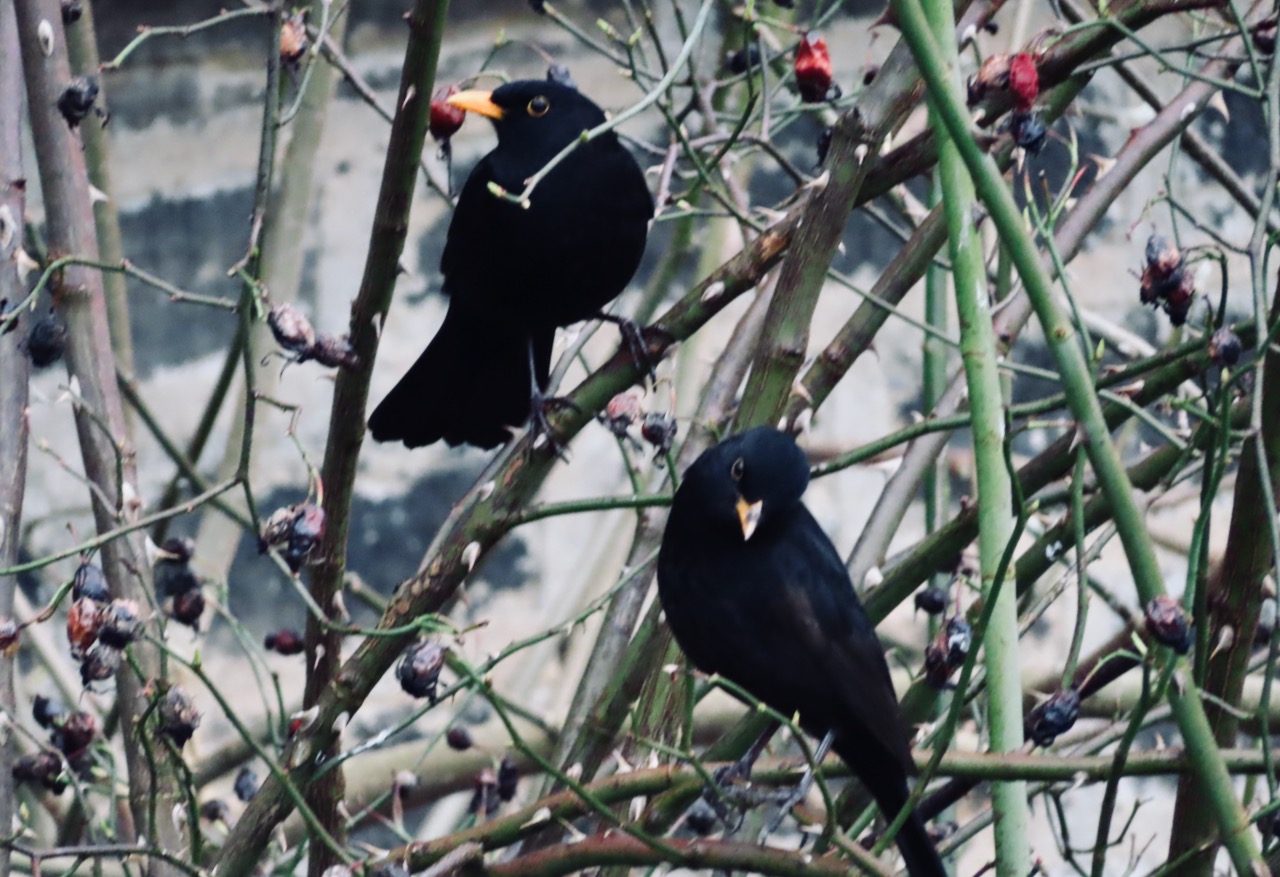
The guys give it the “mean and moody, but still cute” look, as if they are modelling for the blackbird version of a Hugo Boss ad. A shame this one is a little out of focus, but I couldn’t persuade them to repeat the pose, sorry.
Out on a walk on the hillside above our house, and my father-in-law Dave acted as the ‘spotter’ for this one, pointing out the kestrel that was hovering above the grassland, hunting for mice or sparrows. Obviously wanting its profile done, it then landed and obligingly waited on this lamp-post for a minute, so I could get the shot (that’s the old, ruined Heptonstall church behind).
A Happy New Year to you all. I mention no politics here; I will merely say that had the shot of another bird-of-prey, the hawk on 5th March, been just that little bit better in focus, that would have been my favourite shot of 2021. However, instead I will give it to the minutes-old lamb captured on April 11th.
The weir is where the herons work, in town. Maybe I return to this subject quite a lot — this particular heron might have been on the blog several times by now — but it’s sometimes a relief to see one, as on days like today (spent 95% inside, marking), there isn’t very much else to see. May they continue to fish happily away.