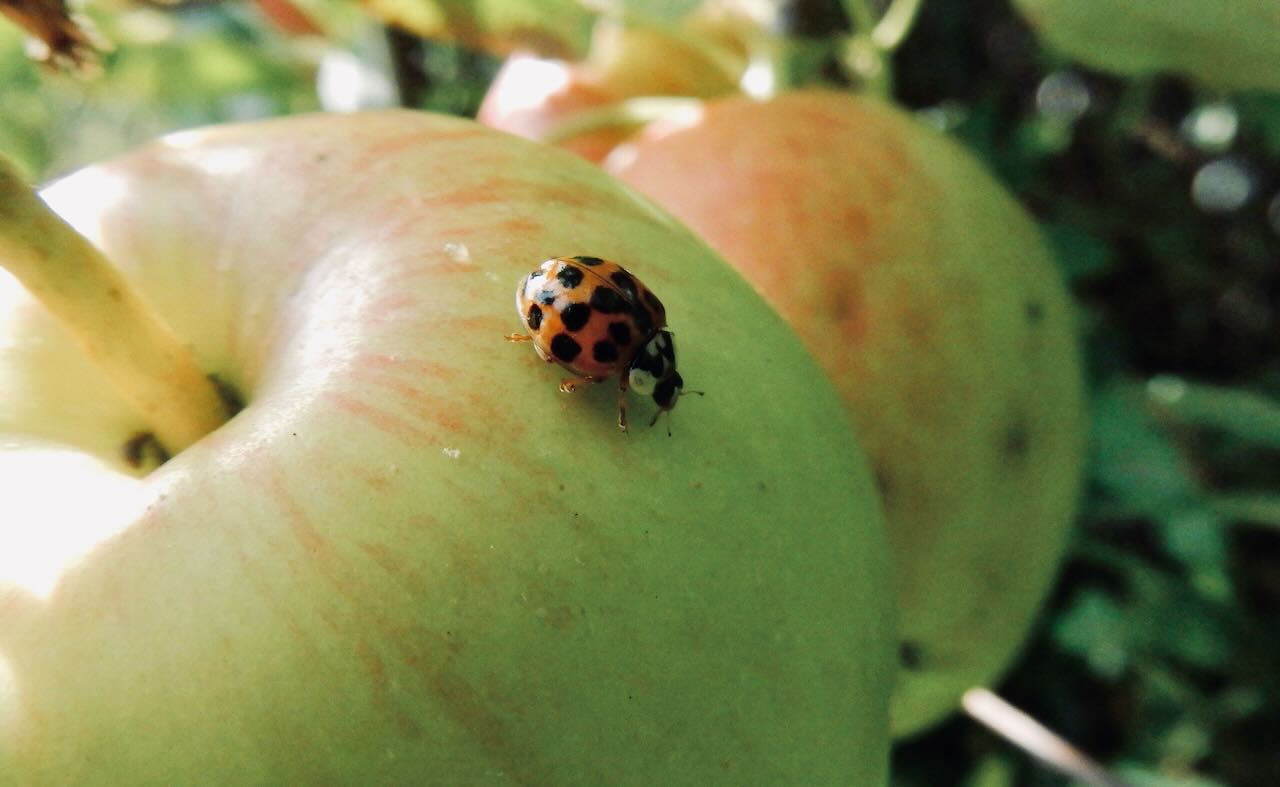
One’s things for sure about the weather of 2026: our fruit have loved it. The apples are the last in the series but like everything else, there’s plenty of them and they taste very fine. The ladybird seems content enough, too.
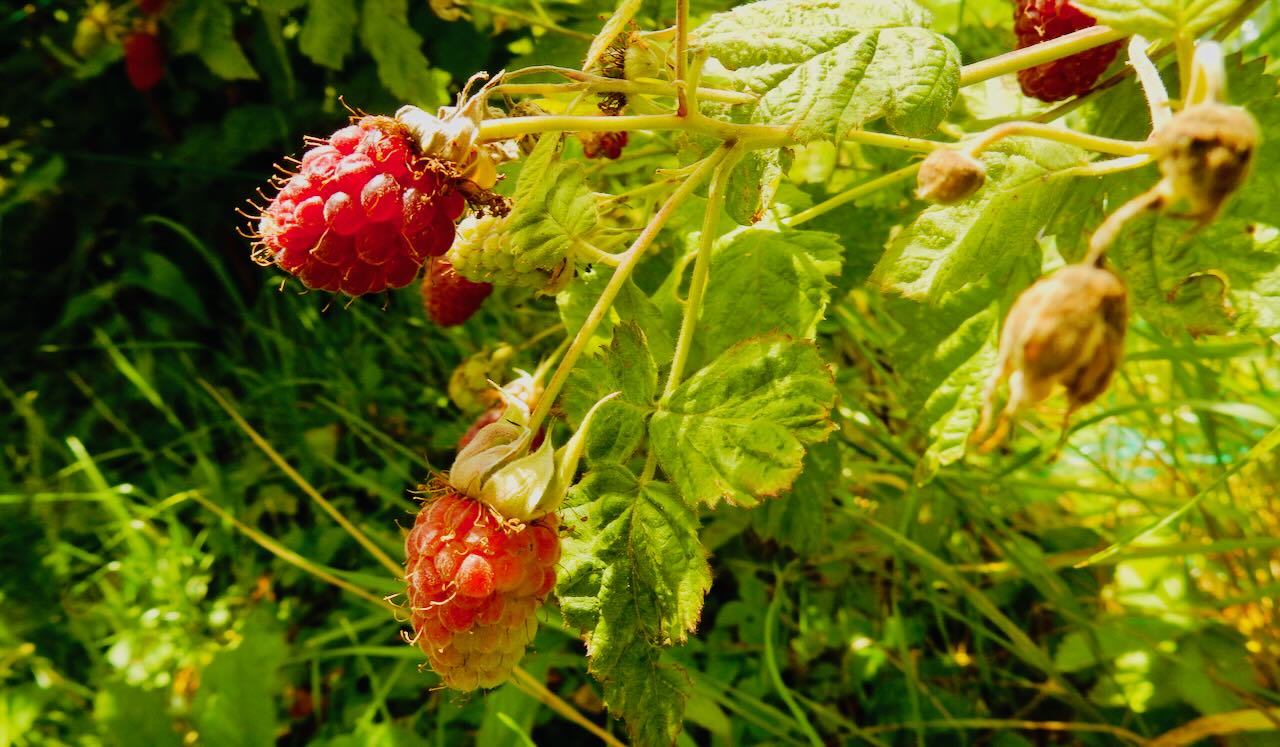
Vegetables sometimes grow in our allotment but in some years they don’t: it’s still not raining and 2026’s vegetable crop has been reduced to a few sad and scraggly-looking beetroot plants that may or may not have edible roots underneath them. But fruit: that, we can produce. After the loganberries and jostaberries, the next tranche of free food appears to be ready.
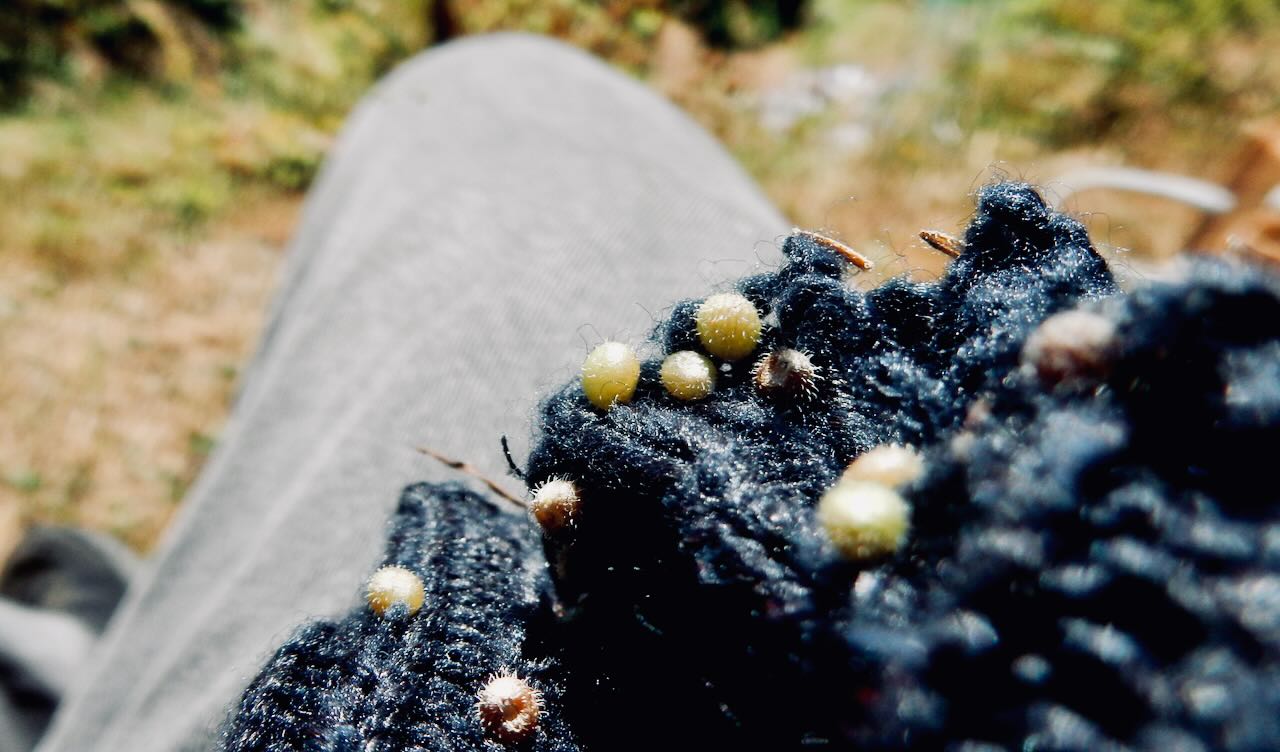
Sunday, not exactly a ‘day of rest’, as there was work to do in the garden, work which resulted in me becoming covered in little sticky seed-balls — whomever invented Velcro must have been inspired by them. I pick the shot also for the surprisingly rugged little landscape formed by my clothing (with the knee mountain rising in the background). The jumper was destined for the washing machine soon afterwards, though.
Respect the pollinators. I know bees are ‘social insects’ but do they socialise, particularly? When two come together like this are they in fierce competition or is it more like, “Hey Bob: make sure you check out the bit just to your left, there’s some good stuff over there”?
I pick the title of this post because it’s not just me watching them, either. The blob to the right is not a blemish on the lens (of which I have plenty) but some other little bug hanging around, and unless I’m mistaken you can see a second one just behind the wing of the rightmost bee. As you can see the weather stays clement — very pleasant stuff I think, although the grass in the garden is starting to go brown.
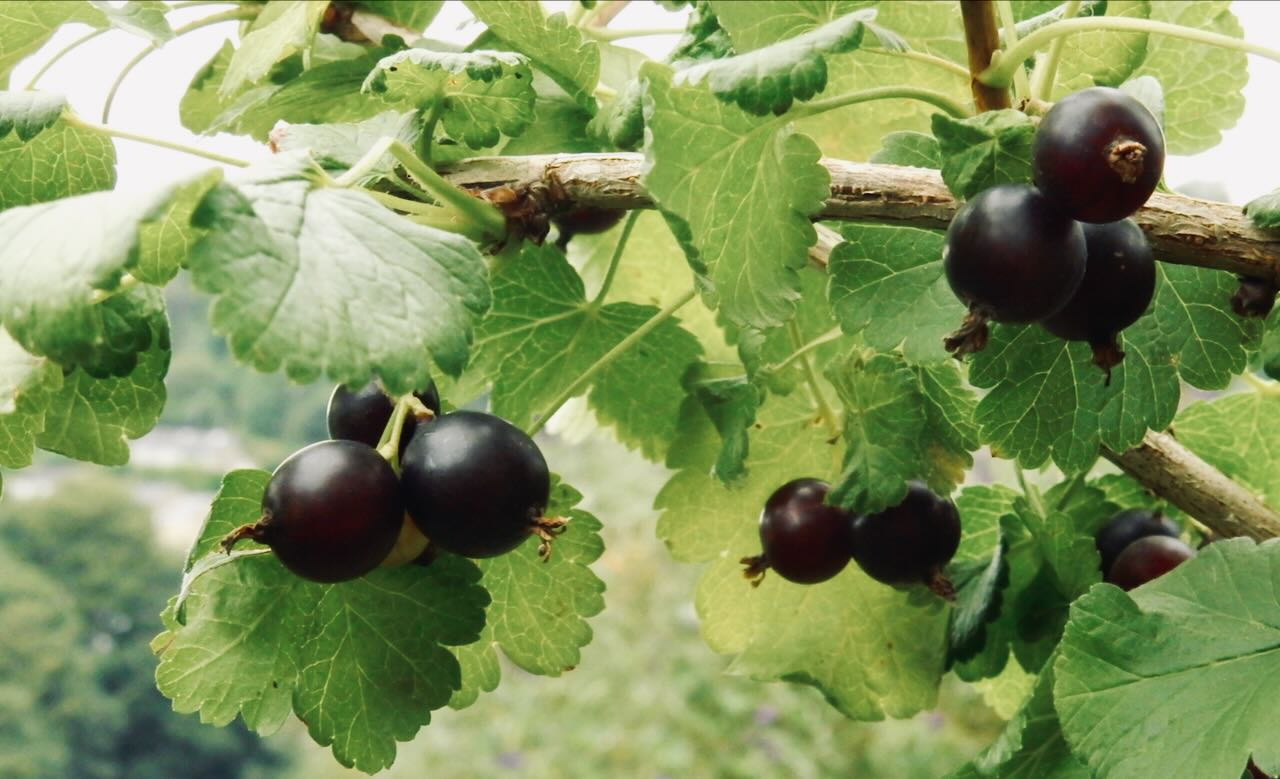
It’s only ten days since I depicted the loganberries, but the fruit on the neigbouring jostaberry plant just looks so succulent at the moment, and there’s lots of it. I think I will try making jam with it. Jostas are a cross between blackcurrants and gooseberries and, according to the Bible (OK, Wikipedia), were first cultivated in Germany and first made available to the public in 1977. The original scientists can be assured that in the climate of Hebden Bridge their creation is doing very well.
Some Sundays are eventful and interesting days. This was not one of them, although neither was it unpleasant. But photographically there wasn’t much to look at, so 5/7/26 will have to be marked by a study of drainage. Important stuff, though — you try living without it for a while.
Fruit is just so much easier to grow than vegetables. You really don’t need to do much work and that suits my gardening style. While we were in Norway, the garden experienced ten days of warm weather with occasional showers, and things have responded accordingly. I didn’t pick these two today — they’re not quite ready — but there were plenty more around the place.
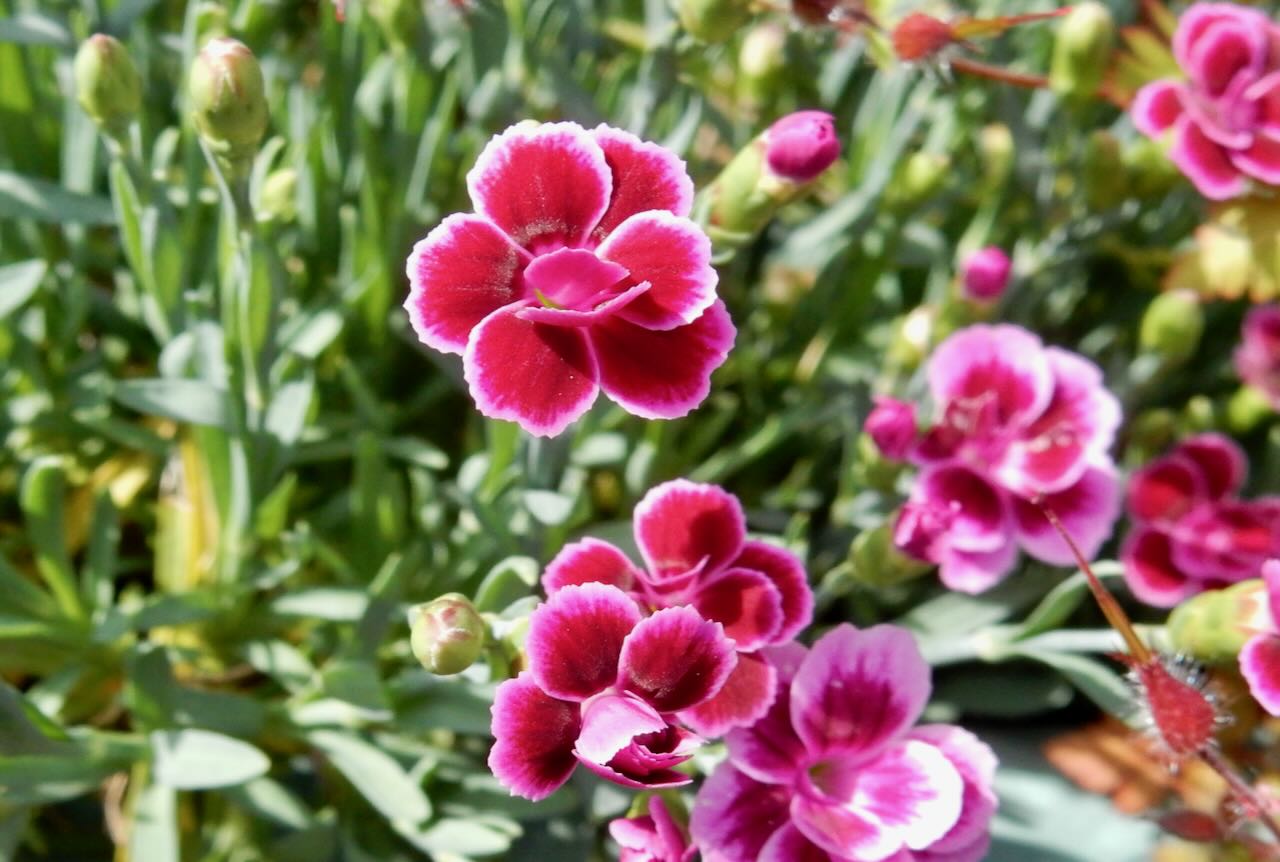
Although this is changing soon, right now there is still not much happening in life, so let me offer more nature. Neither of us at first had any idea of the identity of these flowers, growing in a pot outside the front window. “I don’t even water them,” says C. “They just come up each year.” Google Lens it is, then, which informs us we have healthy specimens of Dianthus caryophyllus (the ‘Pink Kisses’ cultivar) merrily sprouting just underneath the gas meter.
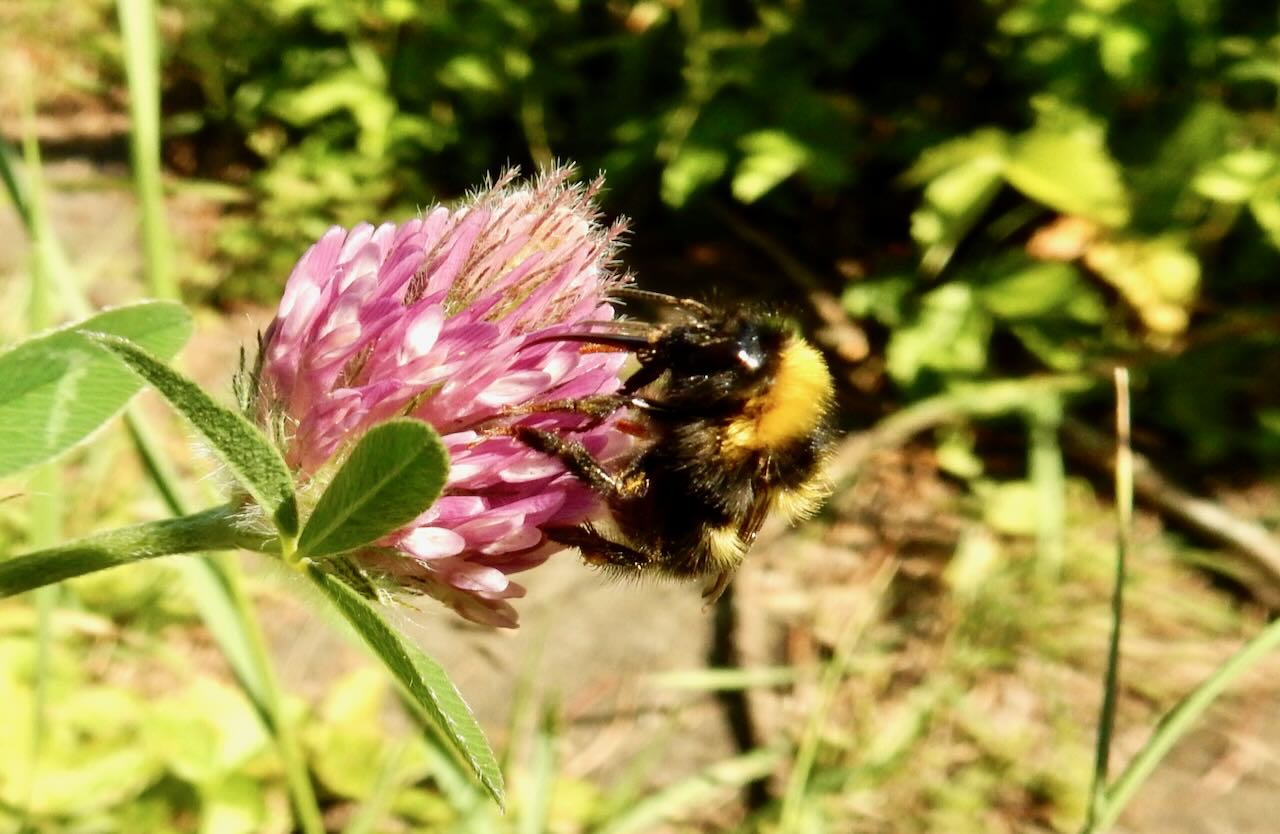
A somewhat unexpected spell of sunshine (of which June has so far seen very little) got both me and this little feller working up in the allotment for a while. It’s good to see the bees getting busy and I suppose the same is true of me as well.
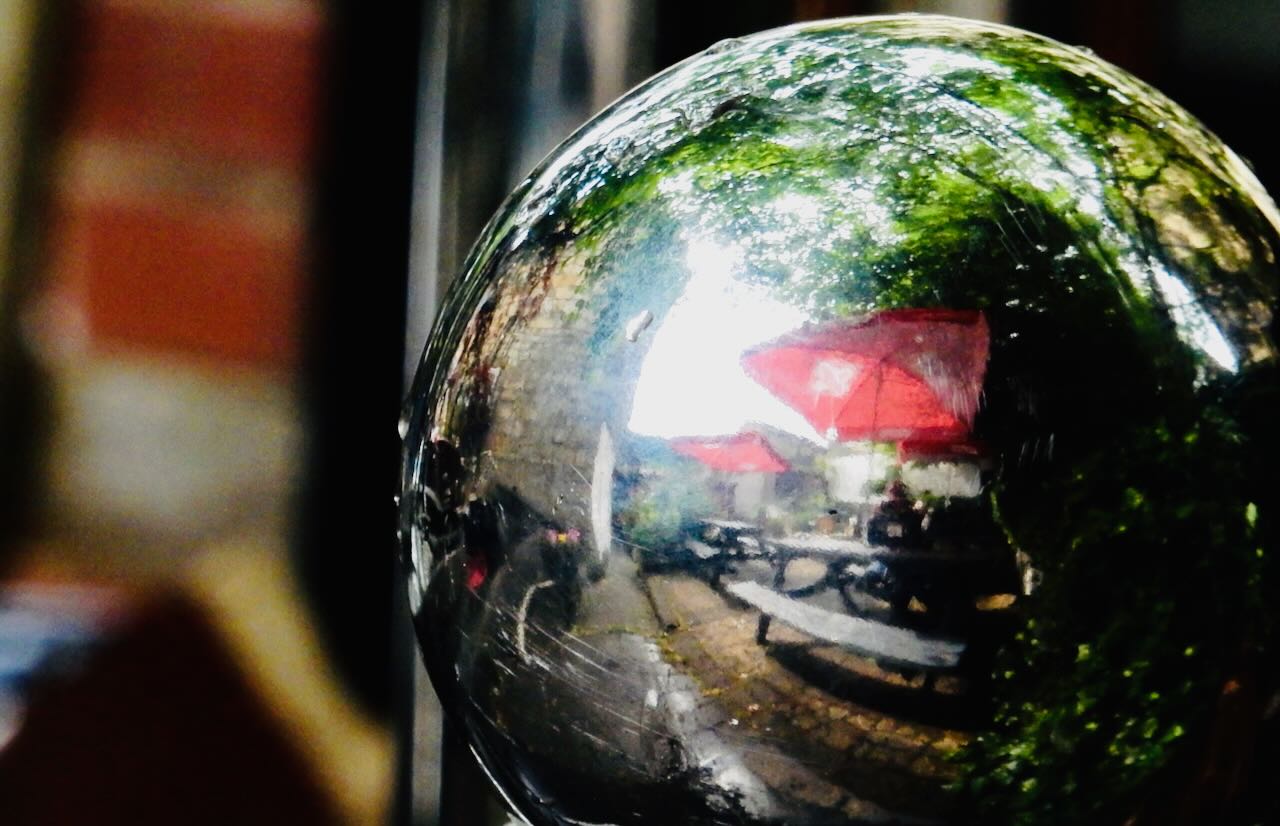
This is a self-portrait — logically I will be on it somewhere, and you may discern me under the red umbrella nearest to this shiny ball thing. I’m in the garden early — but then again I started work early (7:45) and sat upstairs marking for several hours. Semester 2 is now officially done, though, as far as I am concerned.