He was running, mostly. A few minutes after I took this one he passed me on another lap. When I was running — this is a while ago now — I would never have thought of doing so on a Friday evening, but each to their own.
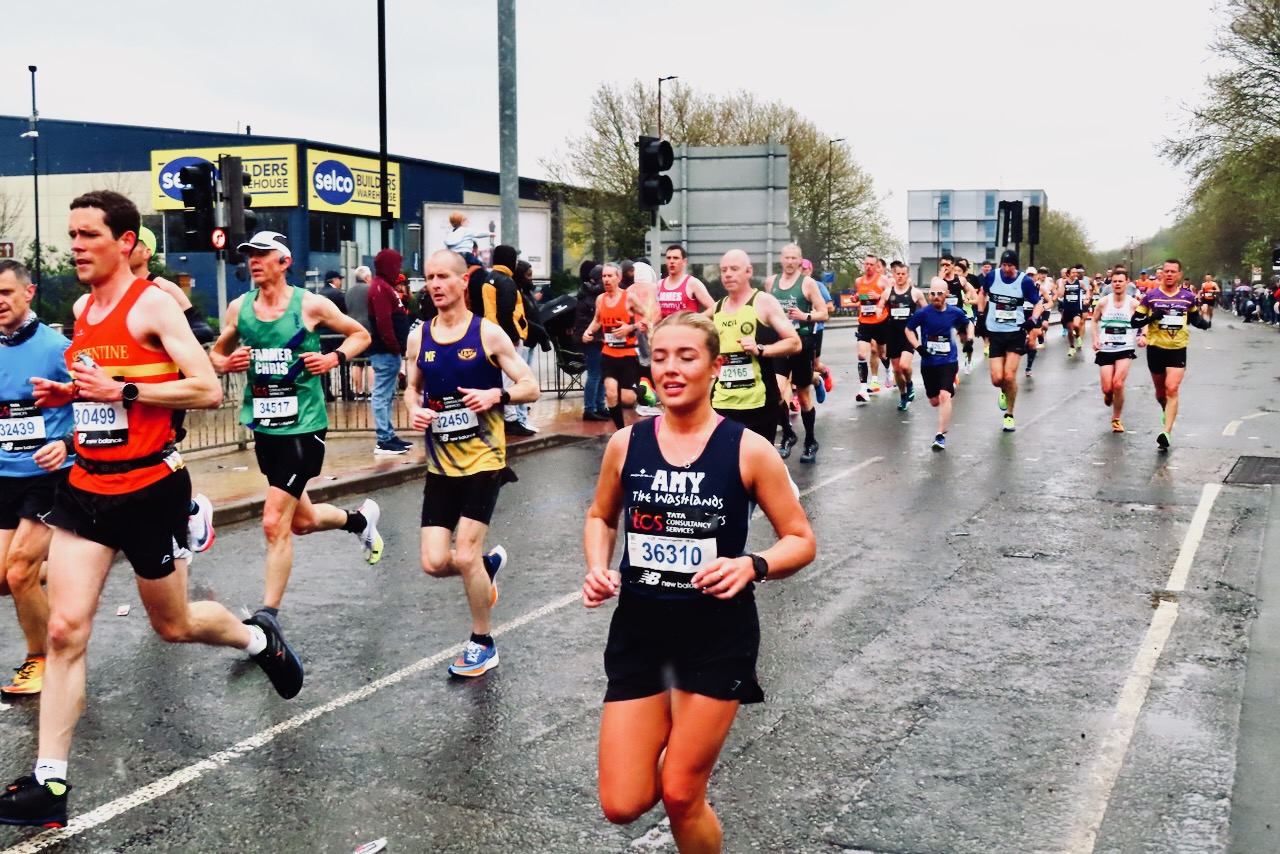
When this weekend in London was organised I had no idea that the London Marathon was being run this Sunday morning, although with hindsight, this certainly explained the dearth of hotel rooms. Never mind, it was nice to get out (albeit in the rain) to a point on the route relatively near to our accommodation and watch this massive river of people flow past: 45,000 people were participating, and we must have seen at least three-quarters of them come down the Woolwich Road. This photo was taken exactly 12 minutes after the leading men came past, so Amy’s doing pretty well.
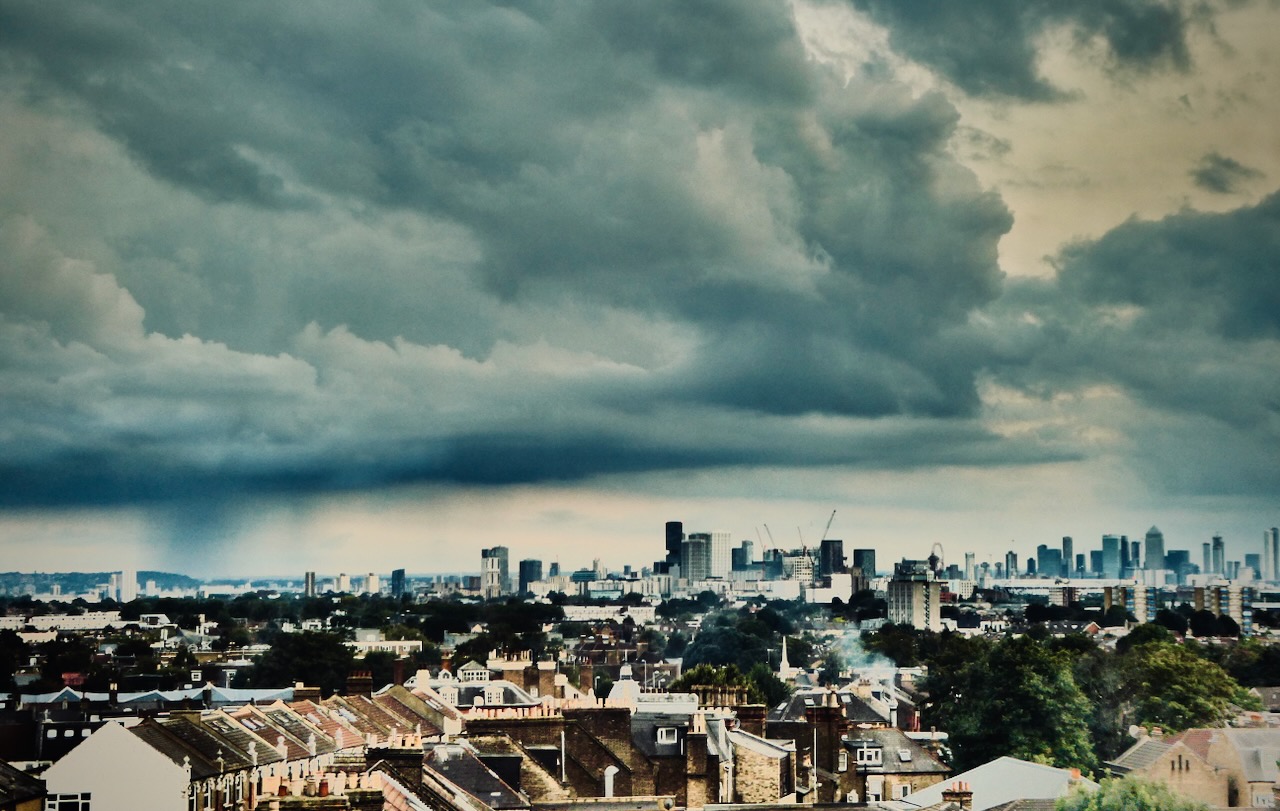
In the 1940s The Valley stadium in south-east London could seat 70,000 people and was one of the biggest football grounds in the country. It doesn’t quite have that same scale any more but it’s still a decent football stadium: if you can find the entrance to the away end, anyway. At least the extended trek that was required to gain access allowed the opportunity of this shot, the only point from which the city behind could properly be seen. And the steward, doing his thing.
My last day in London, this time. I did the Thames as a subject on Sunday, but I’m doing it again. A glorious morning: the two walkers seen here, and me, were considerably overdressed. I’m not sure that the bridge ahead has a name, but it takes the suburban line over the river to Chiswick. This is a very attractive part of the city, which is why I will never be able to afford to live there.
Clapham Junction station takes everything that Victoria and Waterloo stations have to throw at it, and as a result is apparently the busiest railway station in Europe, judged by number of trains. Except between midnight and 5am there can be up to 200 trains an hour passing through here, which makes it more than one every twenty seconds.
I like this golden spillage of light, and the seemingly random fractions posted on the top. I was here late on: this is the latest shot since 5th October 2020, in fact.
Despite having come to London regularly over the years there are still parts of this massive city that I have not yet explored. The western suburbs were amongst them, but this time I am staying in Brentford, giving me the chance to take a Sunday morning walk down the banks of the Thames to Chiswick and Barnes, all desirable spots. The river looks narrow here but that’s because over there is an eyot, or river island, which splits the flow in two at this point. What the old concrete post was, no idea — but the birds like to perch on it.
These have to be among the world’s most stoic horses. The poles in this field are one end of the series of guidance beacons for one of the runways at Heathrow. Gigantic flying machines like the one seen here are coming into land every few minutes, and the noise is incredible. But they don’t seem all that bothered.
The latest in an occasional series on this blog — Abandoned Shoes, n+1. (A previous episode is here, for example.) As this one is waiting at the top of the subway that leads down and into King’s Cross station, perhaps it’s just trying to get home. I am reminded of a joke from an early series of Red Dwarf about “shoes having souls”.
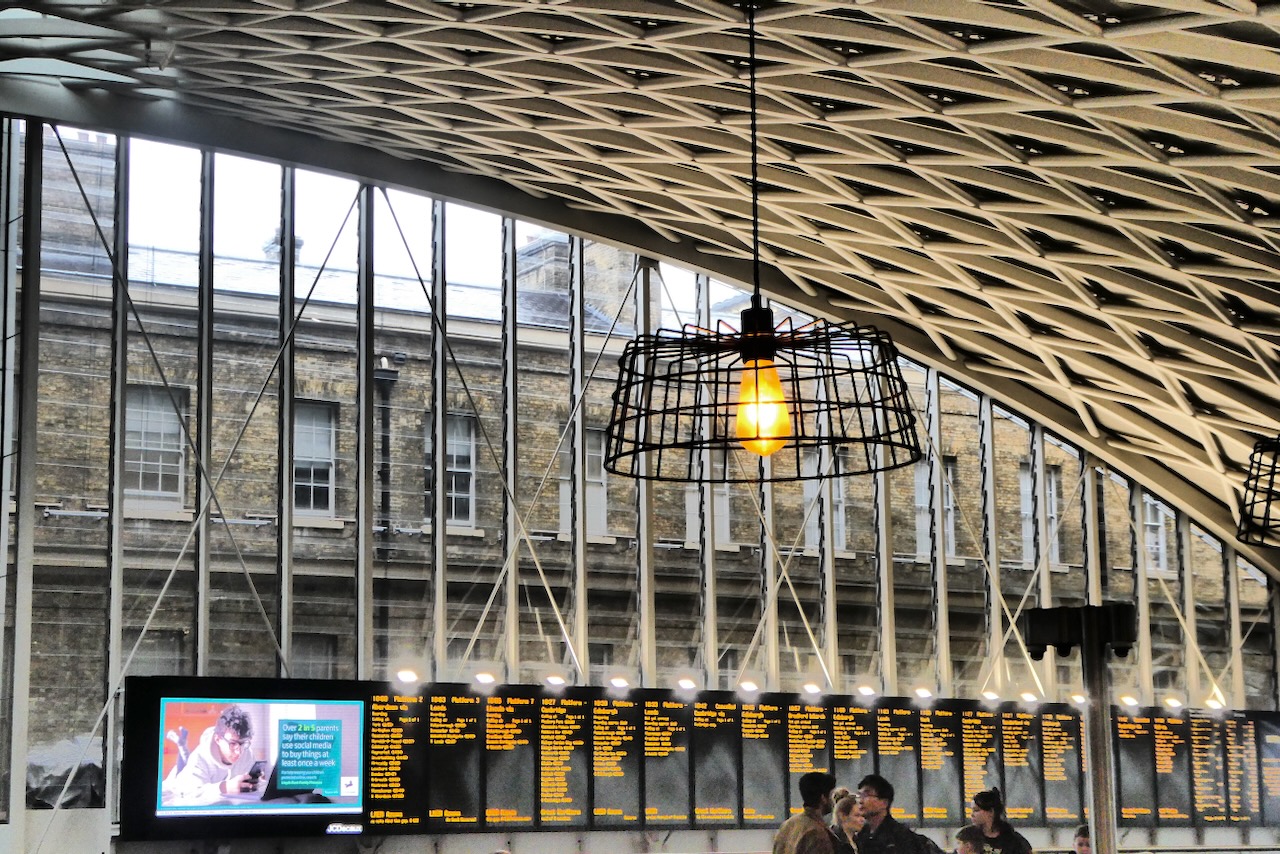
After the sheer excitement of the last few days, at least today was a livelier and more interesting one, involving a day trip to London. It was for work, and working on a Saturday is usually something I avoid at all costs, but this one was worth doing (being connected with my project on St Helena). King’s Cross was its usual busy and attractive self as I began the journey home. The first of four trips to the capital, of varying length, that I am scheduled to make over the next few weeks.
Barking is one of the least gentrified bits of London, not that that is a bad thing. It also gives extremely good graveyard, as I discovered when getting away from the traffic noise and finding myself in the huge necropolis that is Rippleside cemetery, seeming to stretch away for miles, a vast city of memorials to those who have ‘passed on’ and ‘fallen asleep’. Or, here with the three members of the Sanderson family, taken out by (I assume) German bombers one night in January 1941.