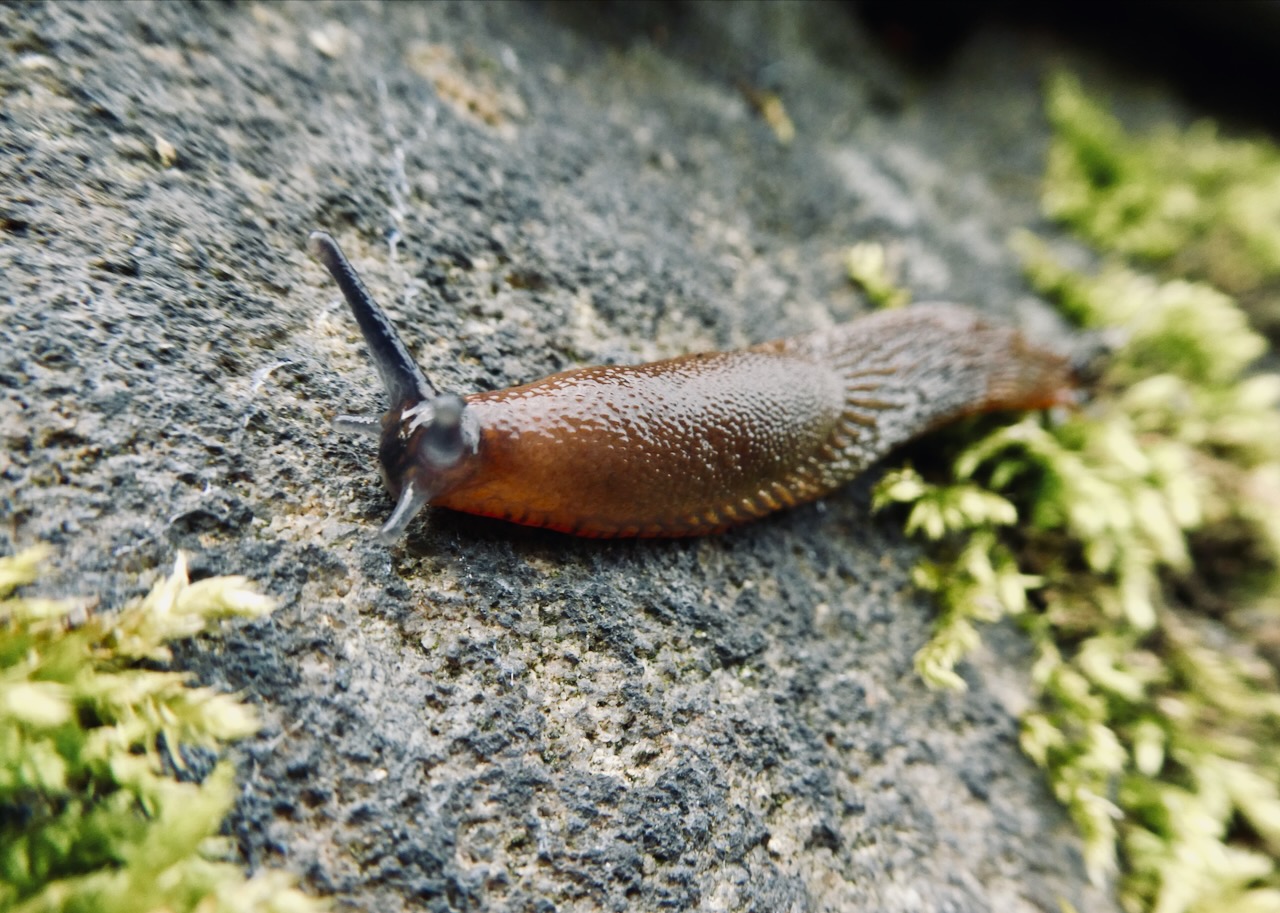
Pictured on the wall behind platform 1 at Hebden Bridge railway station. This is the fourth slug to appear on the blog, and while one doesn’t normally associate the slug, as a species, with the idea of dynamism, I think this one does give it a shot. It’s not quite the crab on that Prodigy album cover, but it’s getting there.
This was one of those shots where the crowning touch was not apparent until I uploaded it — namely the bees. They are not actual insects, of course, but drawn on the doors of the establishment (an ‘aparthotel’ I think) which lies behind these flowers.
Additionally, this looks like it will be the last shot taken with the Canon PowerShot SX740 camera I have been using since 18th August 2021. 20 months is not long for a camera to last, even with the daily usage that I give it: but it never really recovered from the St Helena Tarmac Incident of late January. It limped on for the next three months, and I am grateful for that, but a replacement was becoming urgent. If you’re interested in these things, today I picked up a Panasonic TZ95: let’s see how long that lasts. I think it will be the fifth (and certainly at least the fourth) camera to have supplied the artwork for this blog.
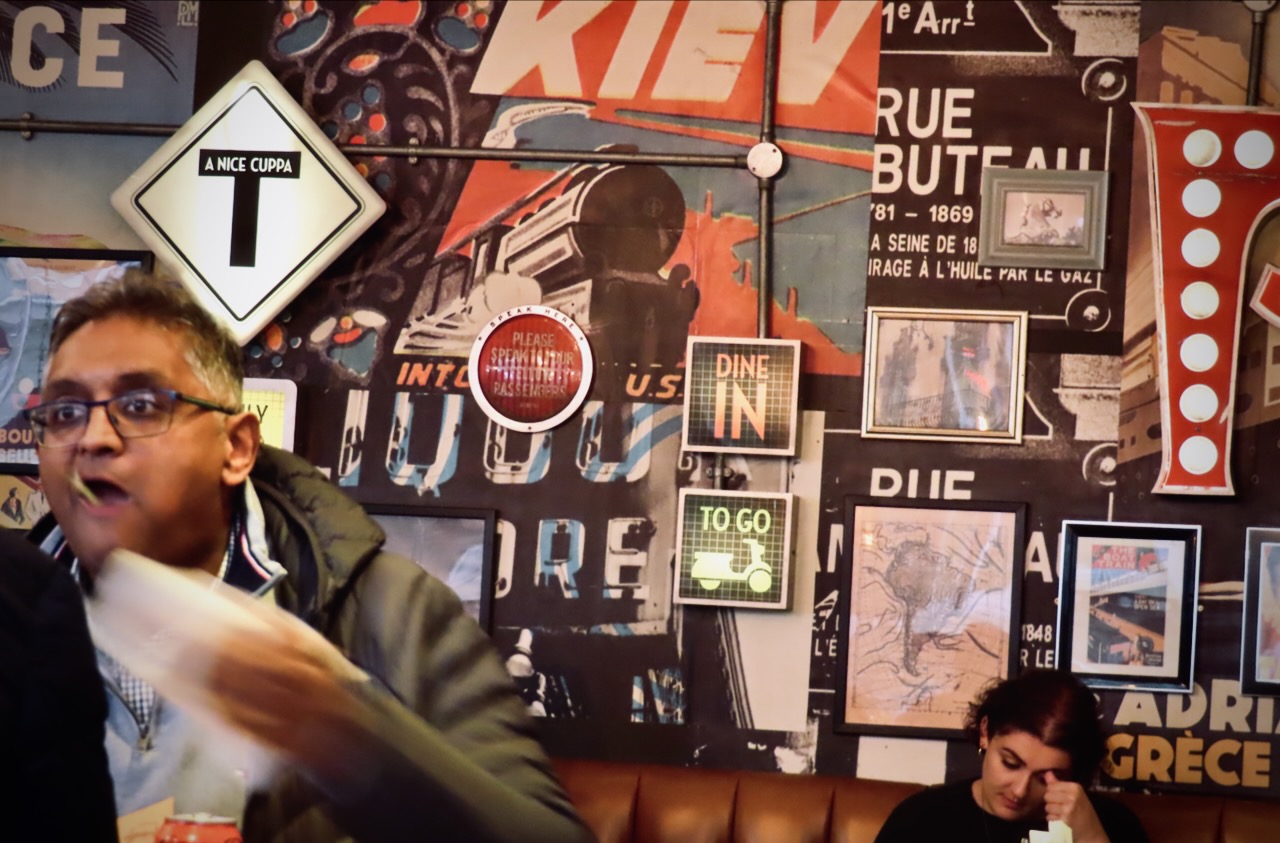
And so, the trip back from London, and that invariably means King’s Cross is the departure point. I quite like the Giraffe café, on the balcony above the concourse — it’s a fairly agreeable railway station all round, in fact. Maybe the guy eating the sandwich might feel his depiction is a little unflattering but at least it catches the lunchtime moment.
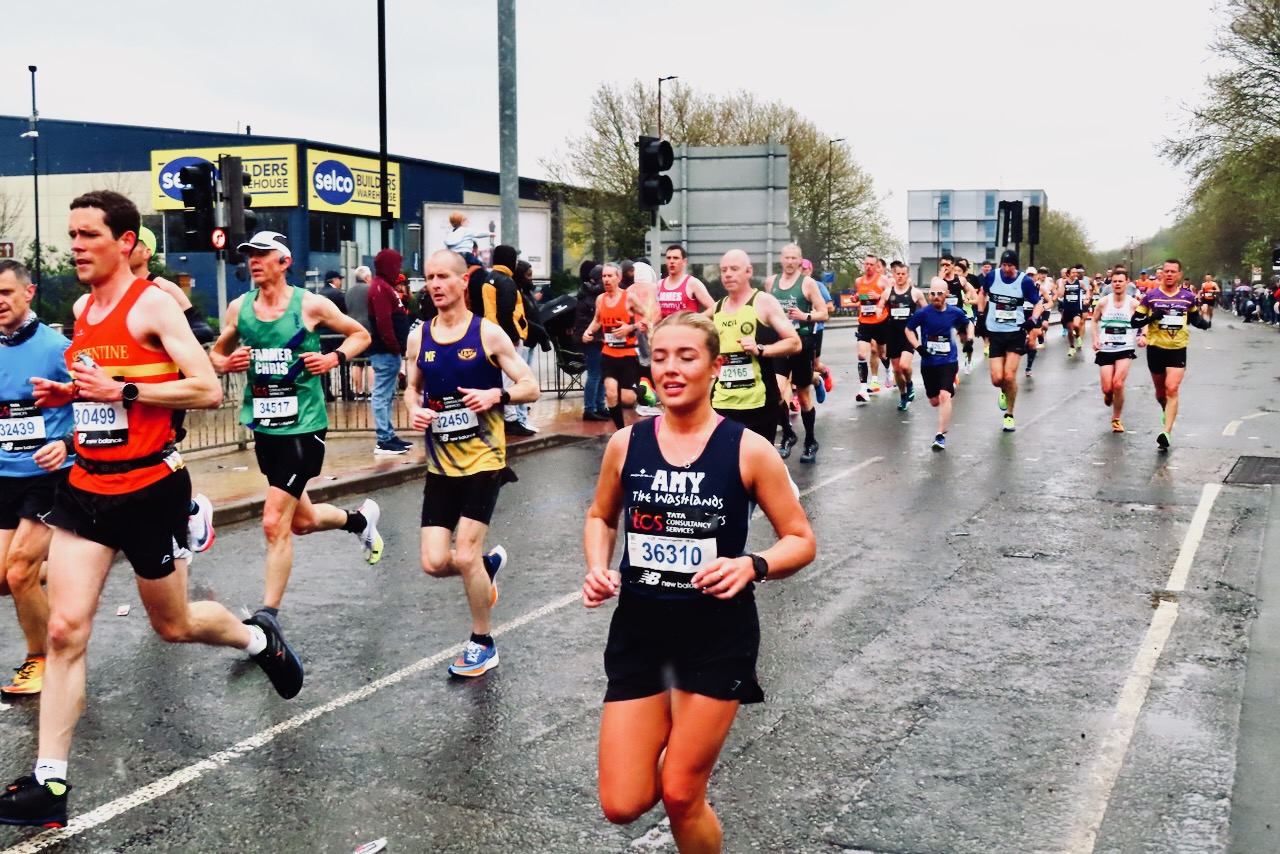
When this weekend in London was organised I had no idea that the London Marathon was being run this Sunday morning, although with hindsight, this certainly explained the dearth of hotel rooms. Never mind, it was nice to get out (albeit in the rain) to a point on the route relatively near to our accommodation and watch this massive river of people flow past: 45,000 people were participating, and we must have seen at least three-quarters of them come down the Woolwich Road. This photo was taken exactly 12 minutes after the leading men came past, so Amy’s doing pretty well.
In the 1940s The Valley stadium in south-east London could seat 70,000 people and was one of the biggest football grounds in the country. It doesn’t quite have that same scale any more but it’s still a decent football stadium: if you can find the entrance to the away end, anyway. At least the extended trek that was required to gain access allowed the opportunity of this shot, the only point from which the city behind could properly be seen. And the steward, doing his thing.
Over my three days in Cambridge I seem to have avoided capturing anything about the sociability of the conference I’ve been attending. So be it. The Sidgwick site is the utilitarian side of the University, none of this medieval architecture stuff: faculty rather than college buildings. But it was a decent place to spend half a week. Clare thinks this sculpture looks like ‘Minecraft Man’, by the way.
Another one of those shots that is basically an attempt to achieve some kind of perfect symmetry. Of course we are all imperfect beings so once again I cannot quite achieve it. I did wonder about asking the bloke at the back to move one seat to his left but perhaps he is the essential element that sets off everything else. Taken about fifteen minutes before our group presented at the conference — a few more people than him did turn up, honestly.
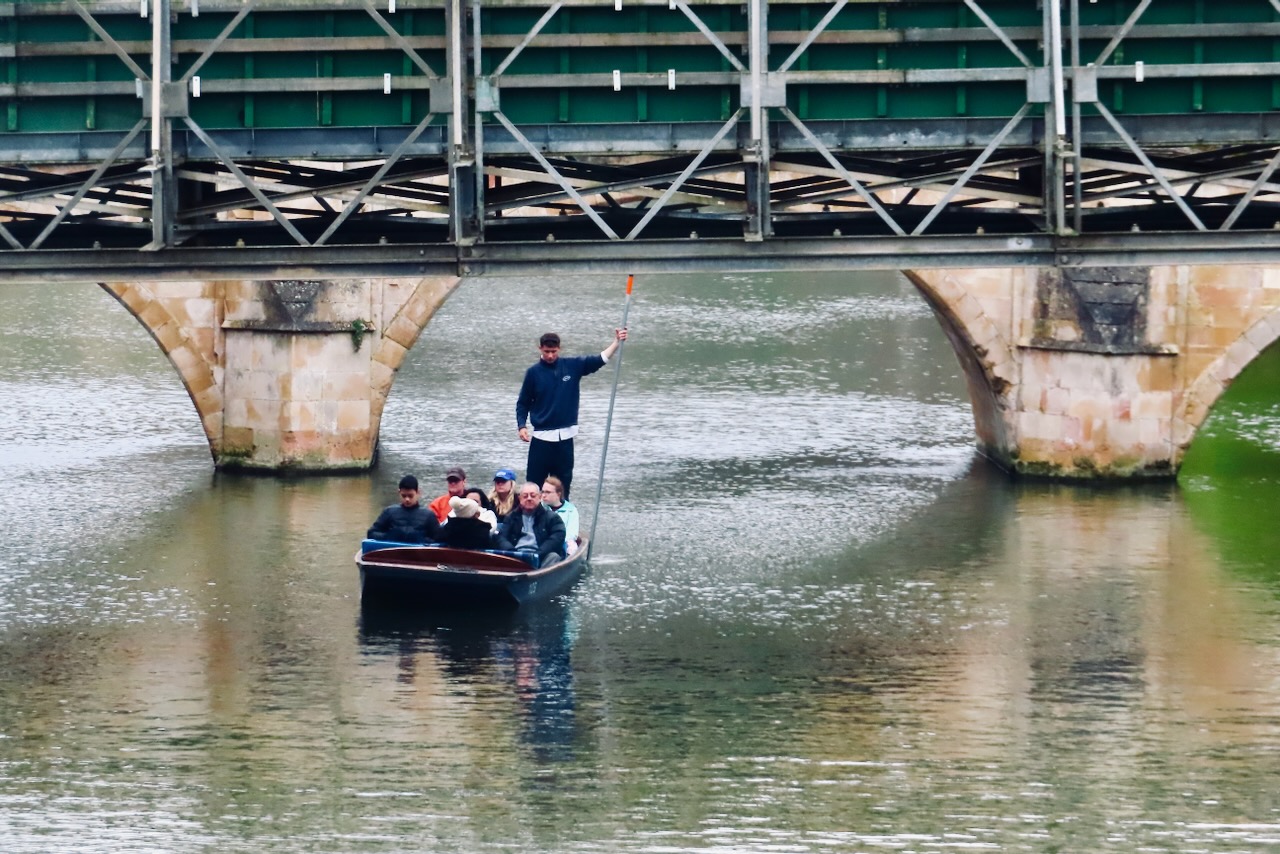
I’m back in Cambridge, one of Britain’s foremost centres of academic excellence, which, clearly, is why I’m here (yeah yeah). It’s proving difficult to present photos of this place that don’t have punts in them — this is the third (after my visits in January 2016 and November 2016 respectively). But it looks a nice way to travel and certainly pulls in the tourists. The metal bridge is something of a harsh contrast but that’s deliberate.
Photographically I still mildly regret not looking out of the window at about 3am on the morning of 2nd August last year and seeing this building aflame. This picture is taken from my house so we’d have got a good view: as it was, I did smell the burning and hear a distant alarm but once my subconscious had determined that none of this was coming from our living room, or similar, I went back to sleep and missed the opportunity. Never mind. The rebuilding is under way, as you can see. I like the green on this shot, which is what caught my eye in the first place.





 Being 42