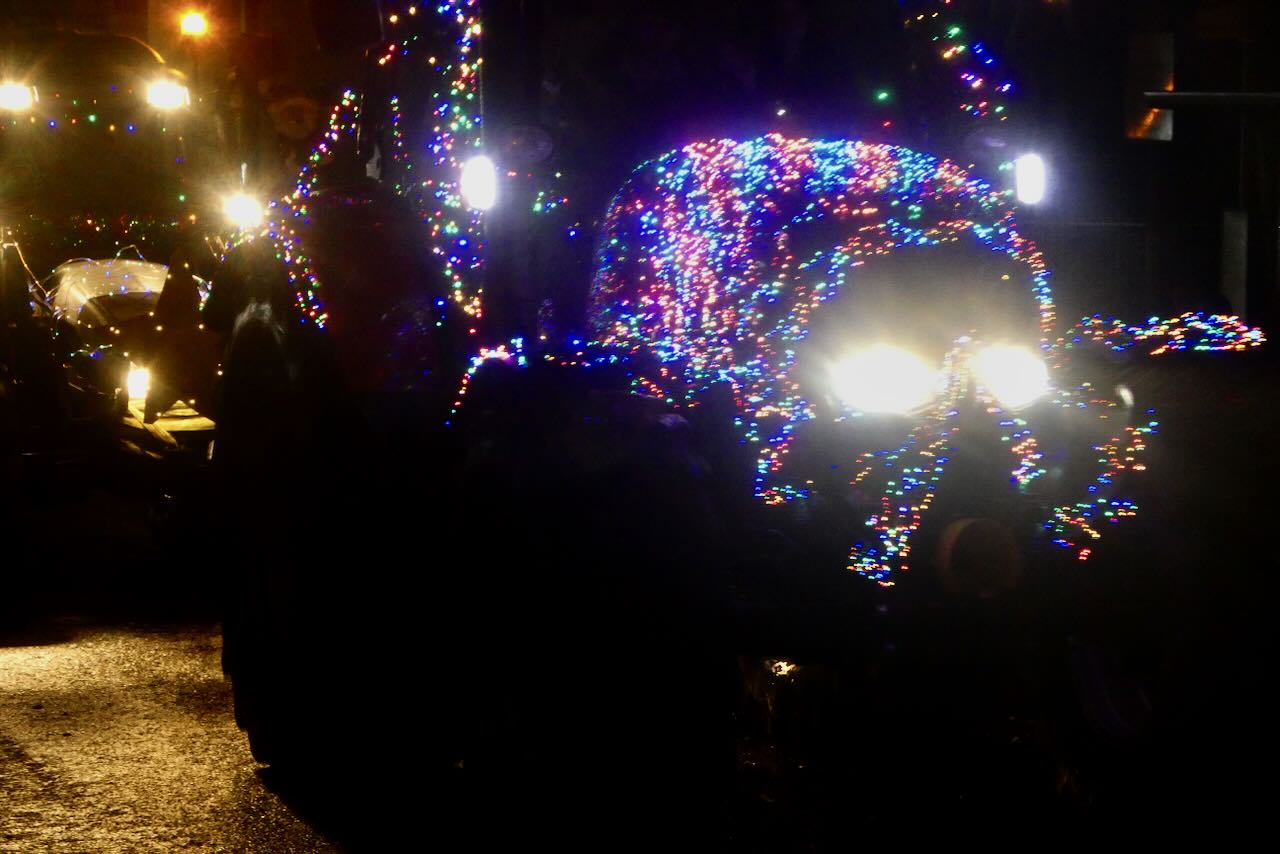
Whatever event was going on in Hebden Bridge Town Hall this afternoon it involved a few dozen identically-dressed elderly gentlemen, weighed down with various medals. By no means all of them had their mobility scooters, but quite a few of them did. Well, good luck to them. I use the shot because I am reminded of the cover of the Dead Kennedy’s Frankenchrist album — it is not to mock.
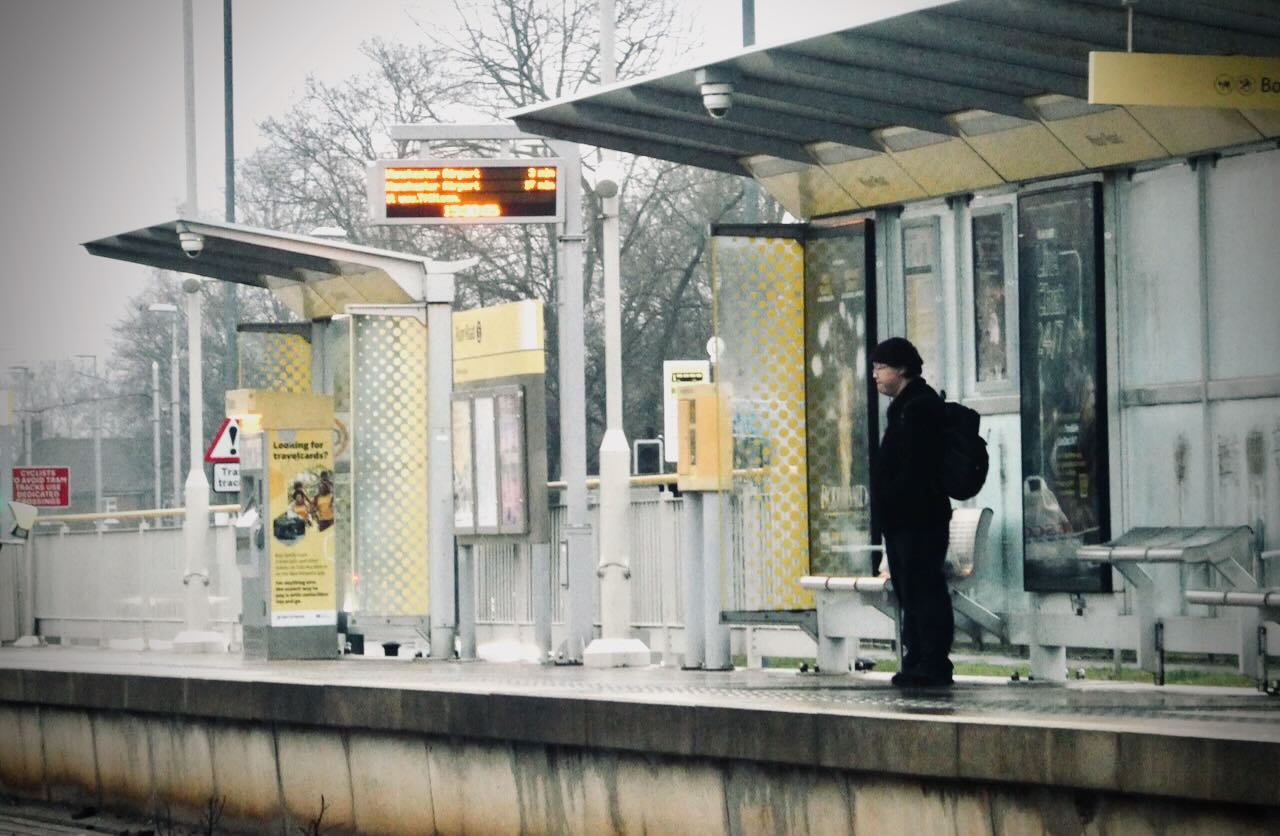
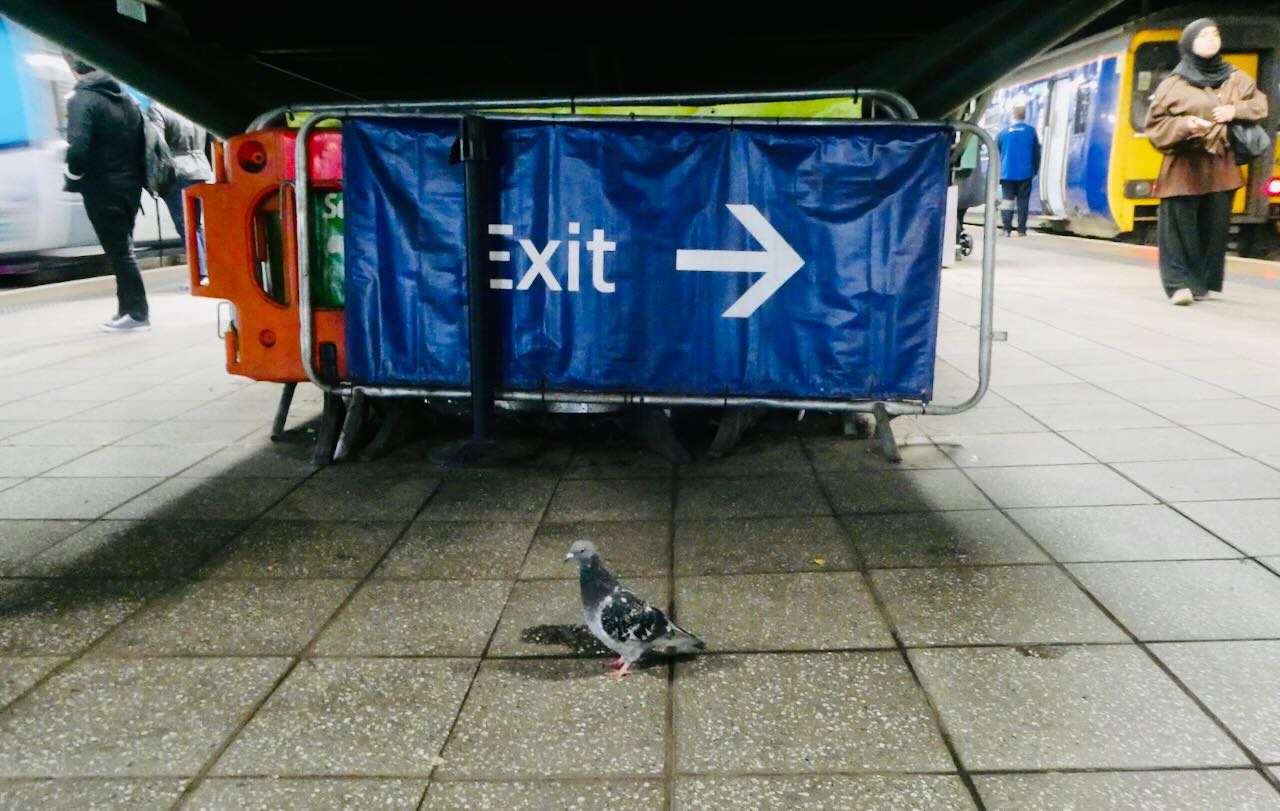
With the main rail line through Huddersfield closed this month — apparently it’s an ‘upgrade’ though that could mean anything — services are being routed along the Calder Valley line and adding further pressure to an already-creaking system. I was not supposed to have 20 minutes or so of hanging out at Rochdale station today, but here it is.
The tower over there has always impressed me — the building used to be a fire station, so presumably this is an observation tower, from the days before 999.
I’ll go with that. In fact I’d quite like this T-shirt, which is one reason I took a photograph of it. As seen on platform 17 of Leeds station this morning.
Day two of the journey home, so a day spent largely behind the wheel. Only at the lunchtime stop, Annandale Water services (it’s been on before) was there the chance for photography. All motorway service stations are places of transience: if anyone stops for longer than 30 minutes, which is about what we managed, I would wonder why. So this little critter shouldn’t be too worried. I’m sure they’ll be back soon enough.
At the start of World War 2, a good portion of the British Navy was berthed in the immense natural harbour of Scapa Flow, the entrances of which were defended by a range of methods including the sinking of obsolete ships in the channels. That these defenses were inadequate was proven when a U-Boat snuck in anyway and sunk HMS Royal Oak with the loss of hundreds of lives. As a result, Churchill ordered the building of the barriers that now bear his name and block off all entrance to Scapa Flow on its western side — though, in a move typical of many public works projects, these were not in fact finished until literally four days after the war had ended. Anyway, the Barriers now act as causeways linking Orkney’s south-eastern group of islands to the Mainland, and the blockships still sit there, rusting away and playing home to the occasional lobster pot.
For those that don’t know, signs like these on British roads indicate one can drive at the ‘national speed limit’, which is no less than 60mph. Anyone doing so on this road, however, may as well presume to end up in the cemetery to which it leads, visible over there on the sea shore. Perhaps the road traffic planners of Stromness, Orkney, have a morbid sense of humour. Or perhaps my using of this photo suggests that it’s just me.
Ever further northward we travel. Only one shot in the near-14 years of this blog has been taken from further north and still been in the UK — that being the one in Thurso on 13/7/25 — but this is a status it will keep only 24 hours. Who cares anyway, Lybster harbour was a tranquil spot on a beautiful evening. Impossible to believe that 150 years ago the herring industry meant this was one of the busiest ports in the country. It isn’t now, for sure.
This is the fifth photo of one or other of the Forth bridges to appear on here, and all apart from one (17/8/2021) have been taken while moving, usually on a train though the first one was an exception, as I was a passenger in a car on that occasion. Meaning none of them have been of the rail bridge: when on a train, all you get to see of it are some close-up girders. Anyway, I am sure this is a terrible photograph in some ways but in other ways I quite like it. It looks like something ephemeral, maybe three stupendous maypoles lined up over the estuary.
Roadworks on Keighley Road continue to increase in both volume and density. Soon the entire street may disappear, collapsing in on itself to form a kind of roadwork singularity, or possibly a new form of matter, which will, while largely inert, occasionally flare up into frenzied and noisy activity at, like, 7 in the morning. Having thereby woken up any sleepers in the vicinity it will then return to its inactive state for the rest of the day.