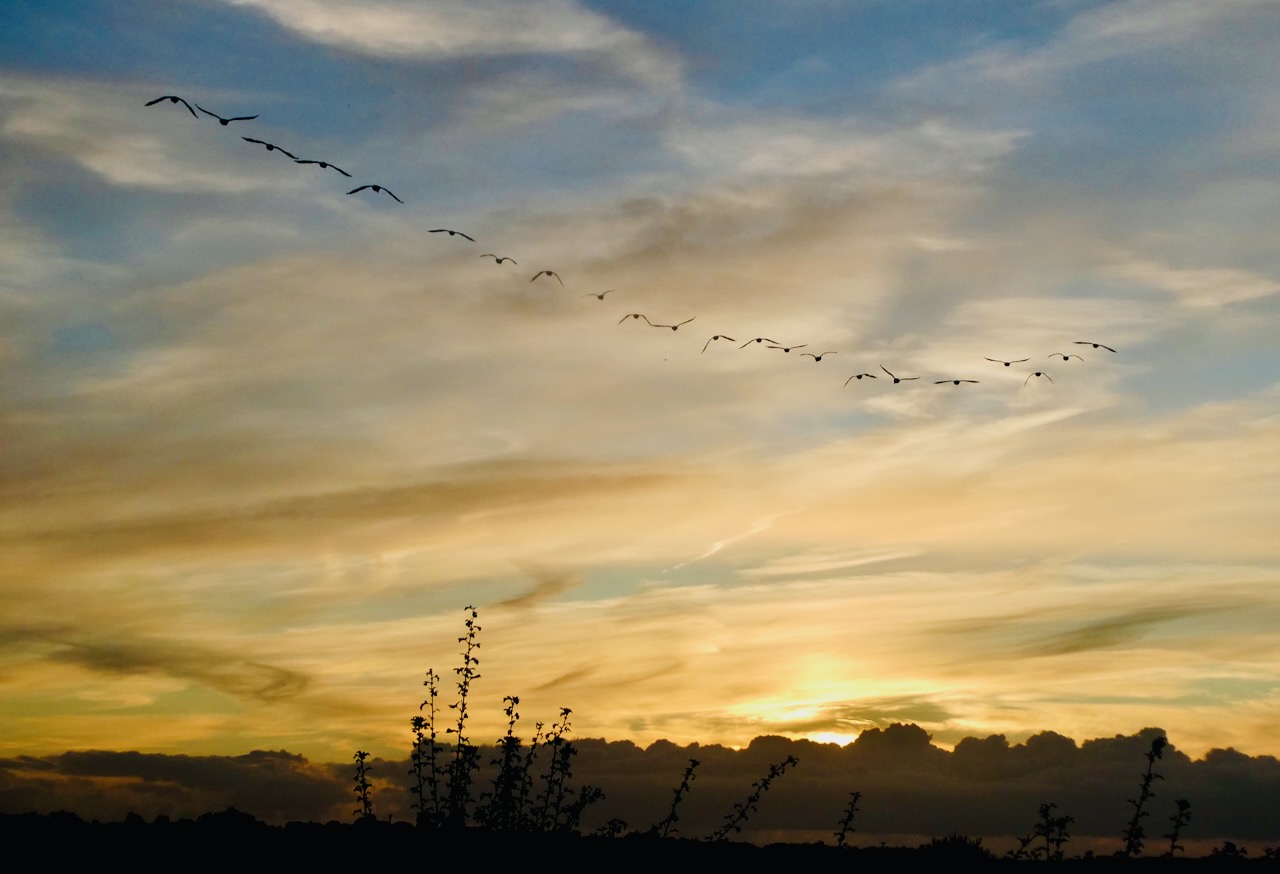
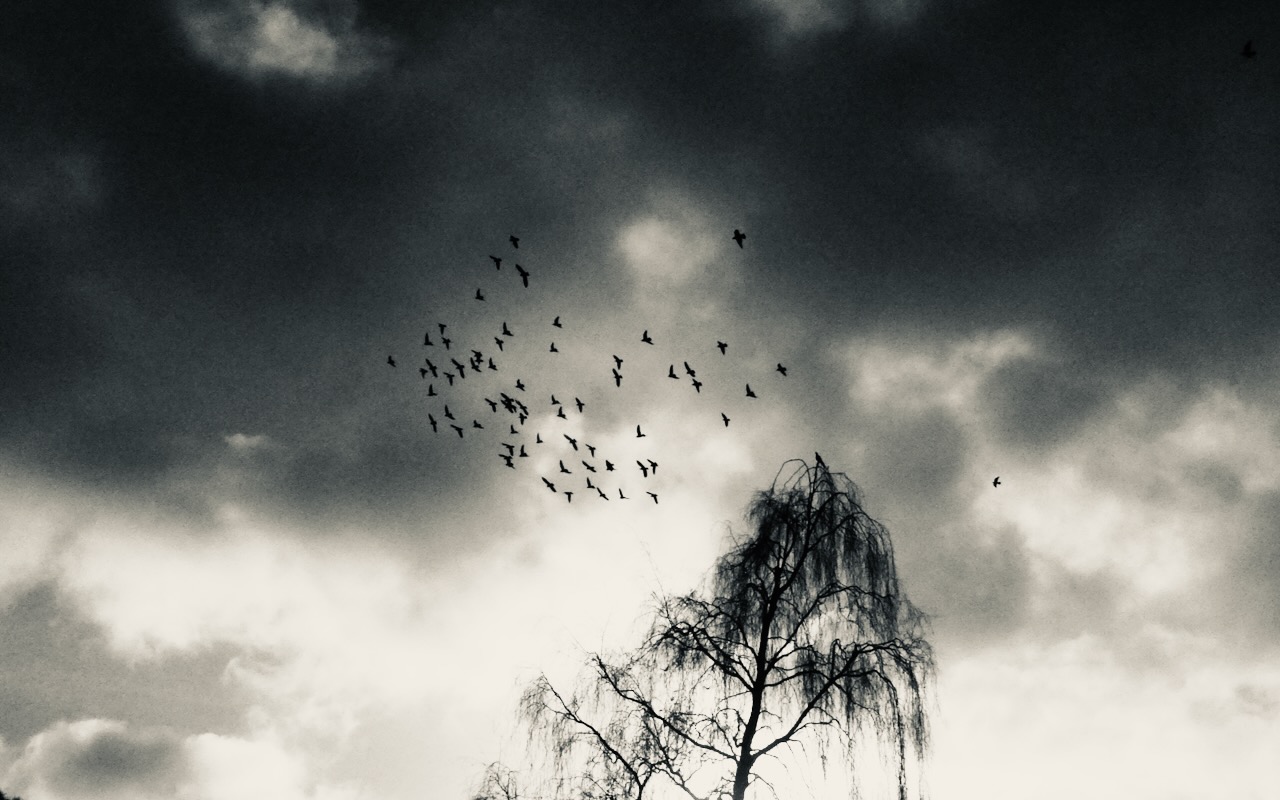
There was a big overflight of geese tonight. They came in waves, sub-flocks of 20-30 at a time (I count 22 in this particular group). Wherever the destination, they were leaving for somewhere else. There’s something a little melancholy about it all — the first intimations of autumn.
I don’t think I have ever seen a brood of ducklings as large as this. Even though a couple of them are only glimpsed on this shot (there’s one right behind the duck, and another mostly concealed in the left-hand group) there were definitely nine of them. No wonder she looked somewhat frazzled: and there was an equally stressed-looking drake in the vicinity too. Still, they’re a good size: quite an achievement in fact.
Incidentally this was taken at Dunsop Bridge in the Forest of Bowland, a few yards from where, on 27/12/2011, I depicted Clare stood in the phone box that is still there, being the reputed “centre of Britain”. That was 4,911 days ago, meaning that Dunsop Bridge now takes over as the place with the longest gap between appearances on this blog. Can things get any more exciting, you ask? Hey, this particular journey has only just started.
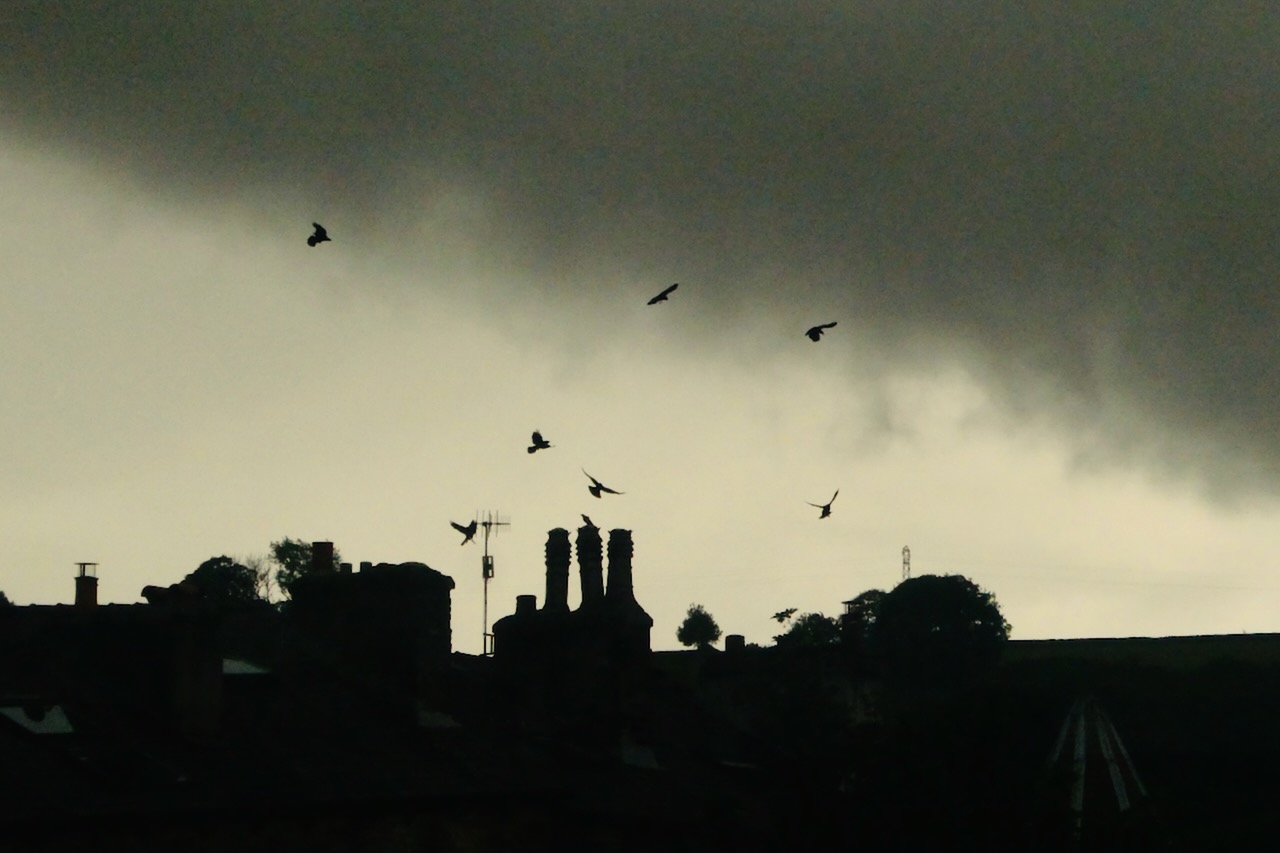
I’m sure birds have just as much of a developed weather sense as do humans. Why wouldn’t they? High winds, for a start, could really screw up that trip they were planning to make to, say, the local household waste centre. These guys may or may not be trying to sort some stuff out before the latest heavy shower comes rolling in, just as we might speed up our journey home from the shops in the face of a cloud like this.
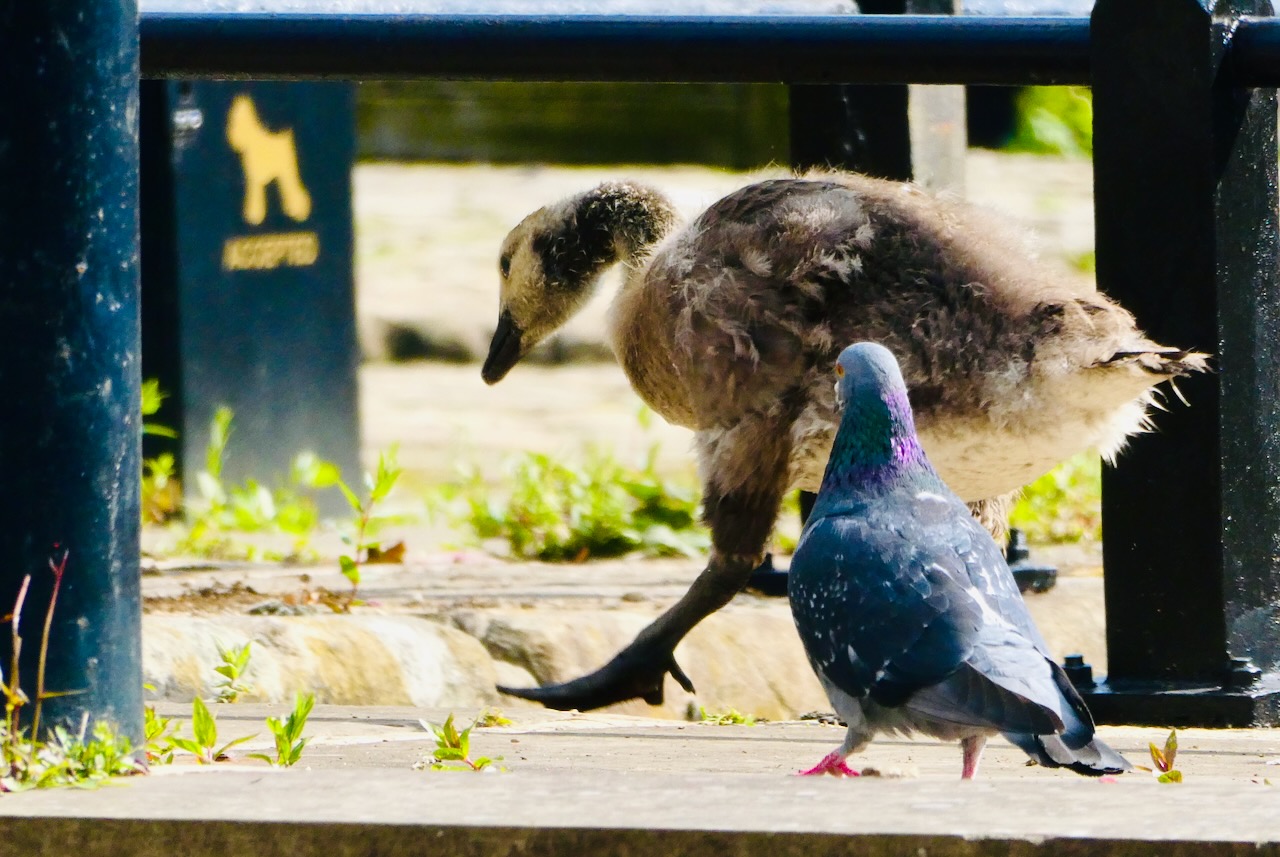
Only a few weeks back the gawky thing with over-size feet would have been an adorable little ball of golden fluff. We all go through an awkward phase at adolescence though, don’t we. The pigeon, meanwhile, is attempting to recruit this new arrival in the war against the ducks, but soon, the goose will realise it is above all that rubbish.
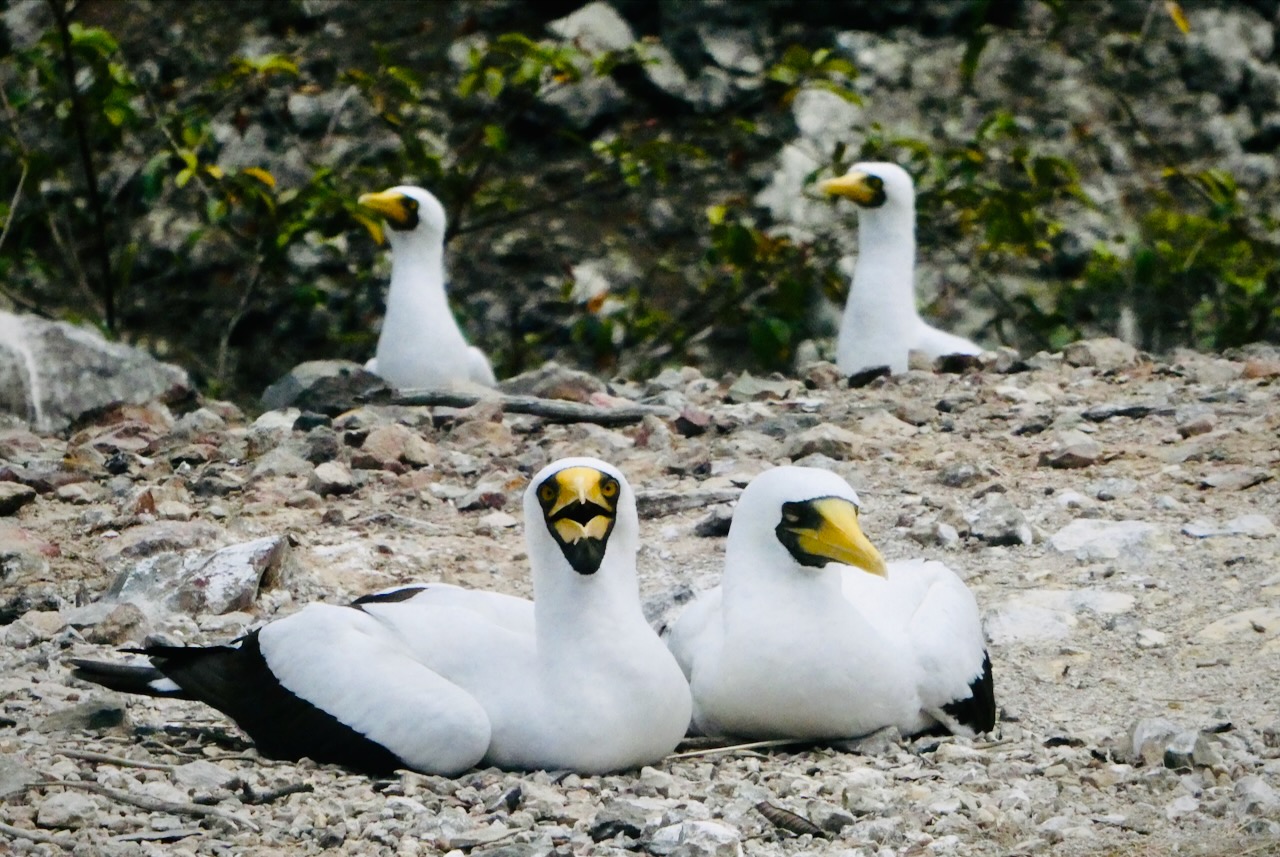
The boobies in question being, of course, the species of seabird (Sula dactylatra), of which there are hundreds, possibly thousands nesting on the Letterbox peninsula, at the eastern tip of Ascension Island. They fly very gracefully but have these big, ridiculous flappy feet and, on the ground, waddle in an amusingly silly fashion. It’s interesting that male and female masked boobies can be distinguished not by their appearance, but by their sound. Males whistle, and females honk. Both noises came out as they watched me pass by, I took the shot, everyone was happy.
Whatever it is that pigeons do to communicate the information that it is time for a collective take-off, they do it well enough, and quite frequently, too. They will then fly around for a couple of circuits, come back to land (or roof) again, and wait a few minutes before doing it all again. Perhaps it’s just training.
My first Hebden Bridge picture in one whole month. It doesn’t seem like the pigeons have changed their behaviour much since I’ve been away: still the group callisthenics, tight circles around a carefully-chosen patch of town. They look impressive enough in black-and-white. Except for the one who’s broken formation, to the lower left.
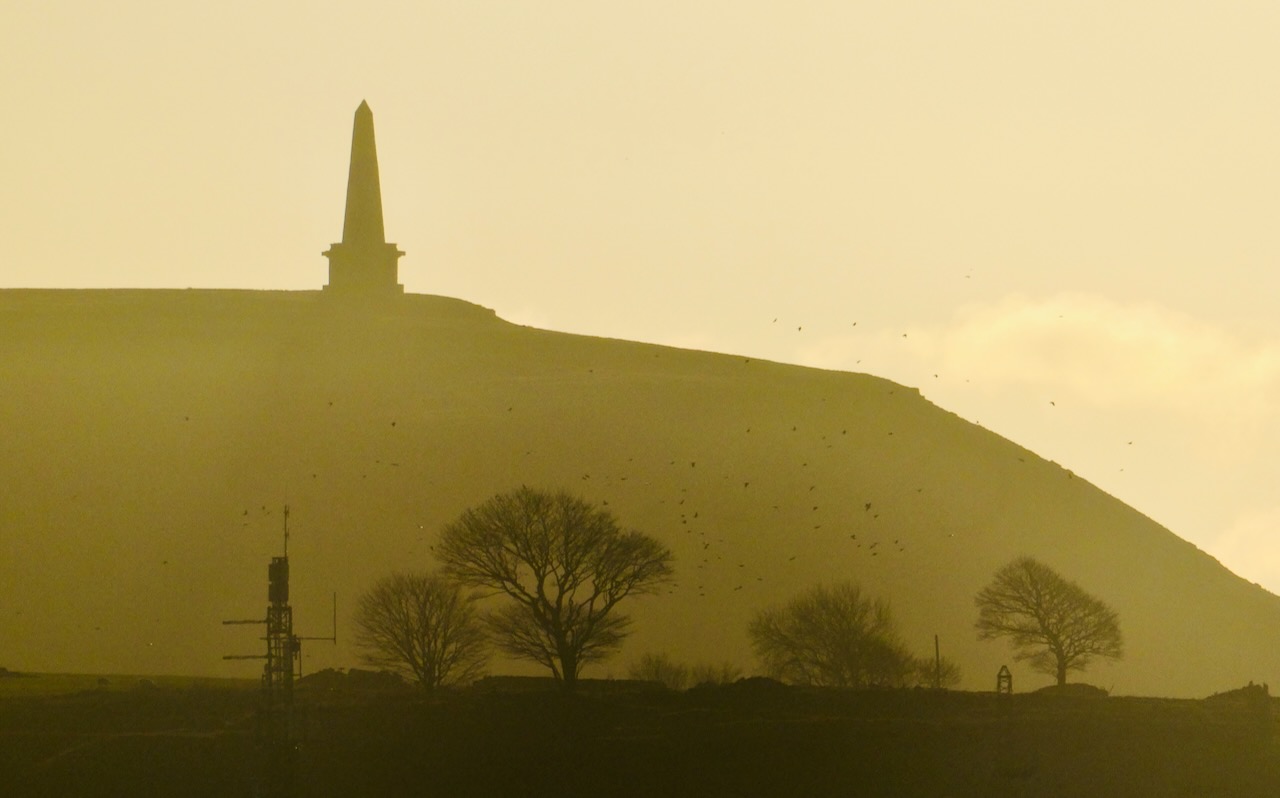
The birds are there, you just need to realise that they’re not grit on the lens. A beautiful afternoon to mark my last day of work until 2025; a shame it is not forecast to last.
In training for the ongoing Pigeon-Duck Conflict (depicted several times on here), Bob completes his latest bout of callisthenics with close supervision from the sergeant-majors. He’ll soon be ready for action down at the marina, where it’s rumoured there are also geese about, so he needs to work on those reaction times.
The colony of Muscovy ducks that used to live around the marina in Hebden Bridge, and peaked at about six individuals, seems to have disappeared — but members of the species have managed to find St Helena, in the middle of the ocean. Why does the one on the right not have the same facial bulges as the other? I suspect, just because it’s younger. They grow their faces over time. As do we humans, of course.