Friday 2nd September 2016, 3.20pm (day 1,835)
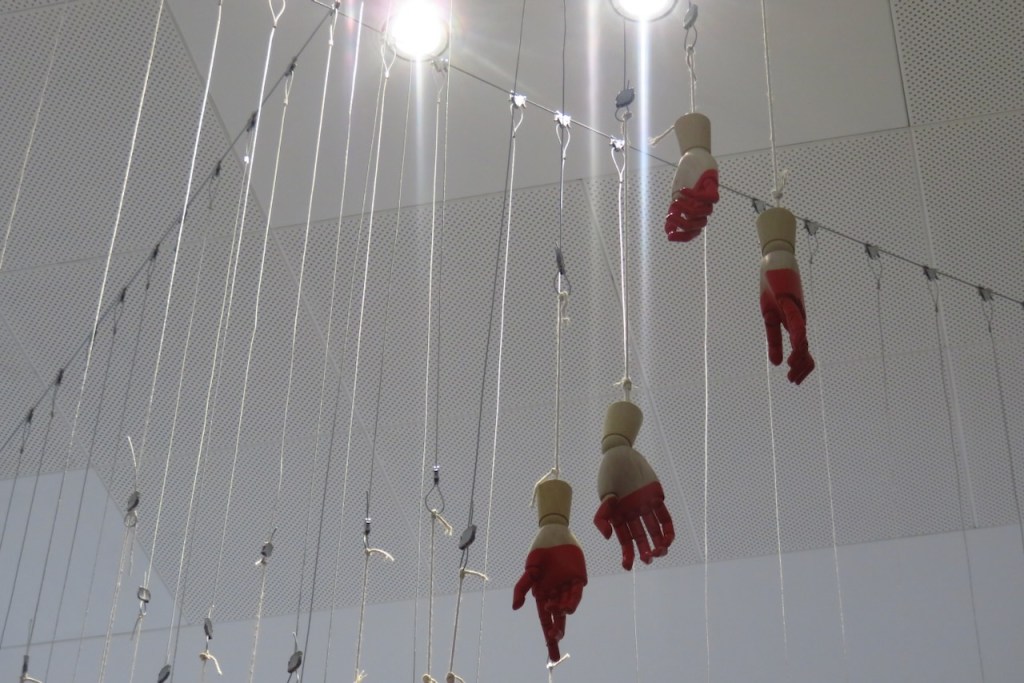
What significance this sculpture has, I have no idea — it currently hangs above the gift shop of the British Library. I guess I should invent some meaning…. but it’s the weekend.
What significance this sculpture has, I have no idea — it currently hangs above the gift shop of the British Library. I guess I should invent some meaning…. but it’s the weekend.
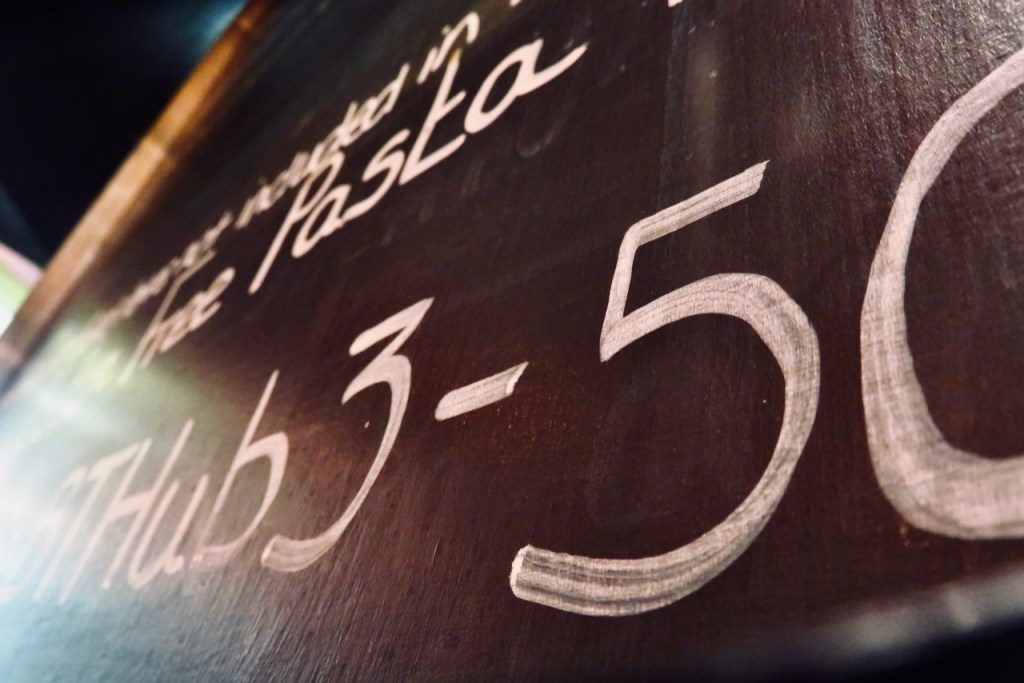
Another rather uneventful day with little to photograph. After a while I determined that I wanted to capture the number five somehow, and did so with this menu board at the restaurant where we ate out in the evening. Why five? Because today marks the completion of five full years of this blog. I started this on my 42nd birthday, 26th August 2011, and here we are, one day before my 47th. So there you are, now you know how many days are in five years (with two leap years)…
When I started I didn’t think it would be easy to keep it going for one year, but after a while this just became an aspect of my daily diary (which has now been going for 33 years). There’s not always something good to photograph but I do my best. I’m sticking with it, anyway — for now it is just a part of what I do.

Spent part of the day in Manchester but there was little to be seen there. I prefer this enigmatic shot for today, which I feel not at all like explaining….

The Great Orme (or Y Gogarth in Welsh) is the limestone headland which rises to the north of Llandudno and was the destination of our visit today, our last day of this mini-break. There are a few candidate photos — the view of the mountains of Snowdonia from the summit was excellent — but while this chosen one isn’t so panoramic, this represents the most interesting element of the day, our visit to the prehistoric copper mines. These were only rediscovered in 1987, at which time it was believed that no metalworking had taken place in Britain until the arrival of the Romans. Archaeologists here proved that not only was copper being smelted at the Great Orme before then — 2,000 years before in fact (4,000 years before the present) — but that this may well have been the biggest industrial complex in the whole Bronze Age world. There are miles of tunnels; our ancestors weren’t sitting in caves eating weeds, these people were engineers, they learned how to do things…. Make metal from rock? Why not?

This structure looks like it might be a tower, but in fact is the opposite, a well sunk into the ground. From the bottom there are tunnels to explore. The well, called the ‘Initiation Well’, can be found in the estate of Quinta da Regaleira, which is in the town of Sintra, an hour or so from Lisbon, and full of castles and palaces where the Portuguese aristocracy used to hang out to escape the heat of the city. Now it’s just full of tourists. Of which, of course, I am one. But that happens now and again.
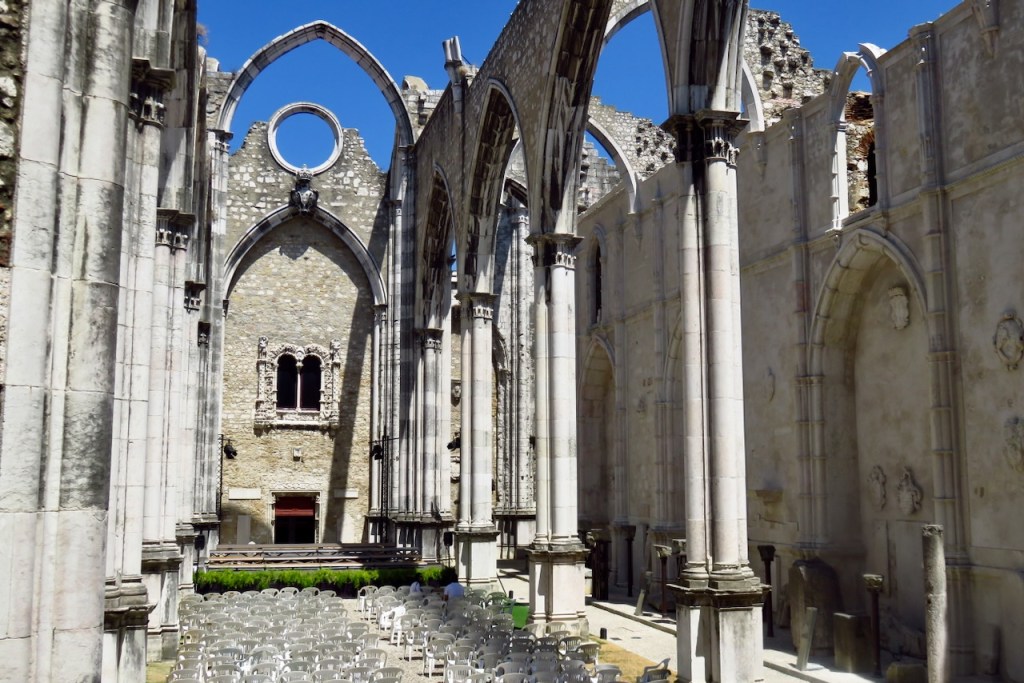
At around 9.30am on 1st November 1755, when most of the population were at Mass, Lisbon was hit by a massive earthquake. The more I hear about this the more it is clear this was one of the most devastating single events in human history. Within a very short time a combination of collapsing buildings, fires, and a tsunami had killed 60,000 people. This building, the former Carmo convent, is one of the few remaining from that date; an attempt was made to rebuild it but not that long afterwards Portugal abolished the monasteries anyway, so it was never finished (or refinished). It now stands as a memorial to 1/11/1755, and the fragility of our existence, or something like that.
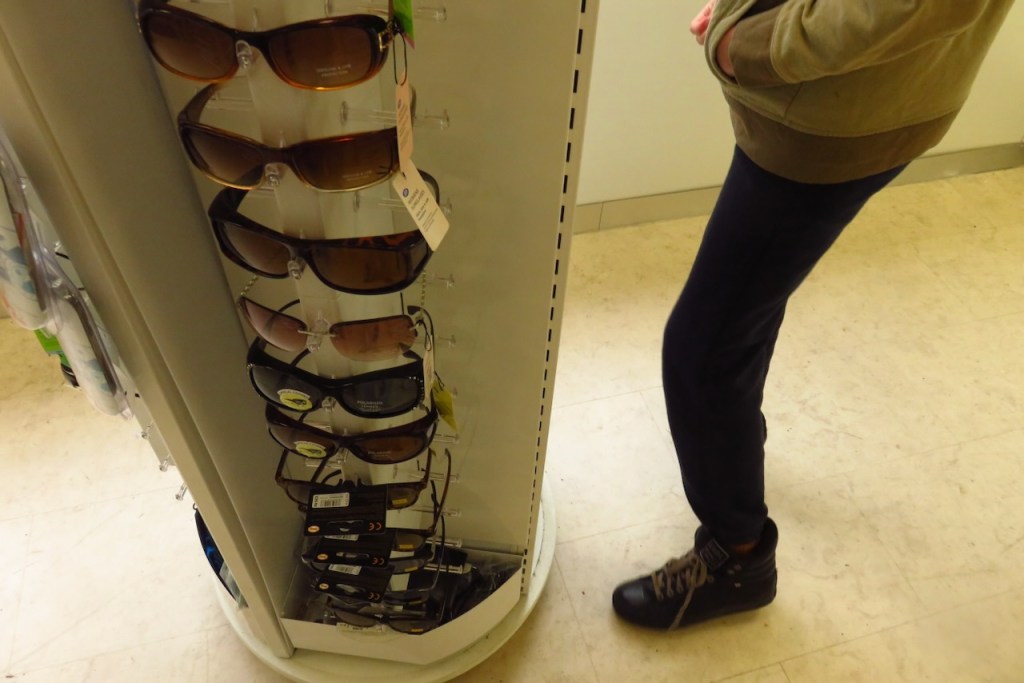
Joe gets on for the second day in a row. Or part of him does — not just the upper half of his body, but one leg seems to have gone missing. He was hoping we would pick him up a pair of sunglasses for the imminent trip to places warmer and sunnier than here.
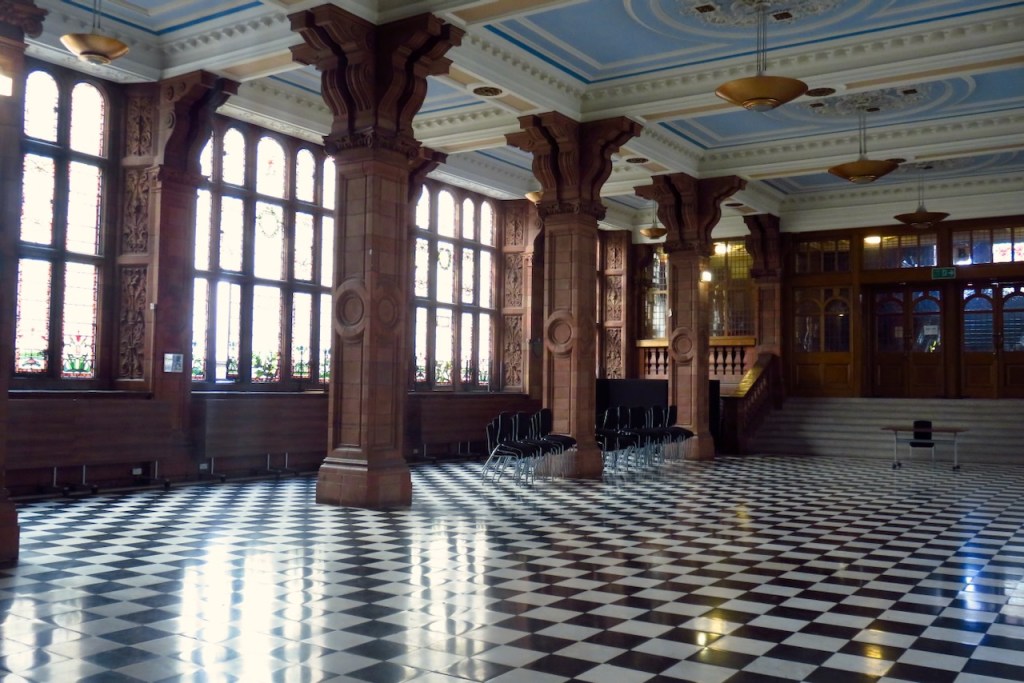
Last day in Manchester, for work purposes, until August 16th. Let’s note this annual moment in time — the threshold of my summer holiday — with a picture of a rather nice room on campus which, grandiose as it is, seems hardly ever to be used.

As made of Lego and pictured at “Bricktastic 2016” in Manchester, to which Joe and I accompanied Clare for our day out today — and this was very definitely her gig (for reasons that might be obvious if you have seen her own daily photo blog). She won the star prize in the raffle, too — a £170-worth Lego kit for a £2 ticket, not bad going. I like this photo of a Lego version of Manchester Piccadilly station thanks to the two guys in the background trying to get their own shot of it. I wonder if I was in the way.
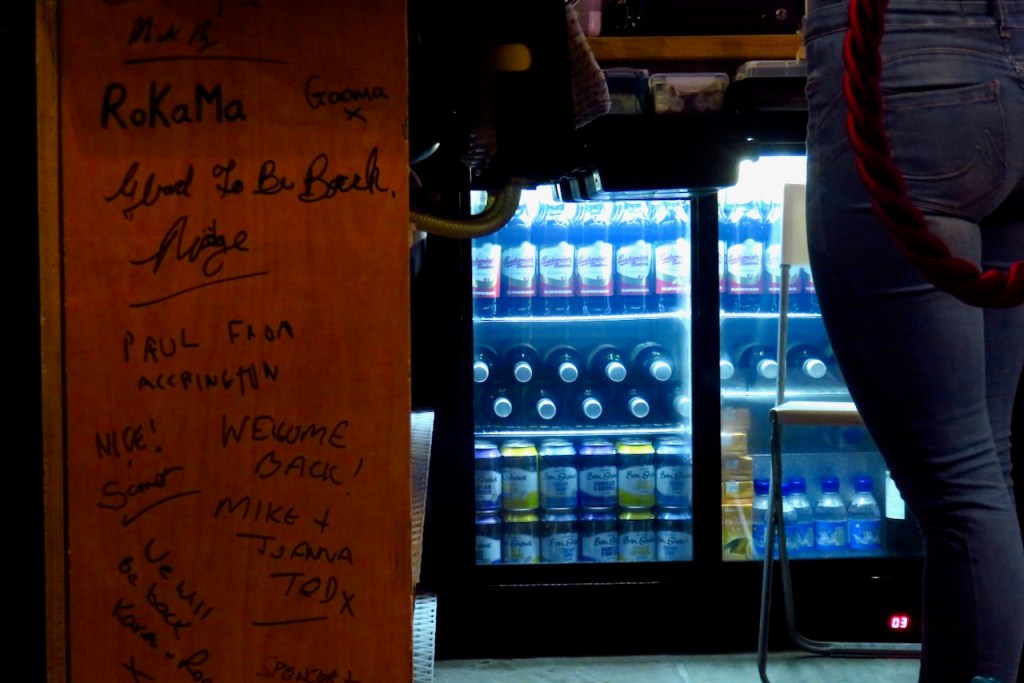
Gradually, the businesses damaged in the floods of 26th December are reopening. This is Calans, a small pub in the town centre that only opened in the first place about a month before the flood. Welcome back indeed, the beer inside is very fine (free advertising).
 Being 42