Struggled to find a particularly interesting photo once I got to the end of the day, but this one will do, with its frisky dogs and imposing architecture. This is the church of Waltham Abbey, in Essex, where I happened to find myself for the afternoon. The last of all the great monasteries of England to succumb to the corporate raiding of Henry VIII in 1540. The church still stands, but all the rest of it is just ruined old walls and gravestones.
St Luke’s, Liverpool, was your basic, big urban church until the night of May 6th 1941, when the Luftwaffe decided to do some remodelling. It has been left like this ever since, as a memorial to all those who died in WW2.
How’s my symmetry on this shot? Hmmmm…. it’ll do. Apart from the barrier on the right-hand side, anyway. These kinds of thing always seem to be there to vex us. The other visitor, I’ll let him off.
In Manchester, but not my usual parts of the city, so a chance to bring some different views to the blog. The statue of the Dead White Male is of Richard Cobden, and until just now I had no idea who this person was so I have read up about him. It sounds as if he was something of a radical dude, campaigning for years for the repeal of the Corn Laws (which kept the price of bread artificially high and impoverished the masses for the benefit of a few rich landowners), free trade and pacifism. So, go Richard. St Ann’s Church, behind, is a rather noble building as well.
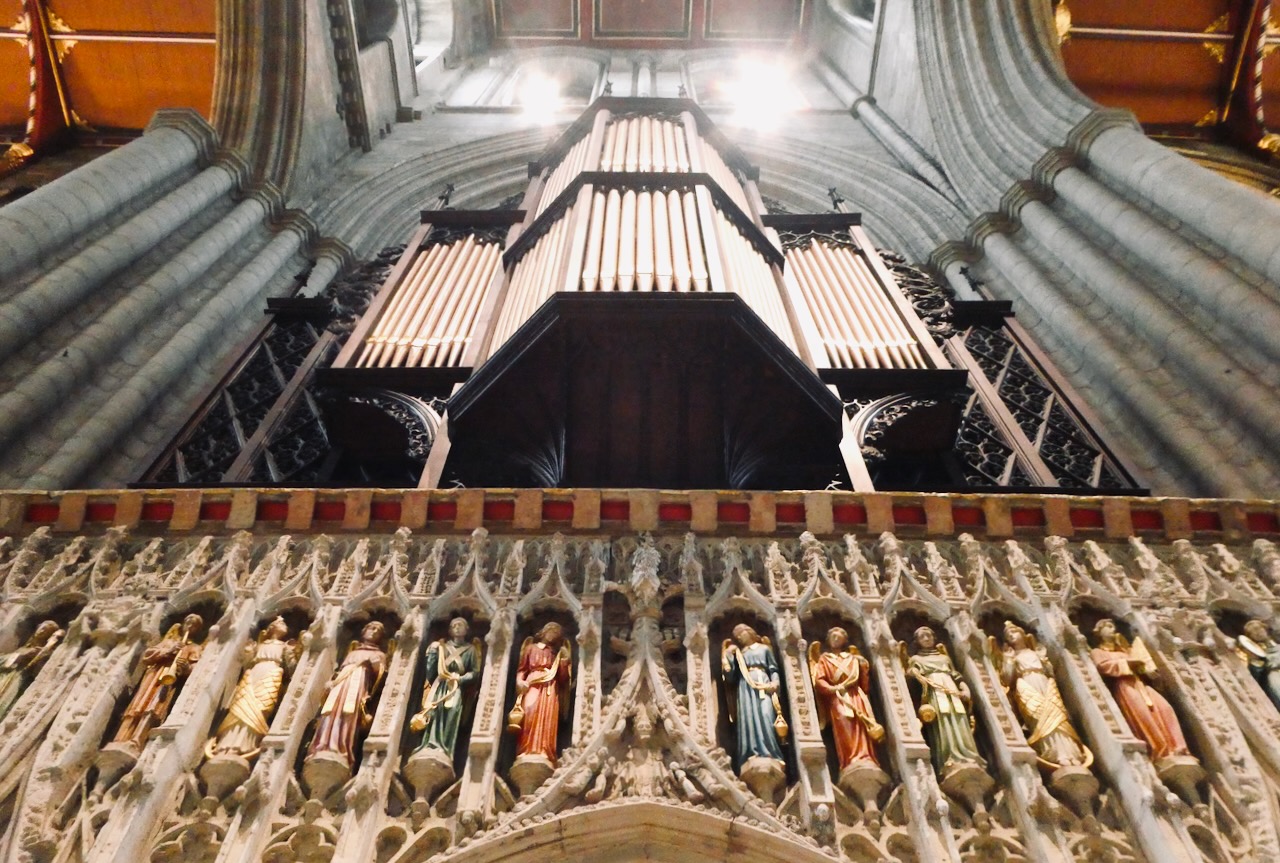
Properly, the Cathedral Church of St Peter and St Wilfrid, Ripon: a big church for a small place. There’s been a place of Christian worship on this site since 672, so 1,350 years. Quite a weight of history, and like most such buildings, you can feel it. This shot of the rood screen and organ pipes above is one where it helps to get the symmetry right, and I think I’ve managed that.
I suppose I am reasonably well-travelled but this is still only my third-ever trip to Spain, the most recent being in about 2007 for a conference (hence before the start of this blog), and the first being in 1991 when I went inter-railing round Europe and went to Madrid and a couple of the cities in the south. But I never visited Barcelona, and Clare hadn’t done so either, and so when we were thinking about a destination for an Easter break, this was suggested and so here we are.
When in this place, everyone comes to see this building, don’t they? But I’m not sure I actually like it. It’s fantastic, unique, for sure, but it’s also somewhat mad, excessive, lacking in grace and beauty (something not true of St Basil’s, which could also be accused of excess). The other Gaudi buildings in the city are more attractive. It’s just a personal opinion based on a quick first impression, so don’t listen to me though. I suppose that one indication of the impression is that the cranes poking out of the top look at first like they may be a deliberate part of the design. It has been under construction for 140 years now, and still isn’t finished. Heaven knows what might still be to come.
Almost every time I am on campus I pass by the front of this building — the Holy Name Church on Oxford Road. Today saw a rare excursion around the back, and thus a chance to inspect its adornment of razor wire, a deterrent you’d think a consecrated place could do without. But clearly divine intervention is not something that puts off the lead thieves (which I assume is the point of all this).
St. Bartholomew’s Church in Ripponden is a fine looking building in its way, and its graveyard an atmospheric and photogenic spot — but someone really needs to cut the grass.
The other side of the Mersey, that is. Hence, on the (recently updated) stats this photo counts as one in Birkenhead, not Liverpool. But Liverpool is what you see here, including both its cathedrals: Catholic (a.k.a. “Paddy’s Wigwam“) on the left, the Anglican one on the right.
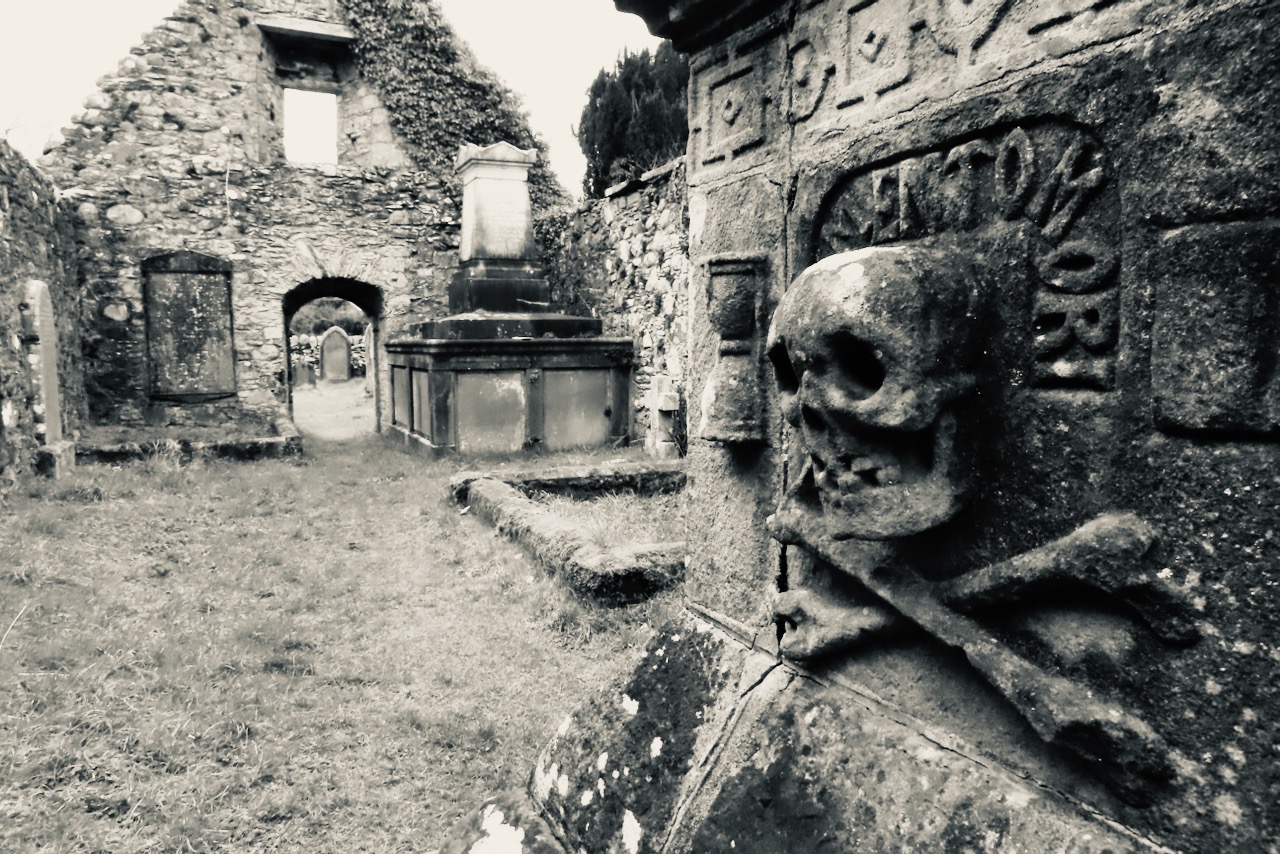
A brief stopover on the way home from Newton Stewart. If I was filming a classic 1970s British horror movie in the Dumfries and Galloway region, and I wanted an abandoned church as a location, I’d come and use Anwoth’s, just as did the makers of The Wicker Man. (See this page.)
11 different locations in 11 days — Manchester, Burnley, Brighouse, Mytholmroyd, Leeds, Hebden Bridge, Huddersfield, Carlisle, Polbae, Glen Trool and Anwoth. That’s the second time there’s been such a long run of variation in place.
The hoped-for walk duly happened — leg 6 of the Calderdale Way was completed, with Clare, over four months after the last one. But we are getting round, and somewhere just before this shot was taken (from Norwood Green, a village on the outskirts of Halifax) we turned generally to the west and started heading back home. There are a couple more days’ walking to do before it’s finished, at some not-yet-determined future date.