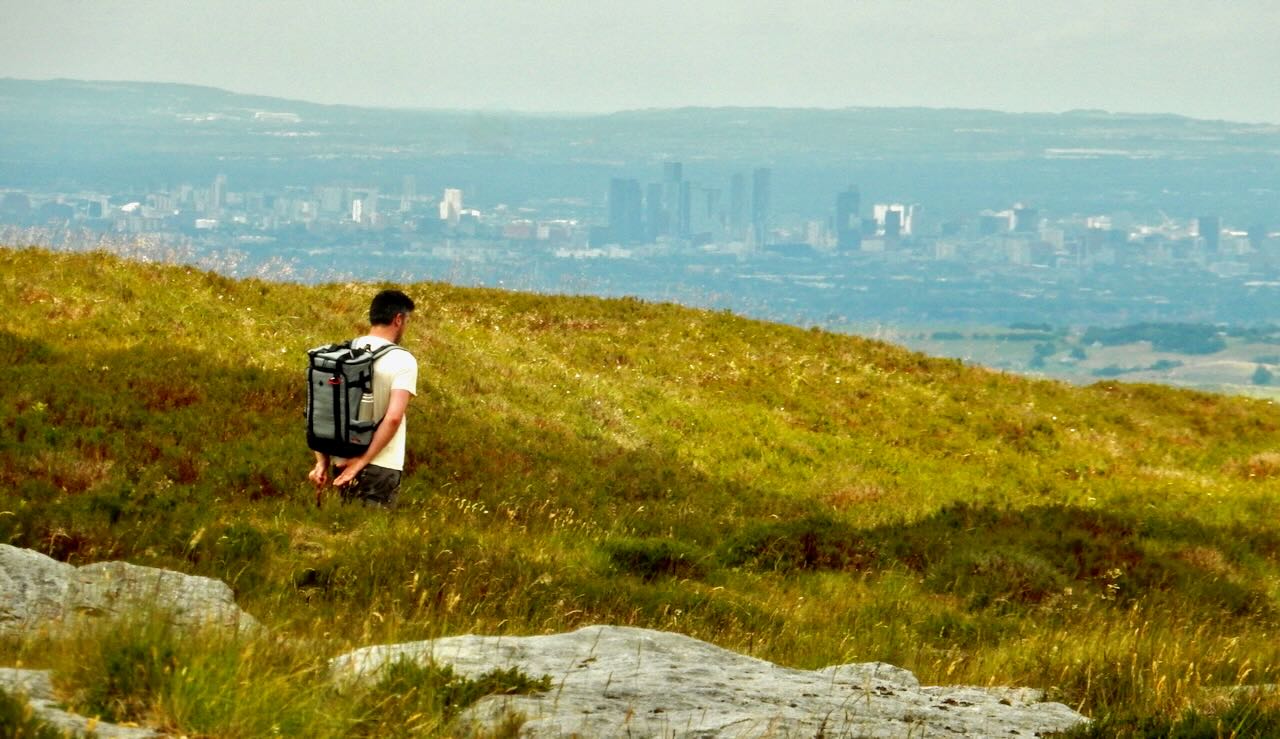
Well, it’s somewhere over there, anyway. But far enough away to be mostly out of mind. Better and more uplifting things were to be found today on the summit of Kinder Scout, in the Peak District; you can read more about this on my other blog.
Most things in Norway are expensive. Public transport, however, is not one of them. Our bus back to Tromsø airport this morning cost 50 krone each, which is about £3.50, and for a 90-minute ride through stellar scenery that is undoubted value for money. Farewell to this very beautiful place: I hope it is not 2032 before I return.
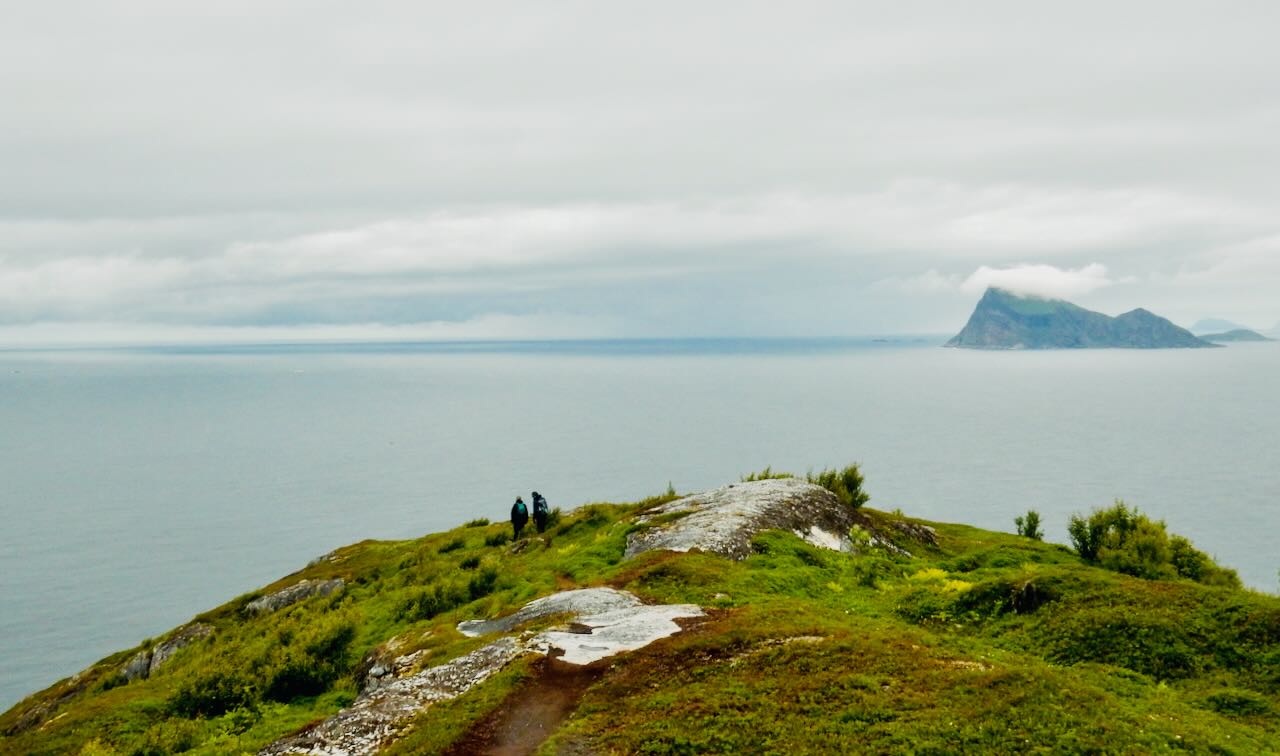
Climbing to the summit of Hillesøya, the sibling island to Sommarøy, made for some needed exercise in the morning, for me, Clare and the two hikers you see here, as well as a bunch of others who hauled themselves up its rocky and awkward slopes. Still, it’s undoubtedly an easier walk than Håja, in the background. This pointy little island apparently inspired the shape of the ‘Arctic Cathedral’ in Tromsø, which can be seen on the left-hand side of the first picture I took of the city back in March 2017.
One full day to go here, and you’ll probably be seeing another landscape tomorrow — but there are reasons for that.
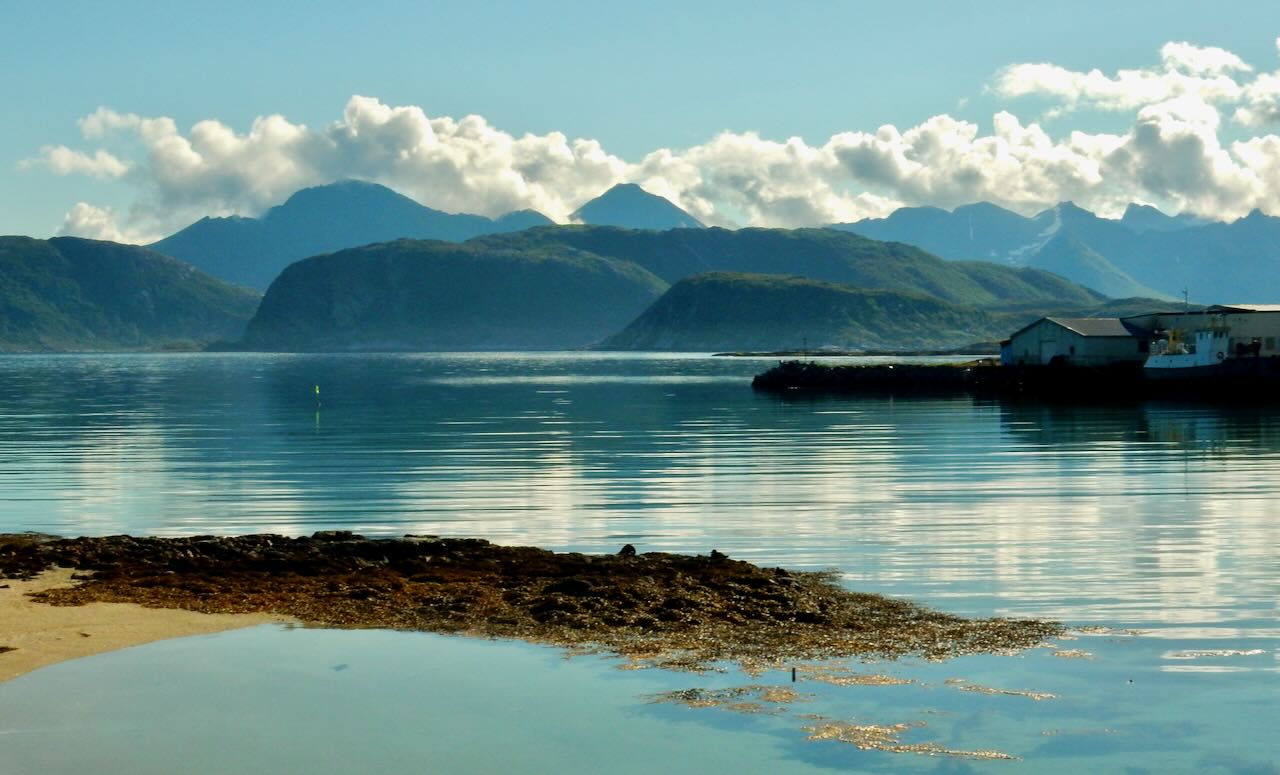
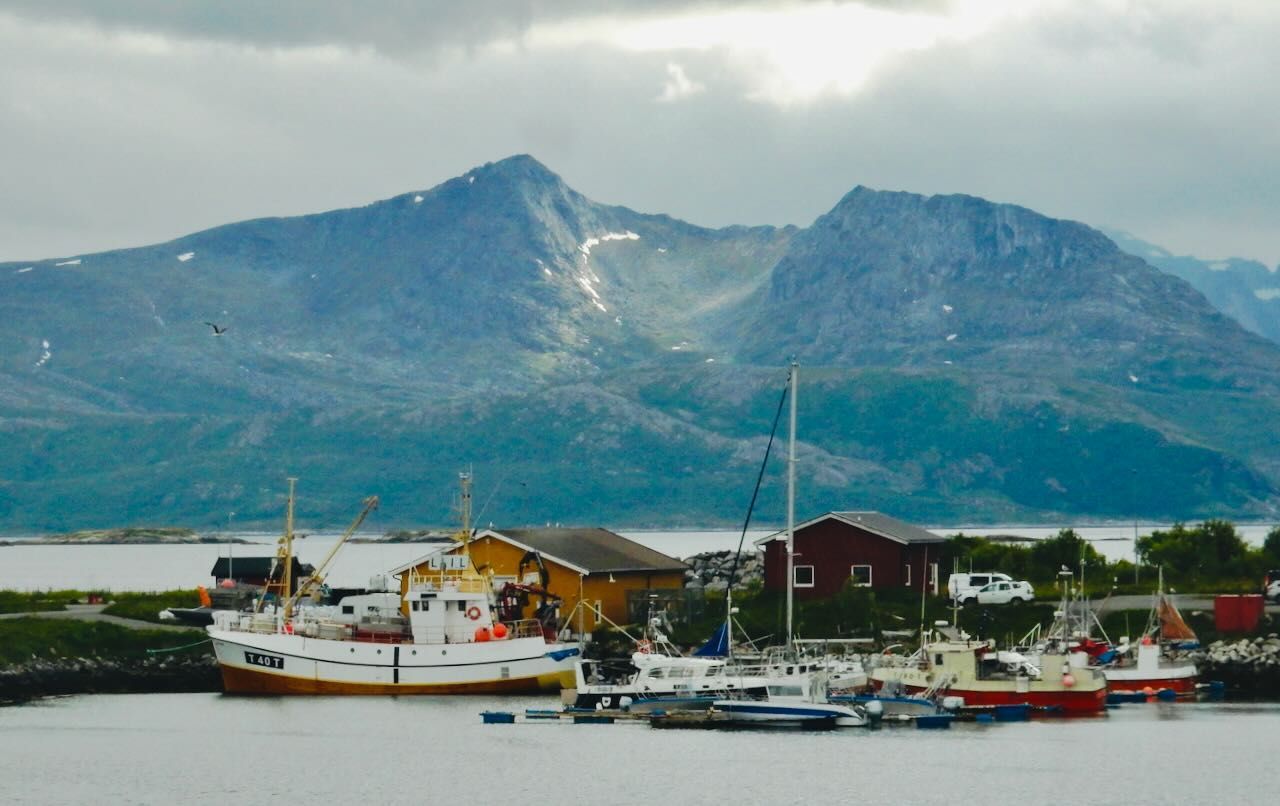
Time to get out of the big city (well, Tromsø) and out into the countryside for the remainder of our time here. The name of Sommarøy means ‘Summer Isle’, which is appropriate for the time of year, but not for today’s weather, which certainly reminded us that we are at 69º 37′ N. On the other hand, who doesn’t like a Wicker Man reference. Somewhere over there a policeman may or may not be landing his seaplane on the loch, sorry, fjord and dropping by to make inquiries about a missing girl. OK, we are in the real Norway, not a fictional Scotland, but the scene is reminiscent enough.
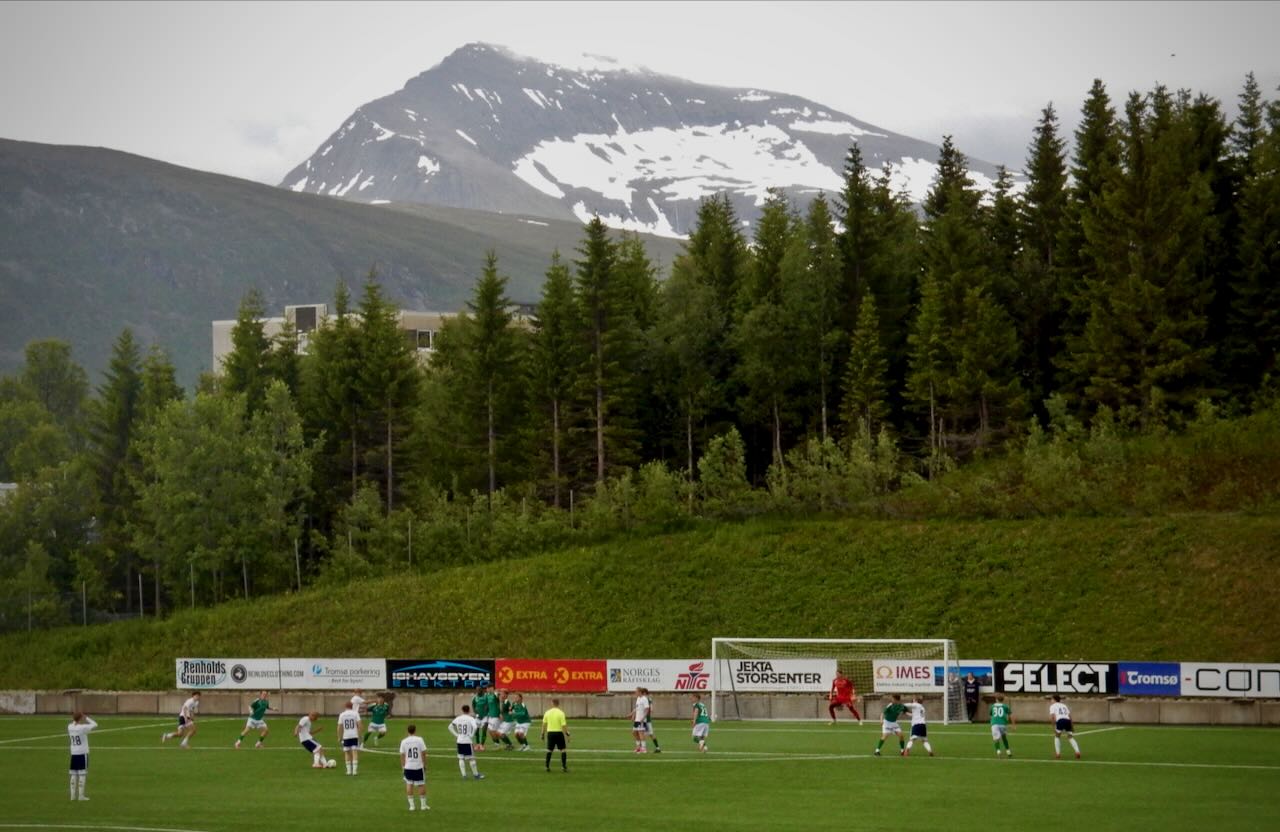
Seems like an adequate combination of two of my more favoured recreational pursuits. In the background, Tromsdalstinden, the summit of which stands at 4,055 feet (1,236m) above sea level and which I hauled myself up on 30/9/2017 — in weather that was a damn sight warmer than today’s ‘Midsummer’s Day’ incidentally, as the snow evidences. As seen from the ground of IF Fløya, the green-clad players of whom are defending here, but they needn’t have worried: they were already 2-0 up at this point just after half-time and went on to win 4-0.
Incidentally, I make this the 100th Norway shot to feature on this blog.
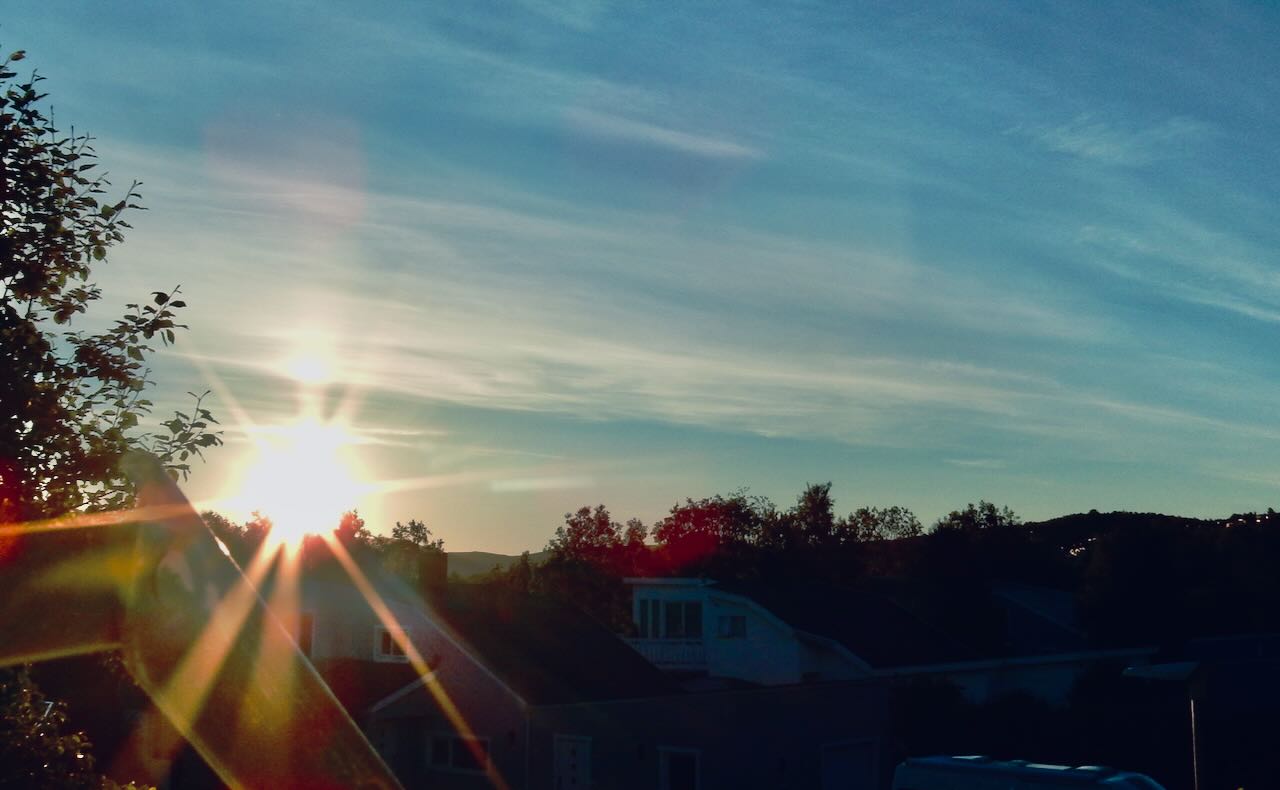
I was in Tromsø at this time of the year in 2017, so well north of the Arctic Circle this close to the summer solstice. But it was cloudy for that entire trip — as you can see from the linked picture — so I never saw the actual shining Midnight Sun (capital M, capital S) back then. But tonight — here you are. It’s still getting low, but it is, defiantly, not setting. We have several days of perpetual daylight to come.
Of course it could be a much better picture but then again, surely that is true of all shots where one points a basically inadequate camera at a big ball of flaming helium, however far away it is. Comfortably the latest picture in any given day to appear of all the 5,411 so far, and it may well retain that record until the day I die. ‘Cos when I am normally up at this time? Not often.
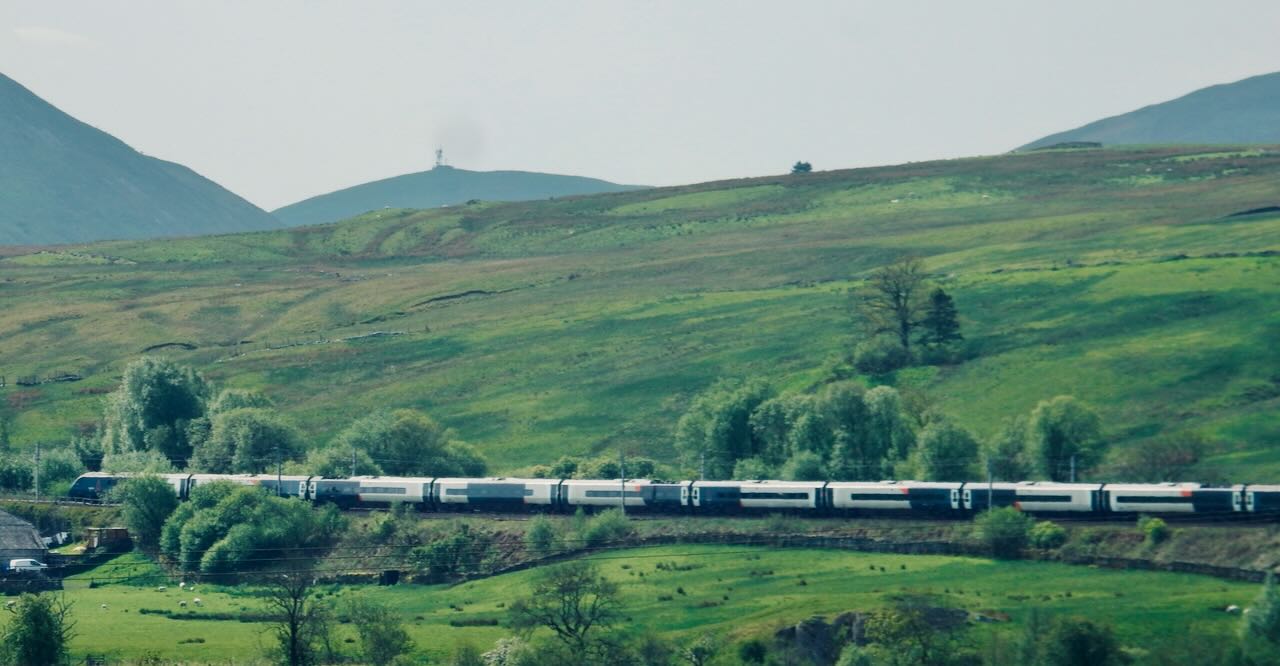
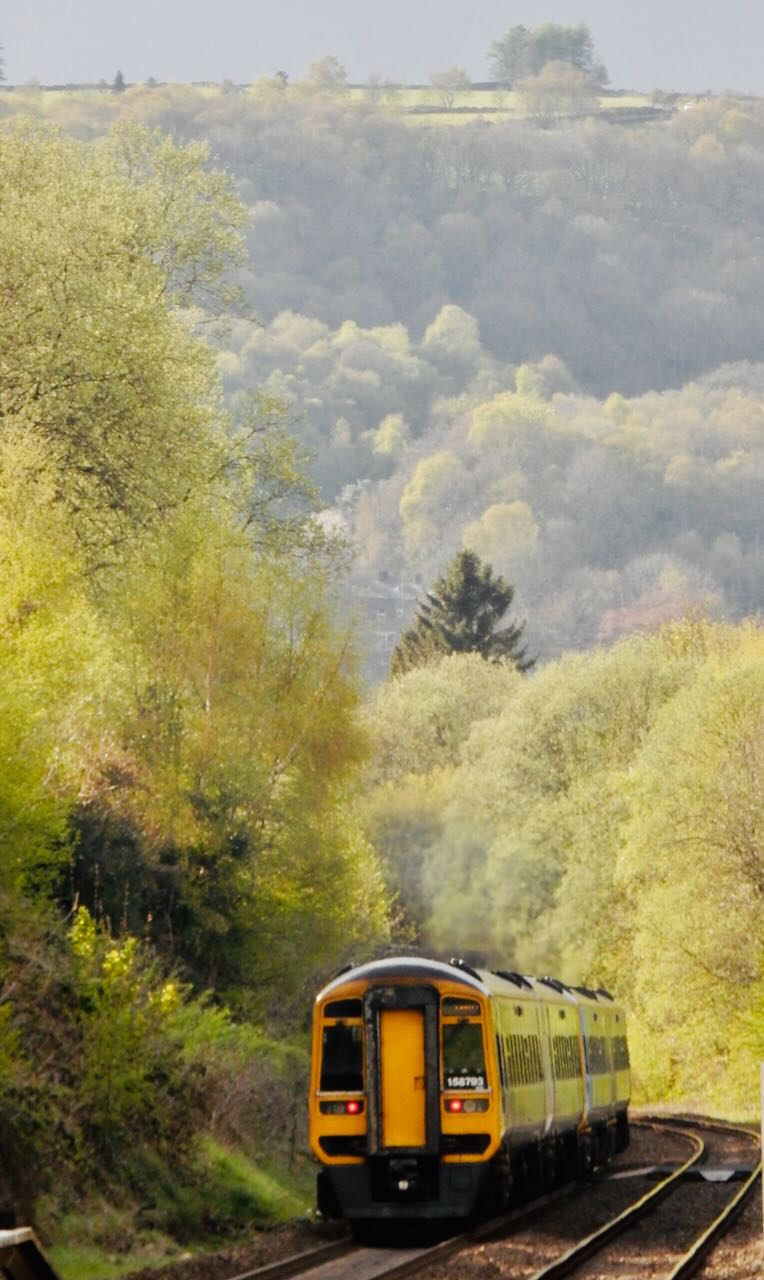
My day was spent driving to Scotland. This took at least an hour longer than it usually does thanks to an excess of traffic around Edinburgh, of which, of course, I was a component part. Being whisked north by train instead does appeal but there are advantages and disadvantages to both modes of transport. (Anyway, the train pictured is travelling south.) As seen from Tebay services on the M6, a frequently-used stopping point on this particular journey — though not for rail passengers.
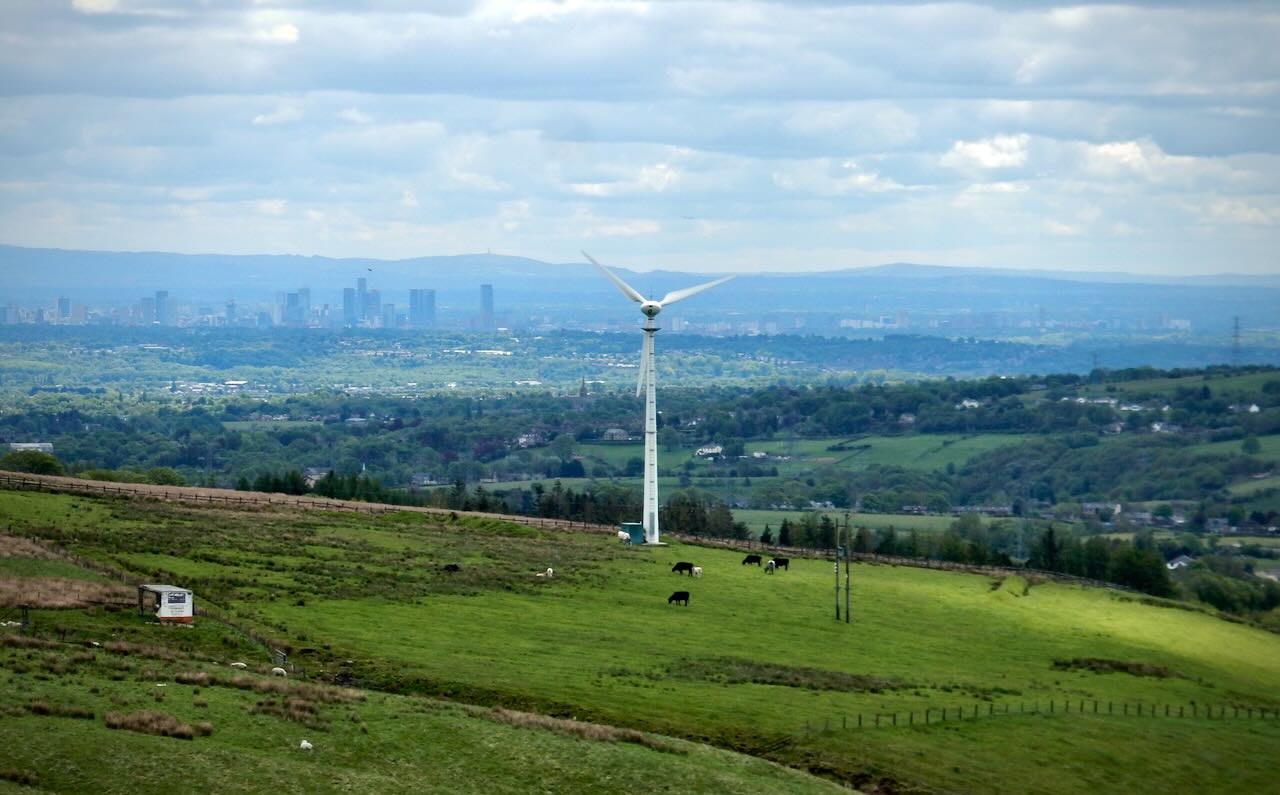
This is the view from a cattle grid at the end of Crowthorn Road, above the village of Edgworth, passed on my latest County Top walk (see my other blog) — a good walk with decent views, as you can tell. That’s definitely Manchester over there. There is one thing I would remove from this composition: and no, it’s not the wind turbine.
Off trundles the 17:10 to Wigan Wallgate — more-or-less on time today (in fact the trains have behaved remarkably well so far this year, at least by Northern’s standards). It’s a bit of a shame about the platform appearing in the corner but, believe me, this one was cropped as carefully as it could be without losing essential elements.
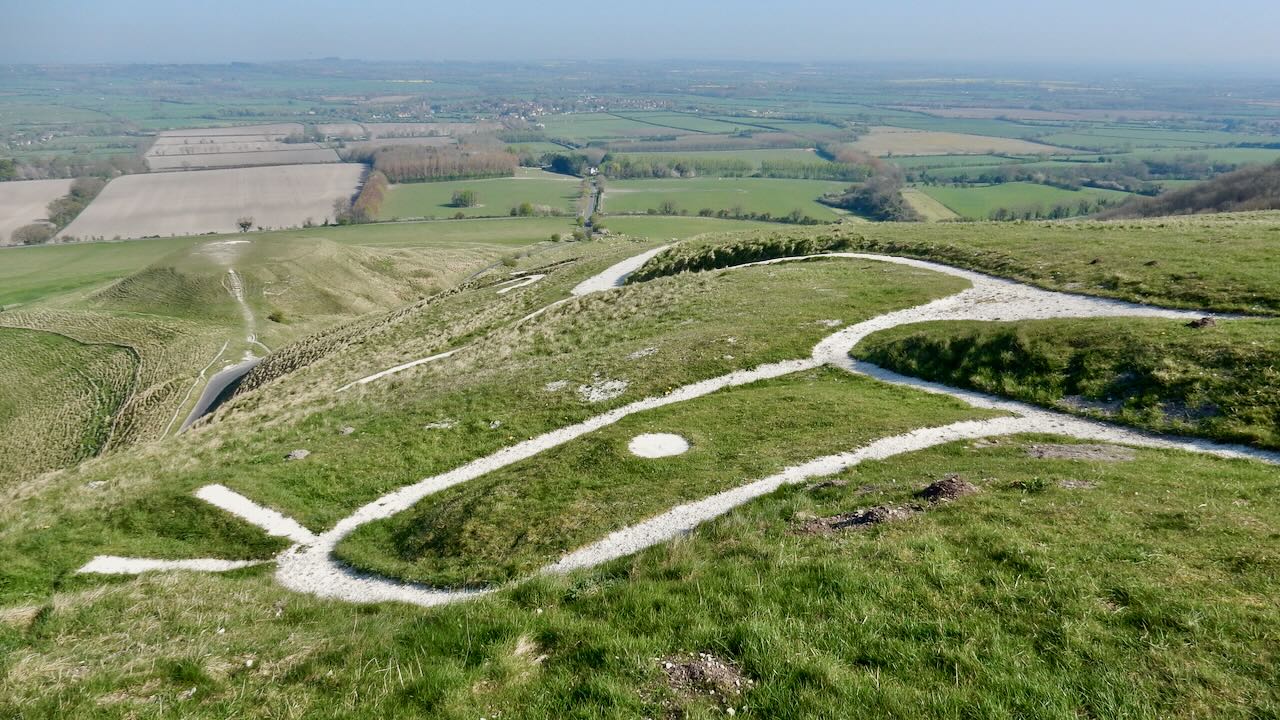
The Uffington White Horse is 360 feet long (110m if you insist) and may be over 3,000 years old. Most of the hill figures carved into the chalk downlands of southern and eastern England are modern imitations but this is the real aboriginal deal. Like most art, it’s designed to be seen straight on, not at some oblique angle from just above its top right-hand corner. But it’s still mighty impressive. Whomever it was first dreamt this up and then managed to organise its production — I say, good for them.