Sunday 4th May 2025, 5.00pm (day 5,001)

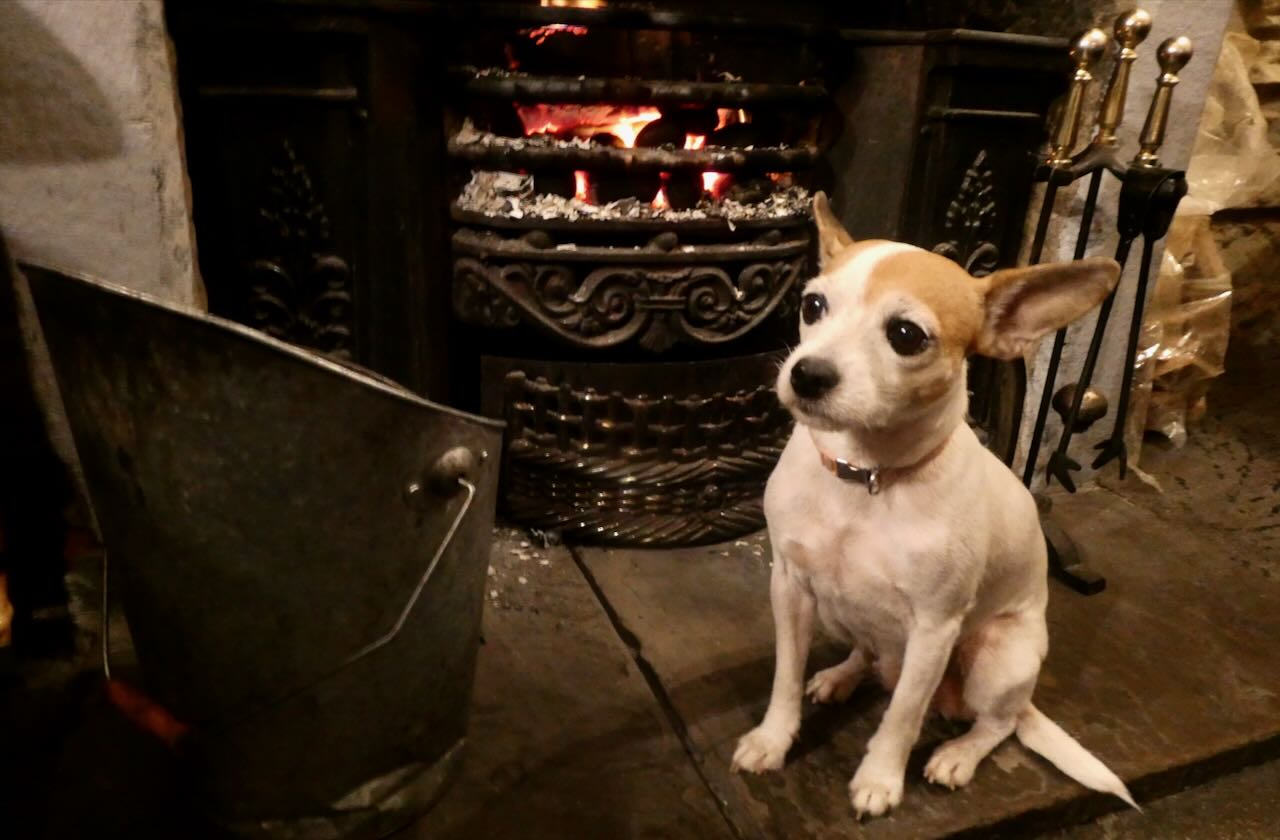
“If I stare at him in the right way, perhaps some of the food will leap off the plate.” It didn’t work though, Milo. I’m immune. (Well, maybe I gave him a bit later on.)

“If I stare at him in the right way, perhaps some of the food will leap off the plate.” It didn’t work though, Milo. I’m immune. (Well, maybe I gave him a bit later on.)

Going on the number of plumlings that currently festoon the tree, I predict that come around late July, the whole thing is going to fall over. Should it stay standing, even 2023’s glut (forty-four pounds of fruit) may be surpassed.
Hello, it’s day 4,999. I’d better not forget to get the camera out at some point tomorrow.

The weather has been pretty good for some time now and things seem to be emerging earlier this year, nature-wise. It feels we should be well into May already, but that month doesn’t start yet for two more days. The dandeliion clocks are heavy with seeds, and an explosion is surely imminent.

Red kites (Milvus milvus) were nearly extinct in Britain at the end of the last century but in the 2000s, thanks to some serious efforts on behalf of conservationists, have made a remarkable recovery. If you are aware of the place you might not think that Luton would be one of their strongholds, but that is where this picture was taken, just on the edge of that town. There were a number of them gliding around this afternoon seeking prey, and clearly, Luton is not a great place to be a fieldmouse.

It’s a shame about the foliage but these are near-perfect ripples, and the impression I got was very much that the goose was just sitting there and making them simply because it could. A human equivalent might be holding a ruler down on a desk and making it go bdrrbbrrrddbrrdd. A pointless but pleasing application of physics.

A profoundly uneventful Easter Sunday saw me barely even leave the bedroom, let alone the house. Well, I’m allowed days like that now and again (it would have been chaos in town, anyway). For photographic purposes it was helpful that the sun was shining, illuminating the lettuce leaves on the windowsill rather pleasingly. I’ll go out tomorrow.

The really big buggers that used to reside in our sheds — like this one, for example — have not been seen for some time, unfortunately. But the ones presently residing in the accommodation are big enough, and if it the evidence is anything go by, they are laying eggs.

The boobies in question being, of course, the species of seabird (Sula dactylatra), of which there are hundreds, possibly thousands nesting on the Letterbox peninsula, at the eastern tip of Ascension Island. They fly very gracefully but have these big, ridiculous flappy feet and, on the ground, waddle in an amusingly silly fashion. It’s interesting that male and female masked boobies can be distinguished not by their appearance, but by their sound. Males whistle, and females honk. Both noises came out as they watched me pass by, I took the shot, everyone was happy.

A true natural wonder of the world, the beaches of Ascension support a large population of green sea turtles, Chelonia mydas (though they don’t look green: the descriptor refers to the colour of their fat, not their shells). In the first half of the year hundreds come ashore nightly, dig pits in the sand and deposit dozens of eggs. Some time later, tiny hatchlings emerge and scurry back to the water: a few will survive to maturity and so the cycle begins again. Humanity seems to have learned to look after them slightly better than in the past. What you see here is a female actually laying: it is only during this time that they can be approached without scaring them, as they concentrate far too hard on pushing out the eggs to be bothered about surrounding humans on the Monday night ‘Turtle Tours’ organised by the Ascension Conservation Centre. One of the more worthwhile £10s I have ever spent. Red torches only are allowed.