The day was spent indoors but the horizons ranged rather wider. What you see here amounts to about 40% of my collection of Ordnance Survey 1:25,000 maps of the UK; ‘the hiker’s Bible’, for sure. I shall hopefully be making use of one chapter before the week is out.
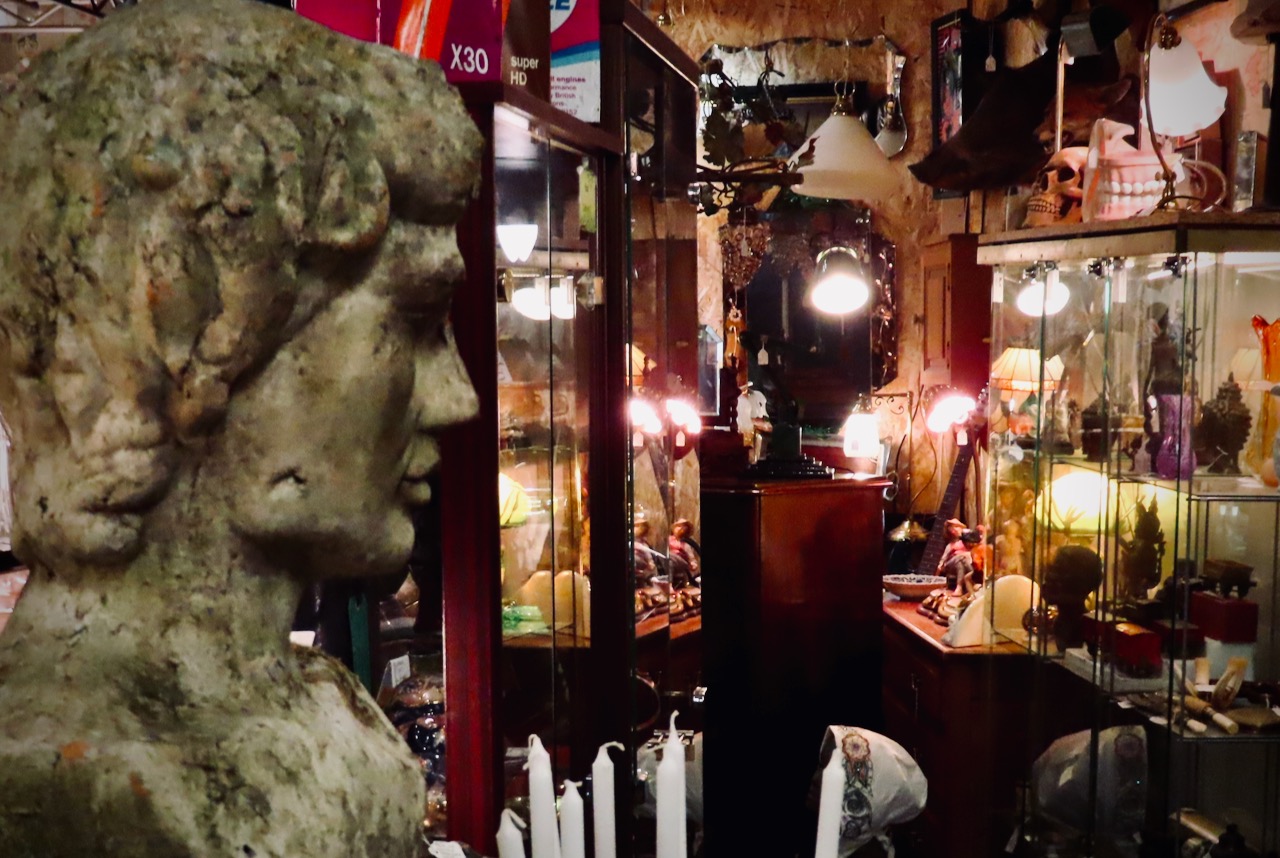
More junk, like yesterday. But no one would come in if it were called a ‘junk shop’, so the word ‘antique’ is employed to give these various discarded pieces of trash some cachet. But it’s all for show. Take the false teeth visible to top right, for example. However old they are, I doubt they would be employed by a set decorator for some period movie.
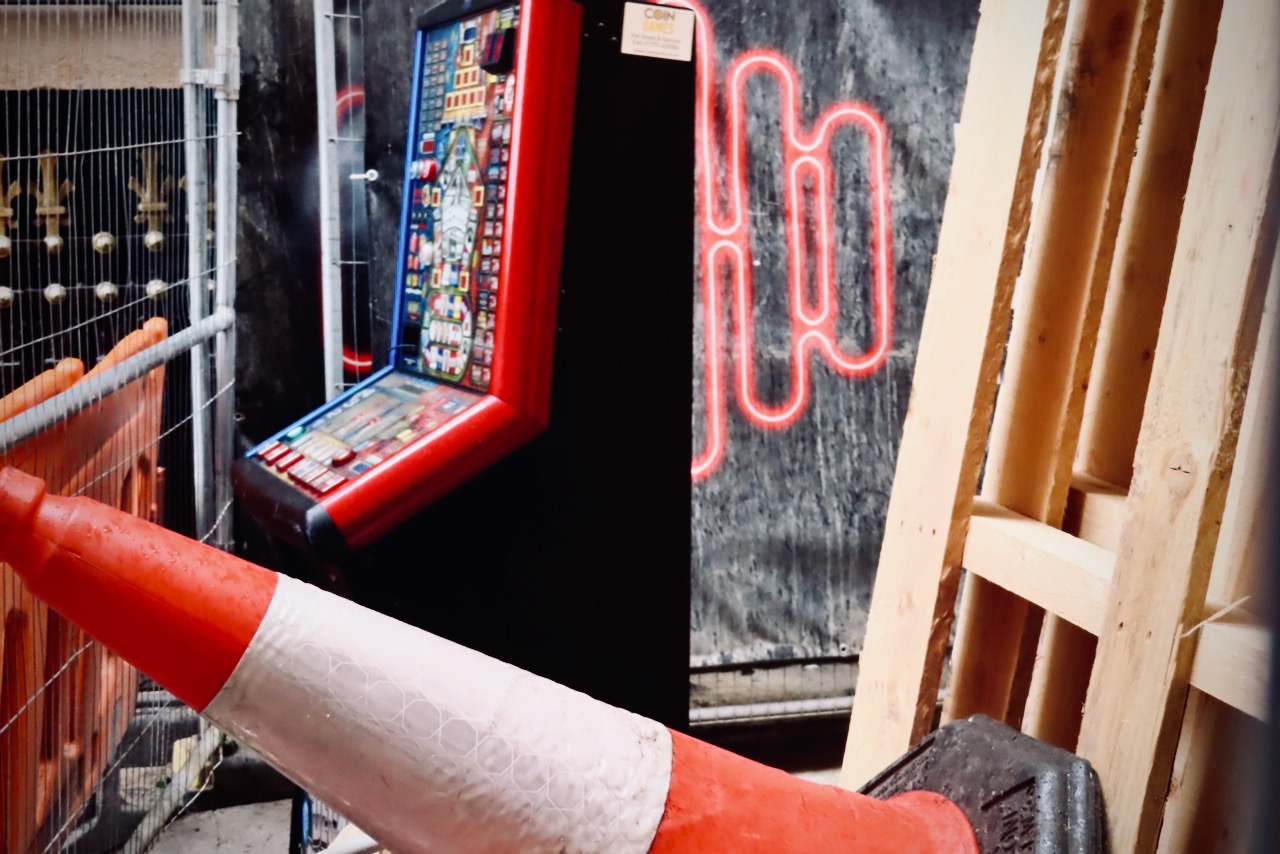
Outside Club Bloom on Abingdon Street. Clearly they feel they don’t need a “Deal or No Deal” fruit machine any more, so if you want one — or a traffic cone — help yourself. What we throw away in the modern world, though. In a SF book I once read there was a company called “Dumpmines” who made lots of cash through mining 20th- and 21st-century landfills for their valuable materials. Seems quite sensible to me, I’d invest in it.
A June walk, and another chance to experience the British weather’s propensity to change from balmy to, if not exactly wintry, then definitely cold and grey over the course of 24 hours. This is why the sheep have better insulation than we do. Stoodley Pike appears for the nth time: it might not be a very prominent peak topographically but the monument on it proves it can be seen for many miles in every direction.
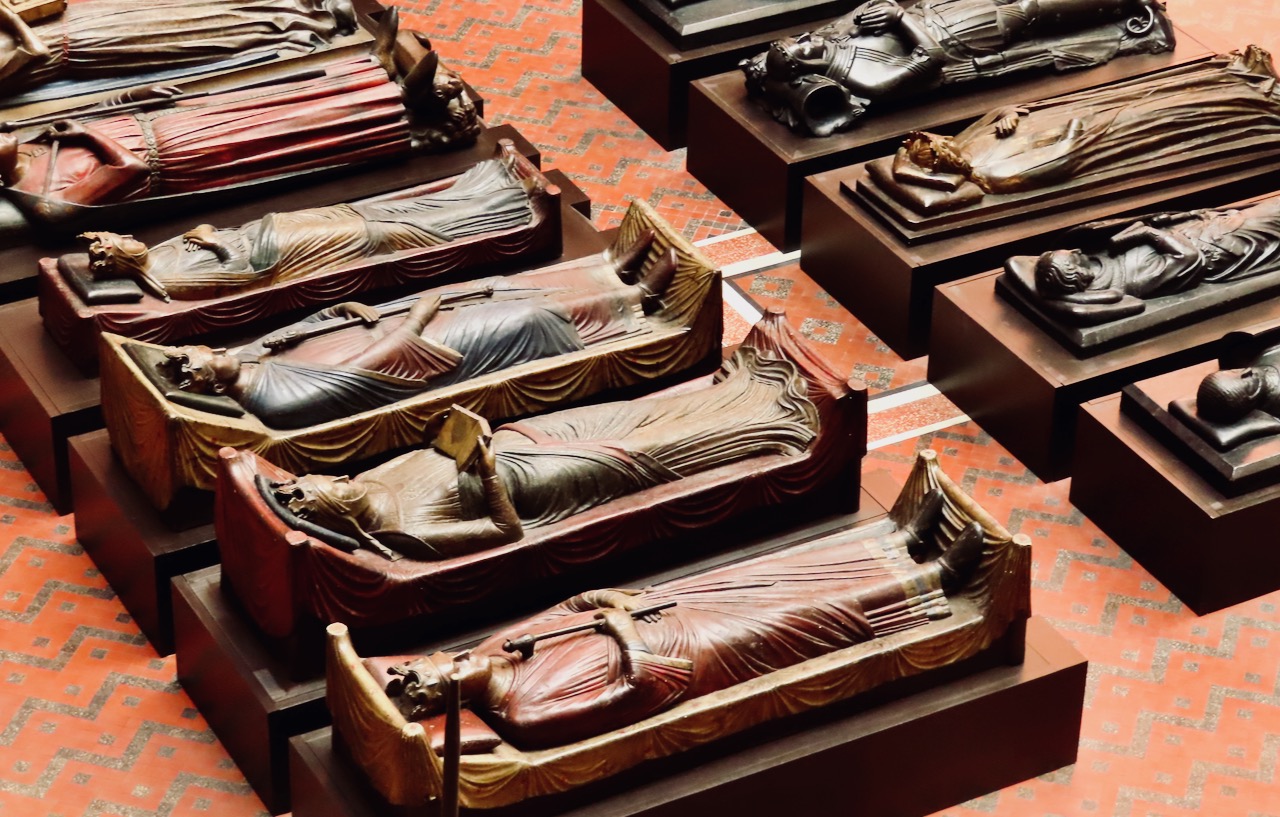
A working week in London, and this becomes the third time that city has been the setting for five pictures in a row. Friday morning was spent at the Victoria & Albert museum, where this collection of sarcophagi reside. Whomever was the subject for the one second from bottom, they clearly wanted to be portrayed as studious, even in death.
During this week at the London Rare Books School I have felt privileged to be taught by Professor Michelle Brown, second from the left here. What an awesome fund of knowledge she has, seemingly knowing absolutely everything that happened to everyone before about 1500 AD. Like being taught physics by Richard Fenynman, and the sort of experience that you just ain’t gonna get through Zoom, sorry.
Senate House makes its second appearance on the blog, after debuting in July 2015. This shot is something of a repeat but I had to get it back on here this week as it’s the venue for my course (we are somwhere up the wall to the right). I do like this building, first for itself and its clean lines — and it’s good inside, as well — but also for the fact (repeated from seven years ago) that it’s the model for Ministry of Truth in Nineteen Eighty-Four. And you can quite readily picture it in that role.
The page of text you see here was enscribed some 1,150 years ago, in the later part of the 9th century AD. This is a page from the MacDurnan Gospels, created in Ireland and now held in the library of Lambeth Palace in London. What you see here are the originators of the idea of a cross-reference: this must be a passage from the gospel of John, because here, the scribe has noted that the same events are also recounted in Matthew, Mark and Luke (listed from the top down).
It’s to look at, and be taught about, beautiful things like this that I am in London this week and this was certainly a good place to start the day. Michelle Brown, whose fingers you see here, is such an expert on this time and subject that listening to her is like being immersed in a river of learning: we’re coming up every so often for breath but it’s no hardship to get back in afterwards, and I was actually disappointed when the day ended at 5pm. And it’s been a while since I could say that about certain other aspects of my job.
Ahh, London. Bloomsbury. Sunset lighting up the chimney stacks, me in a pub enjoying the evening light. A day of feeling like a scholar for a change and not some glorified teaching machine. Amen to that.





 Being 42