Sunday 22nd October 2023, 10.45am (day 4,441)
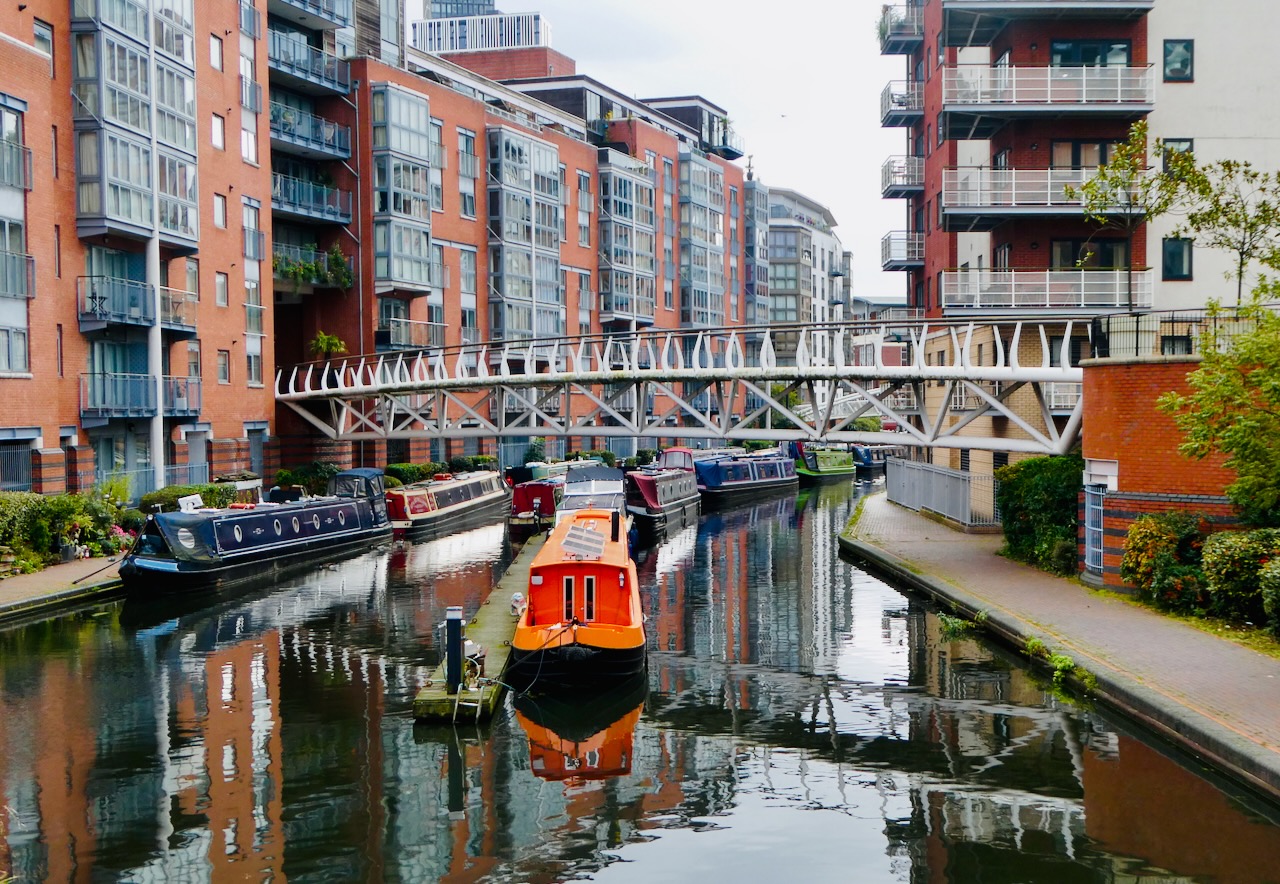
It is said that Birmingham has more canals than Venice, and it’s a believable stat once you start walking around the place.
It is said that Birmingham has more canals than Venice, and it’s a believable stat once you start walking around the place.

Dewsbury is not my favourite place for various reasons but it has one saving grace — the railway station, and the excellent pub which is attached. I didn’t have time to visit that establishment today but no matter. The little girl stepped out from between the pillars at the right moment. And she’s being good, not going over the yellow line and all that.
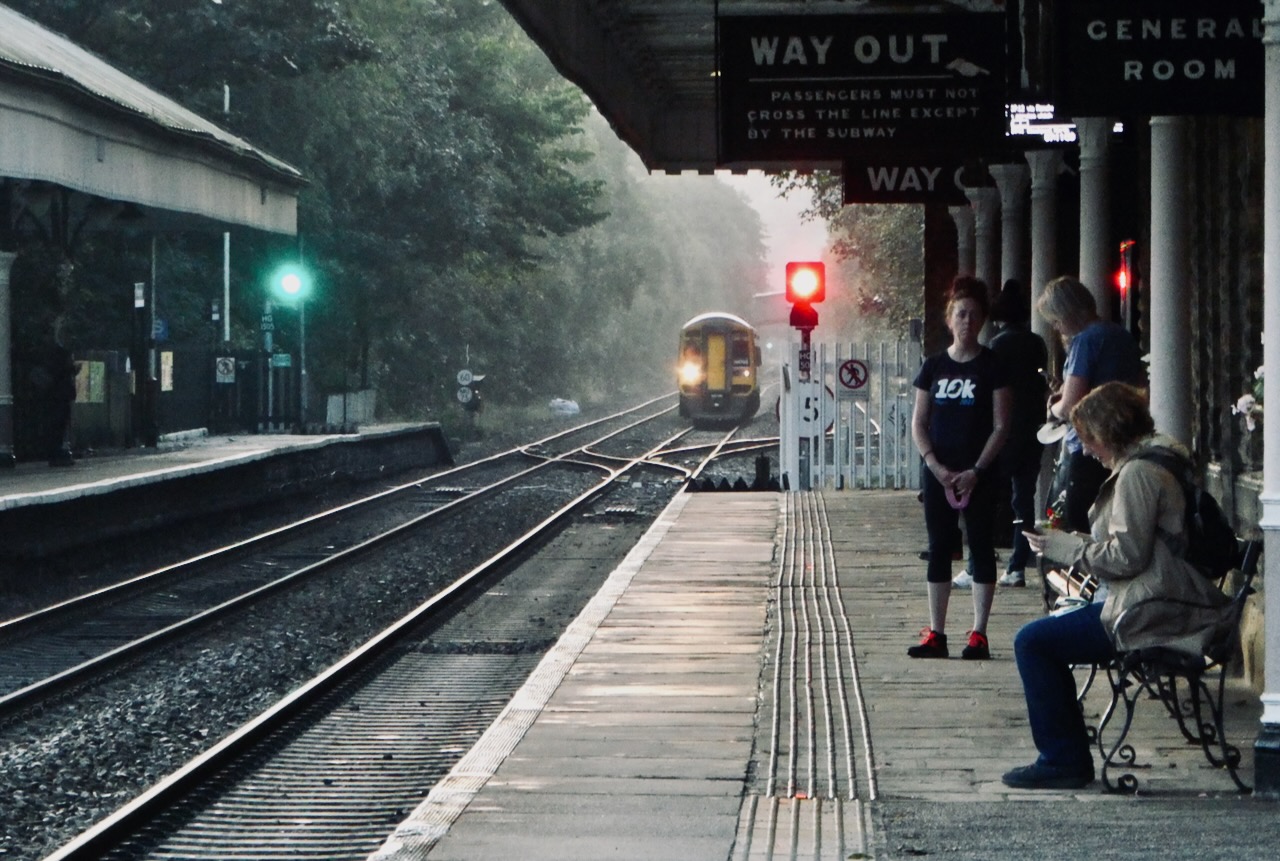
Regular early morning shots seem to have mostly disappeared from the blog; this is the earliest, and the first before 8am, since 20th January, and that was taken when coming into Addis Ababa airport so not exactly normal circumstances. Other than that this is the earliest since 7th October 2022. In all that time Northern Rail might have run a whole morning’s service which didn’t contain at least one train that turned up just that few minutes late…. but I doubt it.

This would be a marvellous sign to see at any point, but the fact that it sits on the outskirts of Bradford makes it more entertaining still, in my opinion. Not to mention the fine optical illusion evident here. Take a good look — it’s almost like one of those ‘impossible objects’ that work in two dimensions but not three.

As made by this board outside Walthamstow Central station this morning. And thanks to ‘good service’ on the tube, Grand Central trains and….. er, OK, Northern (just about) — it was blessed enough. Blessed with very fine weather, at least.
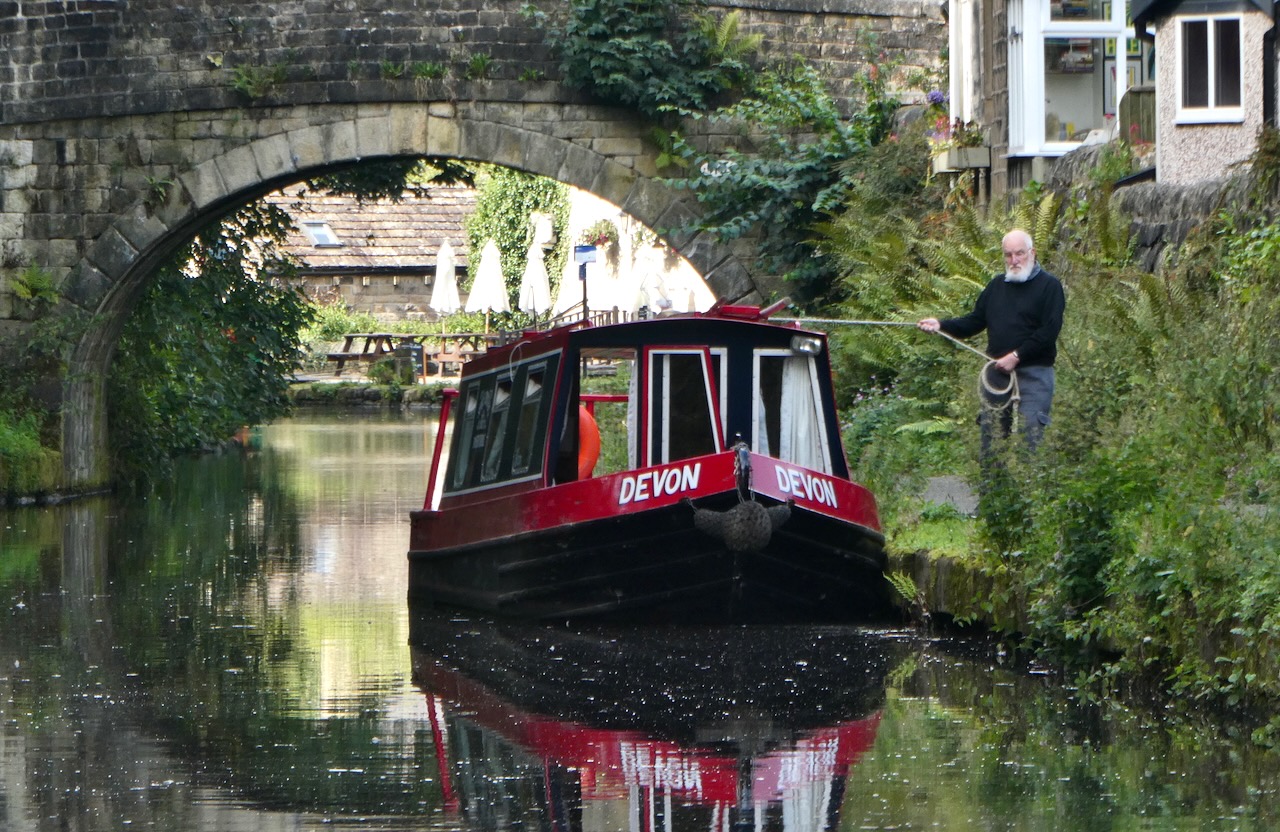
I don’t know whether the 19th century did outdoor seating and umbrellas in quite the same way as the Stubbings Wharf pub does in 2023, but otherwise this picture could well have been taken 150 years ago: man (with beard) waiting for nearby lock to fill, and trying to stop the boat floating away while he does so. It’s a slow way of life on the water, which I guess is why plenty of people like to live it.
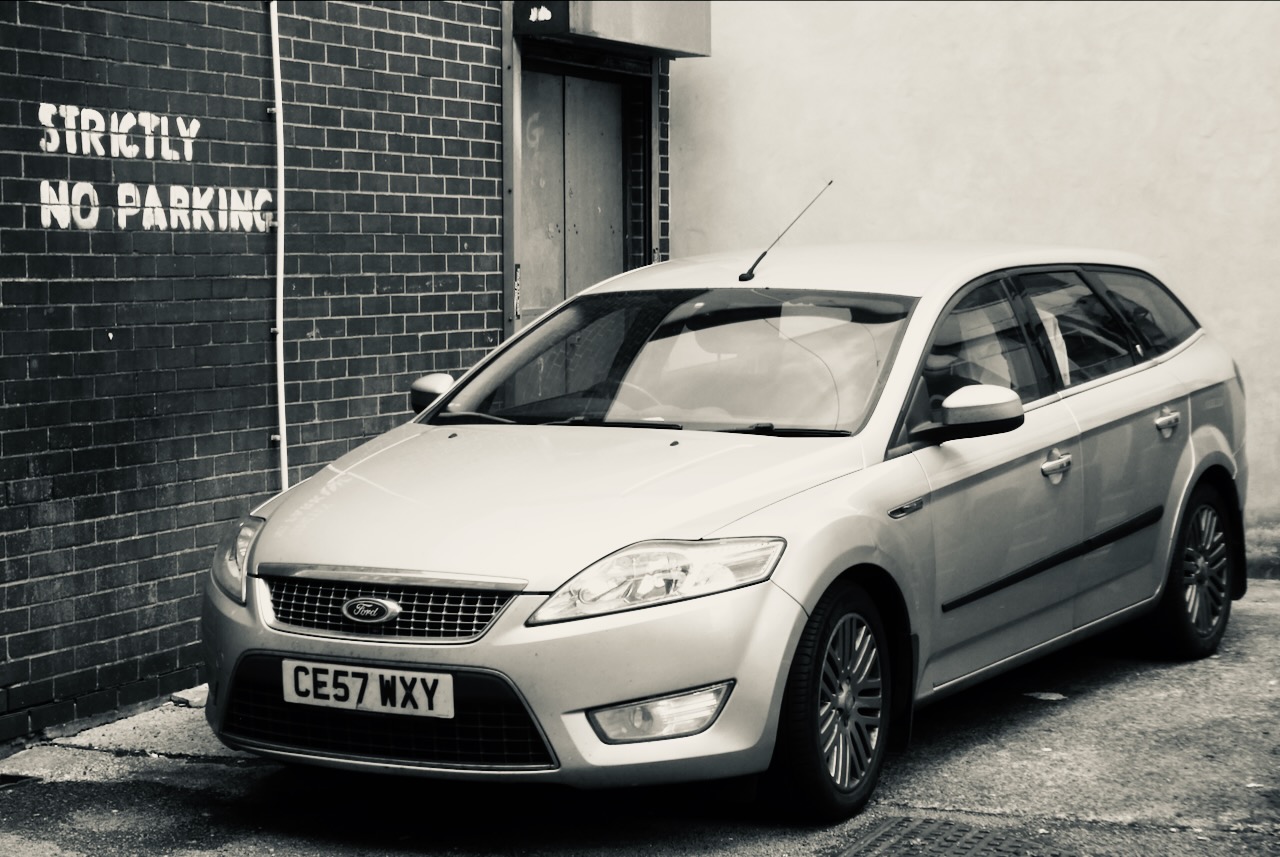
It was still there when I passed it again in the early evening, too. Shocking, what is the world coming to, etc etc.

Walking through Manchester city centre tonight it was impossible to not notice the activity around the corner of Oxford Road and Whitworth Street, with everything cordoned off by police tape and some major sweeping up under way. Turns out at lunchtime a bus took out a central reservation, for some reason (which I can quite believe involved swerving to save the life of some idiotic cyclopath of the kind who thinks his Deliveroo bag gives him the right to ignore red lights), a few people hurt but nothing serious. And the picture? Well, the pink scaffolding is impressive. Some might say there’s not been enough pink on the blog recently.
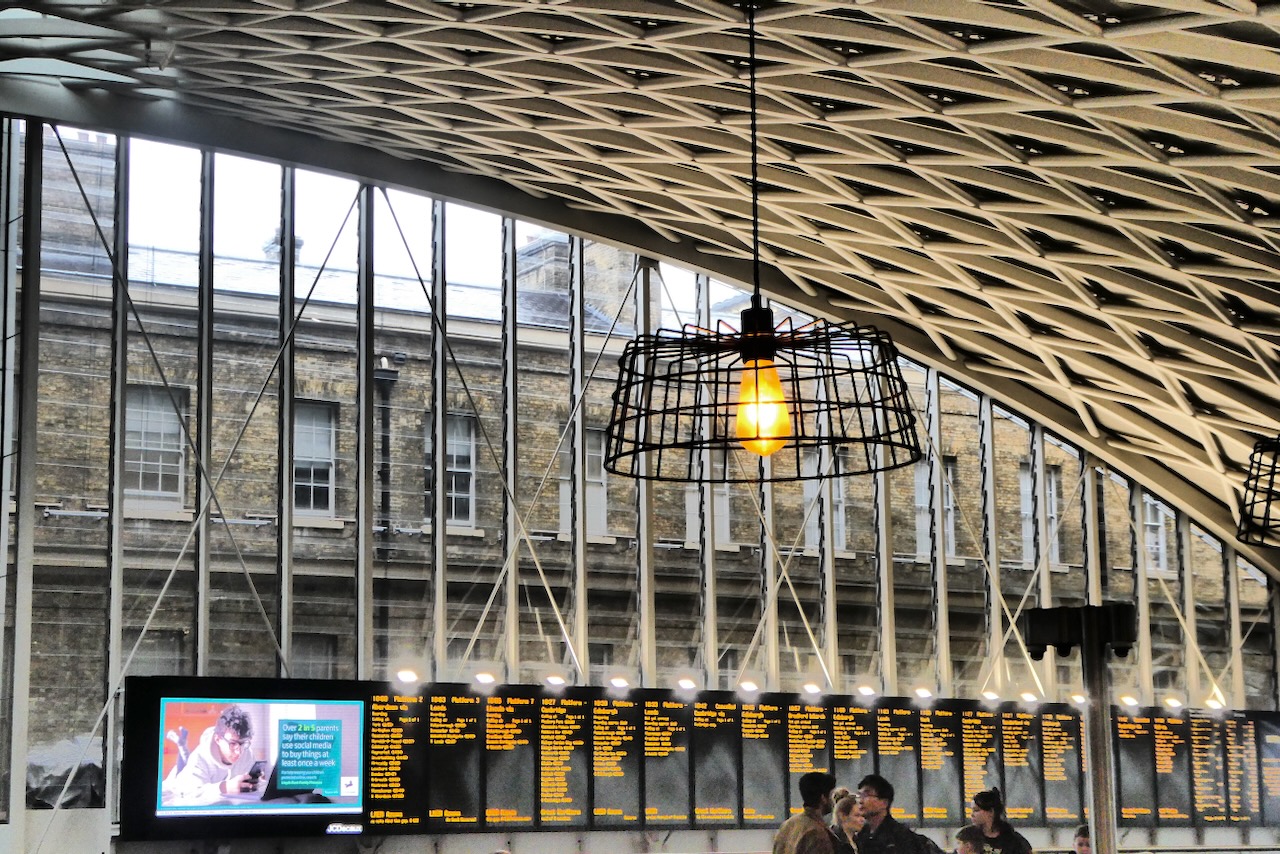
Almost every one of my trips to London ends here. Now and again I might leave in a different direction, but mostly it’s on one of the half-hourly Leeds services: we all watch the departures board over there, to see if this will be one of those times where LNER give us all more than about eight minutes’ notice. (Today, they did.)
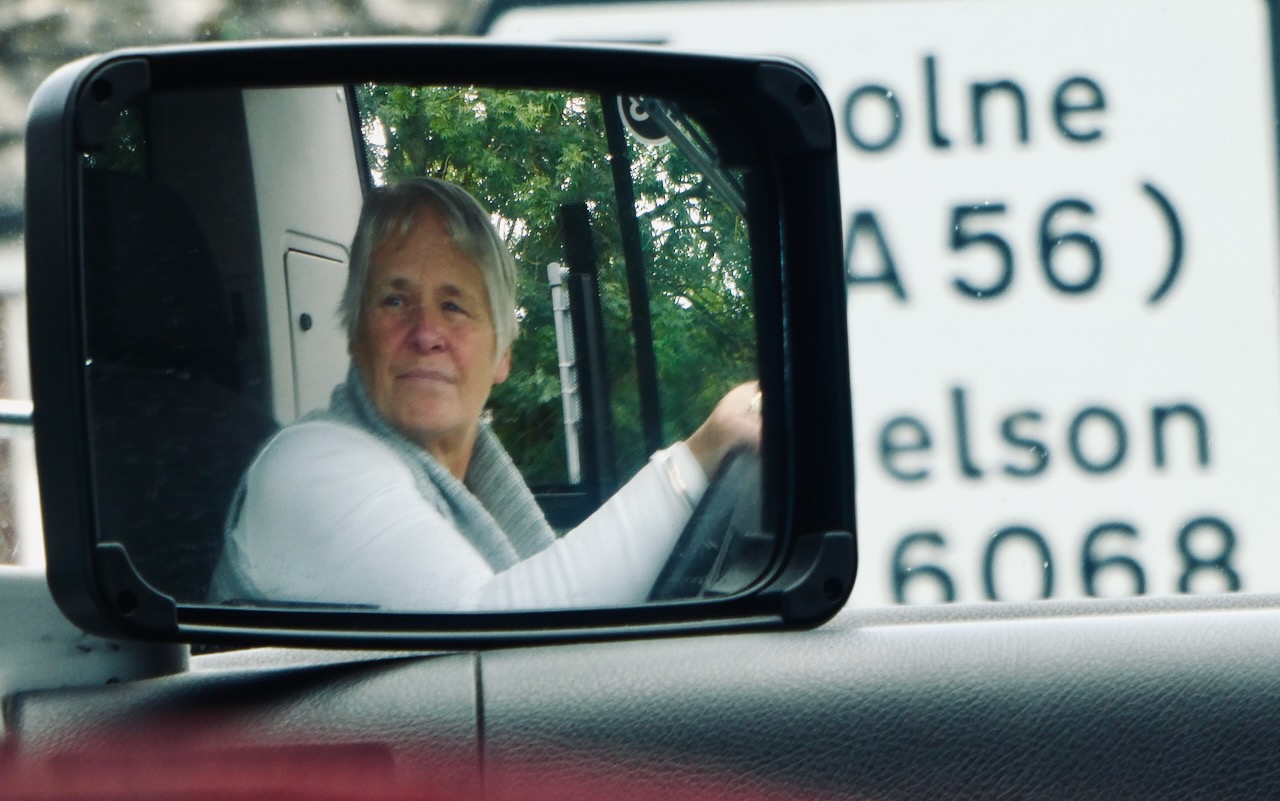
Anyone prepared to do some detective work, based on the evidence of the road sign in the background, could perhaps work out where this was taken and maybe even the service on which we were travelling. But I’m sure for a summer Friday afternoon, this is too much to trouble with.
 Being 42