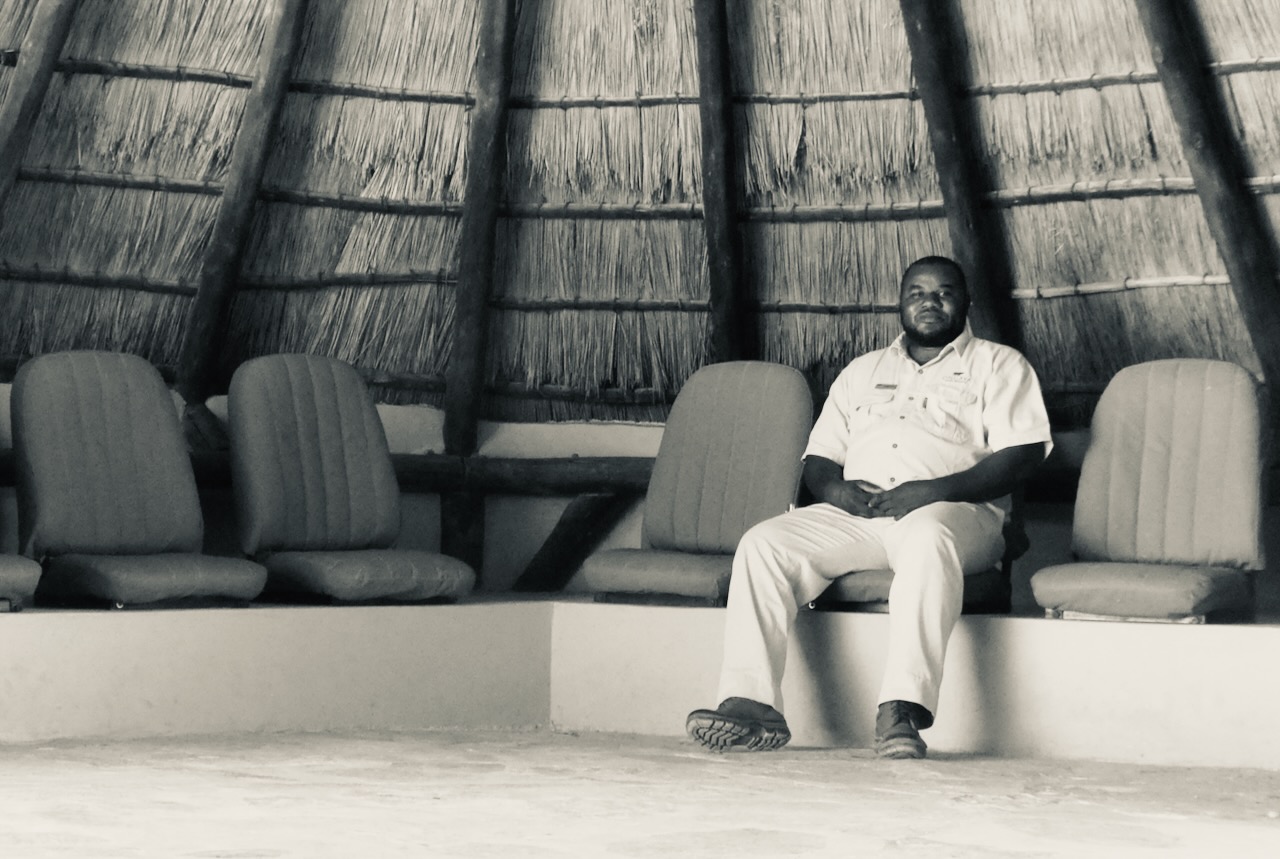
Since I left Windhoek there have been only landscapes and fauna depicted on here — so on my last full day in Namibia let’s pay some credit to the fine people who have welcomed me in this country. My three guides have been particularly notable: Johannes in the Namib Desert; Veondjavi in Damaraland; and for the last three days, Samuel here in Ongava. The latter is seen here waiting with me for my plane to arrive: this is, in effect, the departure lounge of the Ongava airstrip.
I have spent the last three days in Namibia’s, and one of the world’s, largest nature reserves — the Etosha National Park, so it’s understandable that wildlife shots have featured. There have been many species that I have seen and managed to photograph but which, due to the strict one-photo-per-day rule, have not made it on here, and today you might have had white rhino; elephant; kudu; and the cute, teddy-bear-like rock hyrax. But I am going with these springbok simply because of the fabulous golden light in which they are bathed. My penultimate full day in Namibia.
I do not know what you call black-and-white striped pedestrian crossings in your country, but hopefully this associative pun works very well for UK readers. Taken in the Etosha game reserve.
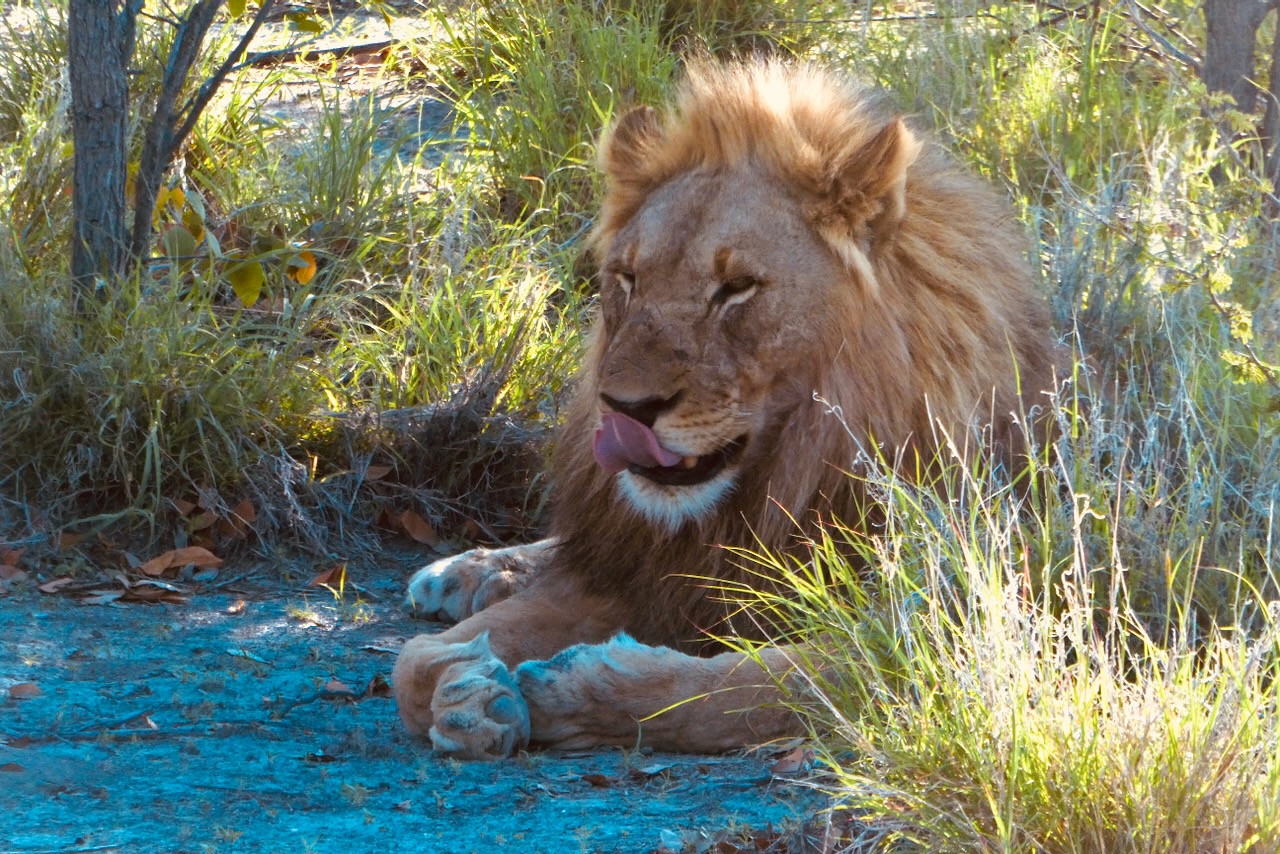
I was about 20 feet away from this magnificent creature this afternoon. There was plenty I was thinking of saying in this commentary but, mostly, I’ll let the picture speak for itself. ‘Awesome’ is an overused word but here, it really had meaning.
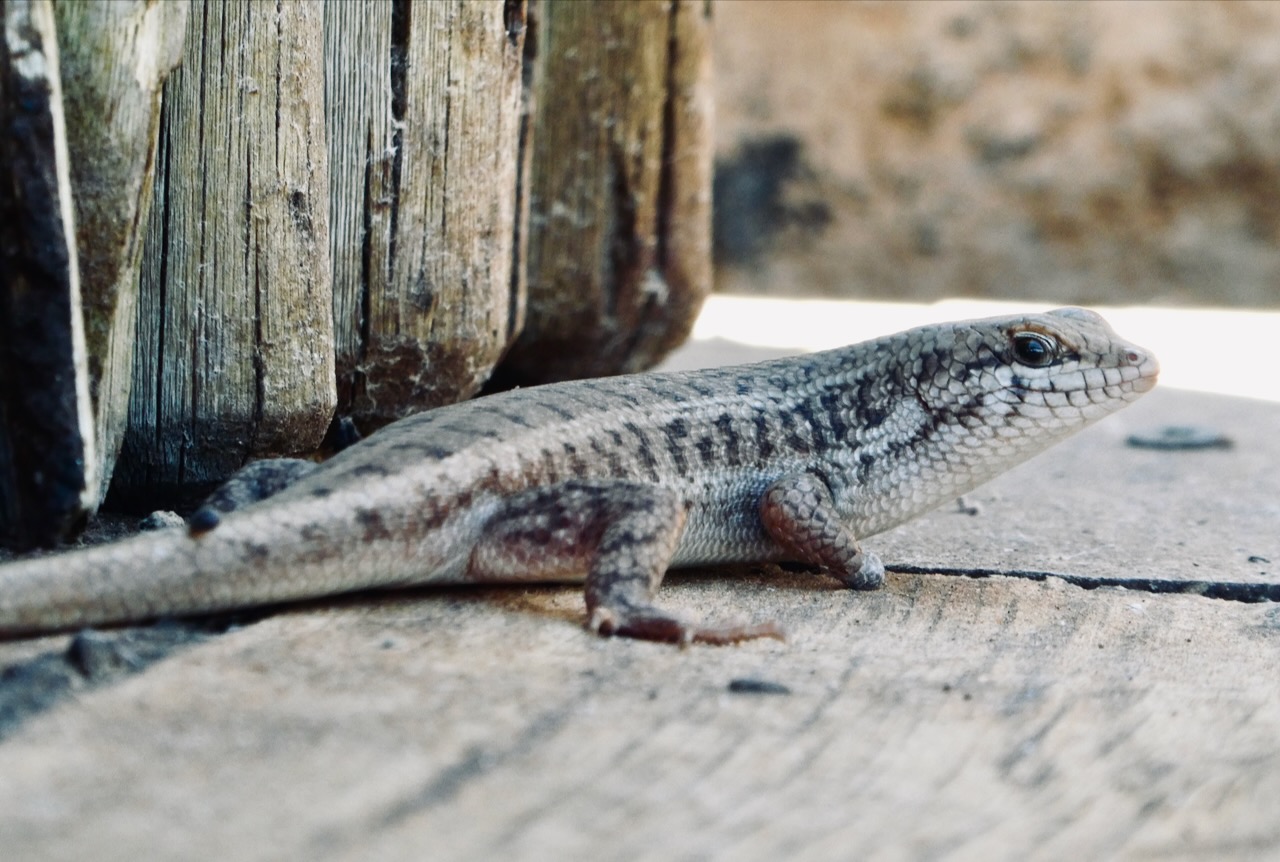
This chap definitely looks happy, and I know why — because it has just wolfed down a huge dragonfly that was about the same size. The whole thing, apart from a discarded wing or two, went down in about ten seconds. Had I been quicker with the camera (which was a few yards from me at the time as I’d just got out of the swimming pool) you might have seen the feeding, but it was happy to hang around and wait for me to do its close-ups.
Biology note: the defining characteristic of the skink (as opposed to other types of lizard) is apparently their stumpy little front legs, obvious on this shot. This is the second skink to appear on here down the years, after the one I saw in Saigon in 2019.
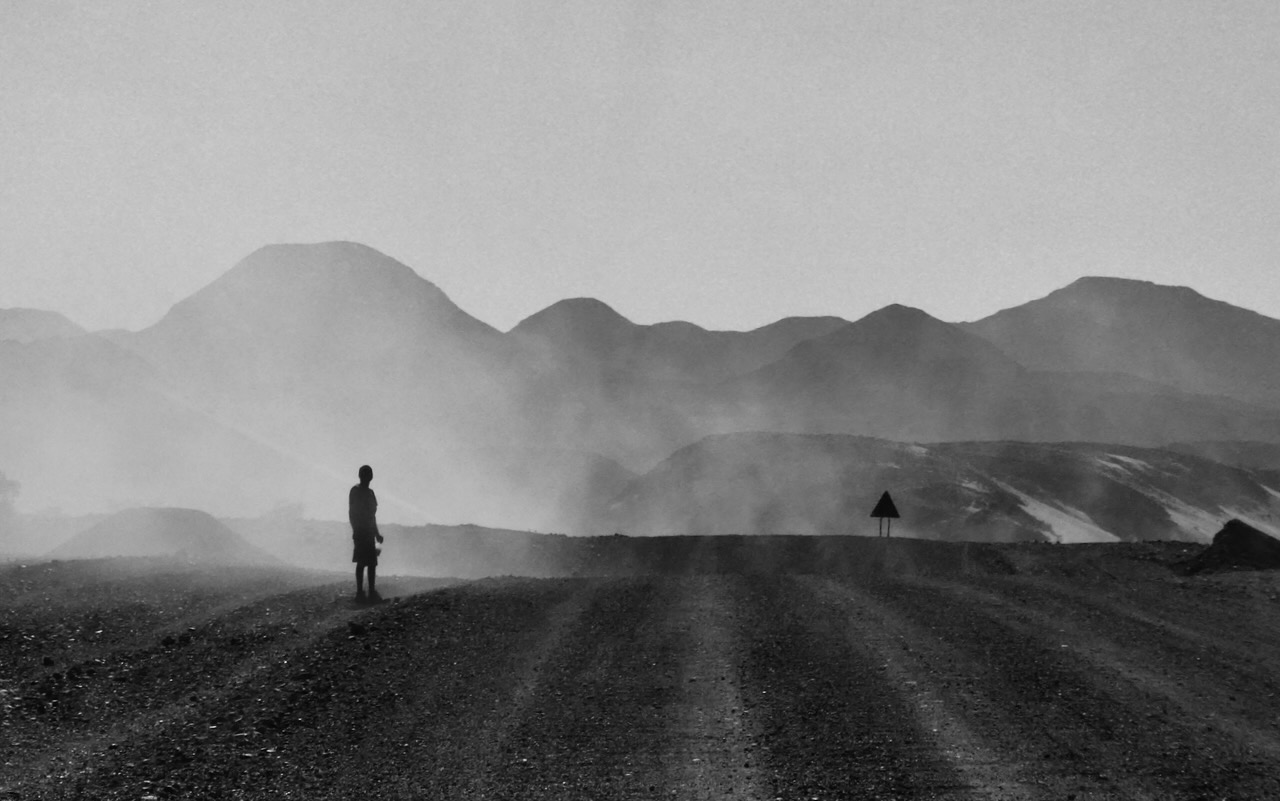
This is a hell of a place to be waiting for a ride — then again there is no public transport this far out. I did feel sorry that our tour vehicle didn’t stop, but we didn’t carry on very far past this point so at best would have taken him another two miles nearer his destination. In any case, he might have been Rutger Hauer.
Going monochrome here, as is often the case, conceals the colour balance sins: this was taken through the dark green sun filter at the top of the windscreen.
The dominant theme of the last few days has been sand, so it’s about time we had some local fauna on here. This is not only the first time I have ever seen flamingos in the wild, but, I am fairly sure, anywhere. Apparently over 200,000 of them live on Walvis Bay’s lagoon. This place is where I came in with Namibia, on the flight out to St Helena some 16 months ago (see this shot): compared to that, today’s picture is certainly fuller of life and rather pinker. Flamingos are pink — it’s the way they are — and they definitely seem to like each others’ company.
I was forewarned about the fogs that affect the coast of Namibia. The Benguela current sweeps cold water up from Antarctica, and as it passes the African coast it mixes with the warm air coming off the continent. But just because I understand the climatology doesn’t mean that the actual experience of the fog hasn’t come as a surprise because they really are bloody cold; the mornings and evenings here in Swakopmund have not at all been like one might imagine an African beach holiday, more like Morecambe in November. These two swimmers must be seriously hardy.
More desert, this time from above, the second of my internal Namibian flights, to Swakopmund on the coast (of which more tomorrow). The shapes here are just amazing, like the earth itself is crinkled, akin to the skin of a passion fruit, say. Quite probably, no one ever sets foot here from one century to the next.
Sossusvlei is one of Namibia’s major tourist attractions and probably you have seen pictures of it before — sinuous, ruddy, massive sand dunes pictured at dawn etc. etc. And I did get such shots today. But I’ll go with this one. Dead Vlei (a ‘vlei’ is the Afrikaans word for a marsh or riverbed without open water in it) was once connected to Sossusvlei but a few hundred years ago, shifting sand dunes cut it off and since then it has dessicated to a hard clay pan with ancient, dead trees still left from that time.
What is behind them, and the seated woman, is not grey sky but a massive wall of sand: the dune known as ‘Big Daddy’, which is nearly 1,000 feet (324m) high. The Namibian tourist board would like you to believe it’s the world’s biggest but I checked it out and it’s not even close to the winner, which is a dune in Argentina that’s a staggering 4,000 feet high: Big Daddy is in the top 10, though. A marvellous and highly photogenic place, even if I did have to get up at 5.30 to reach it.




 Being 42