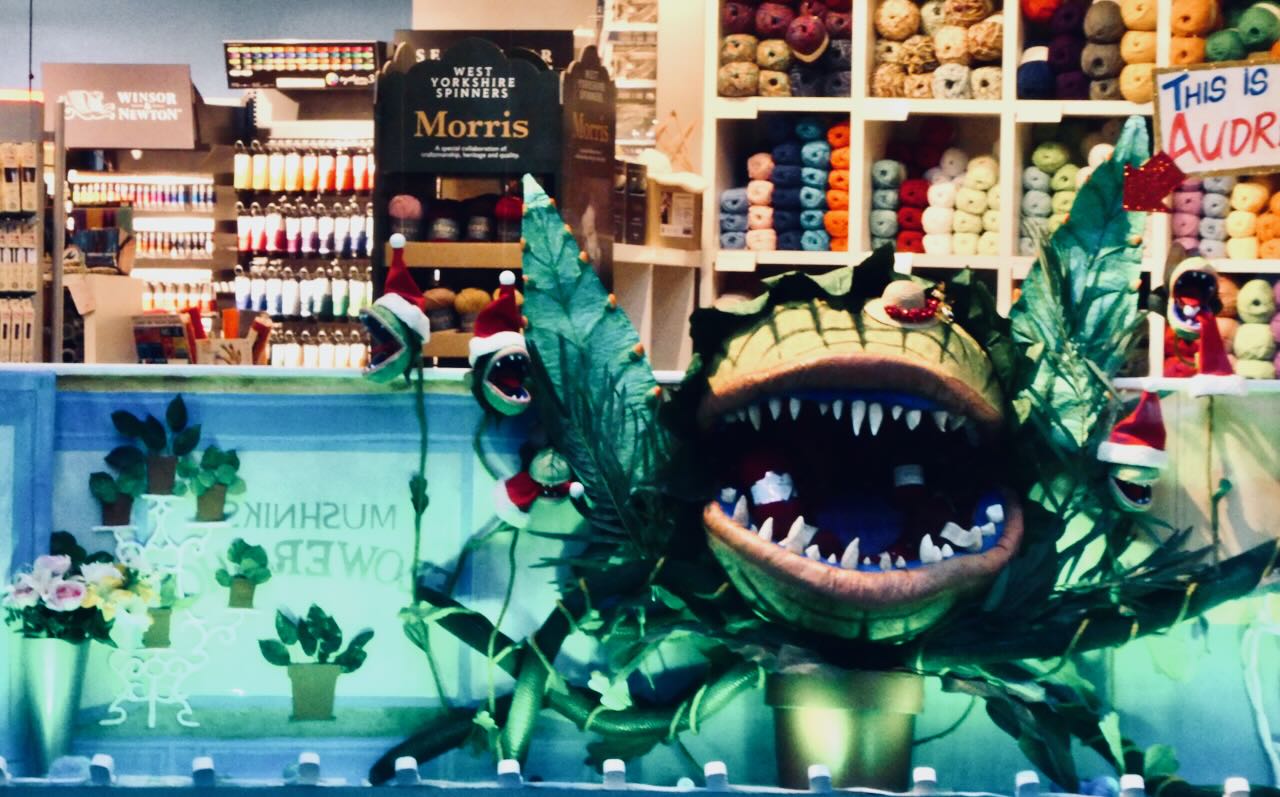
One has to admire the level of detail that has gone into this ‘Halloween’ window display, even down to the ‘Mushnik’s Flower Shop’, backwards, to the left. In the sign I have cropped to the right, the creators claim this is ‘Audrey III’, perhaps because Audrey II already passed through Hebden a few years back.
Manchester’s creative destruction is an ongoing, continuous thing. The pagoda in Chinatown has been boarded up for a couple of years now. Attractive murals were painted on the bare boards — or stencilled on them, as this shot from September 2023 depicts. At some point since then, Michelle Yeoh’s not-unattractive features were added. Time passes. And then everything gets ripped down again, board by board. Nothing behind the screens is any different, and we wait for it to all cycle round again.
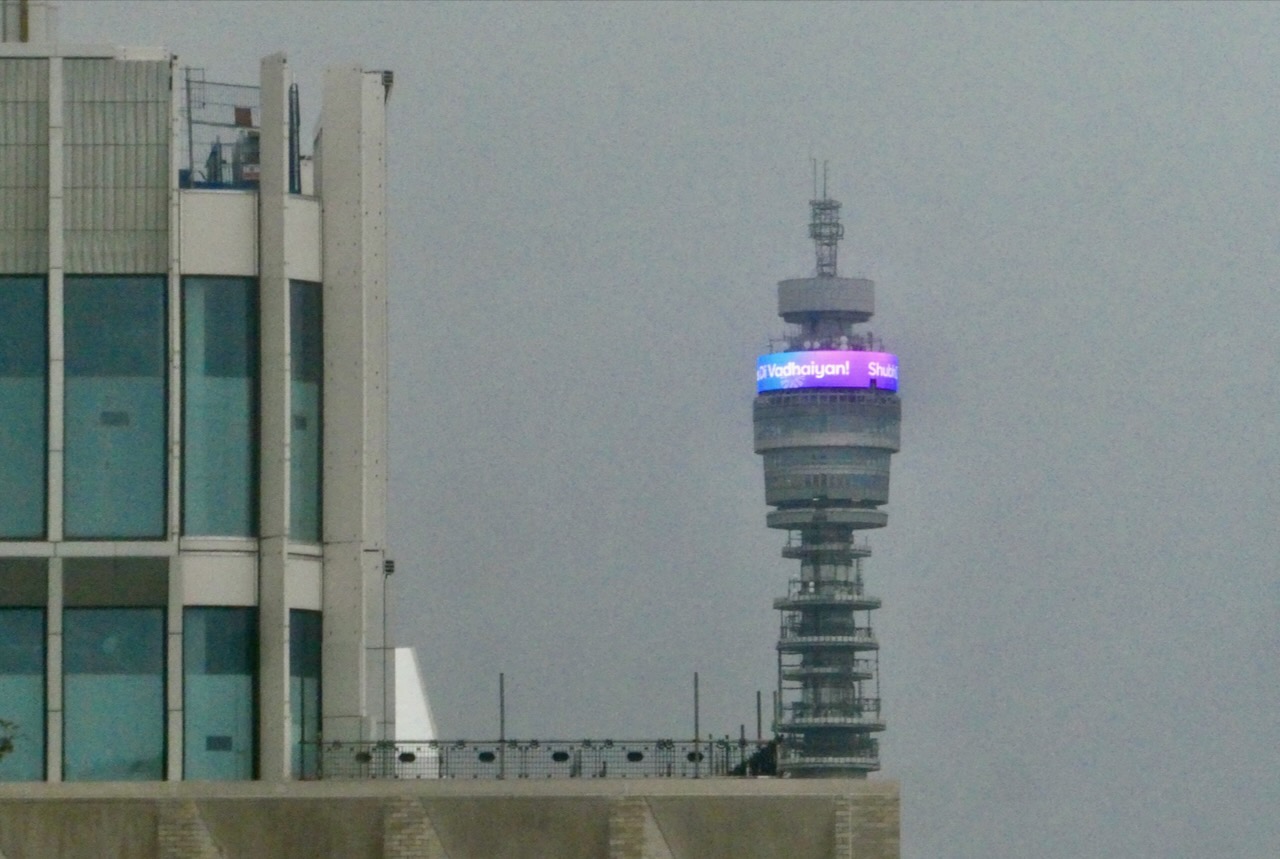
The Post Office Tower, as seen from room 337 of the Farringdon Travelodge — this morning, but also the last three mornings. It definitely looks like a spark plug, though — or possibly, some bizarre toy (let’s not go there, though).
Took me a day to decide on this one, if only because I am now going to end up with two consecutive shots taken from the same place, viz, the back of my house. But never mind. There is a clear sense of autumn on the turf roof on the extension to the mill — younger than this blog, although it doesn’t feel like it.
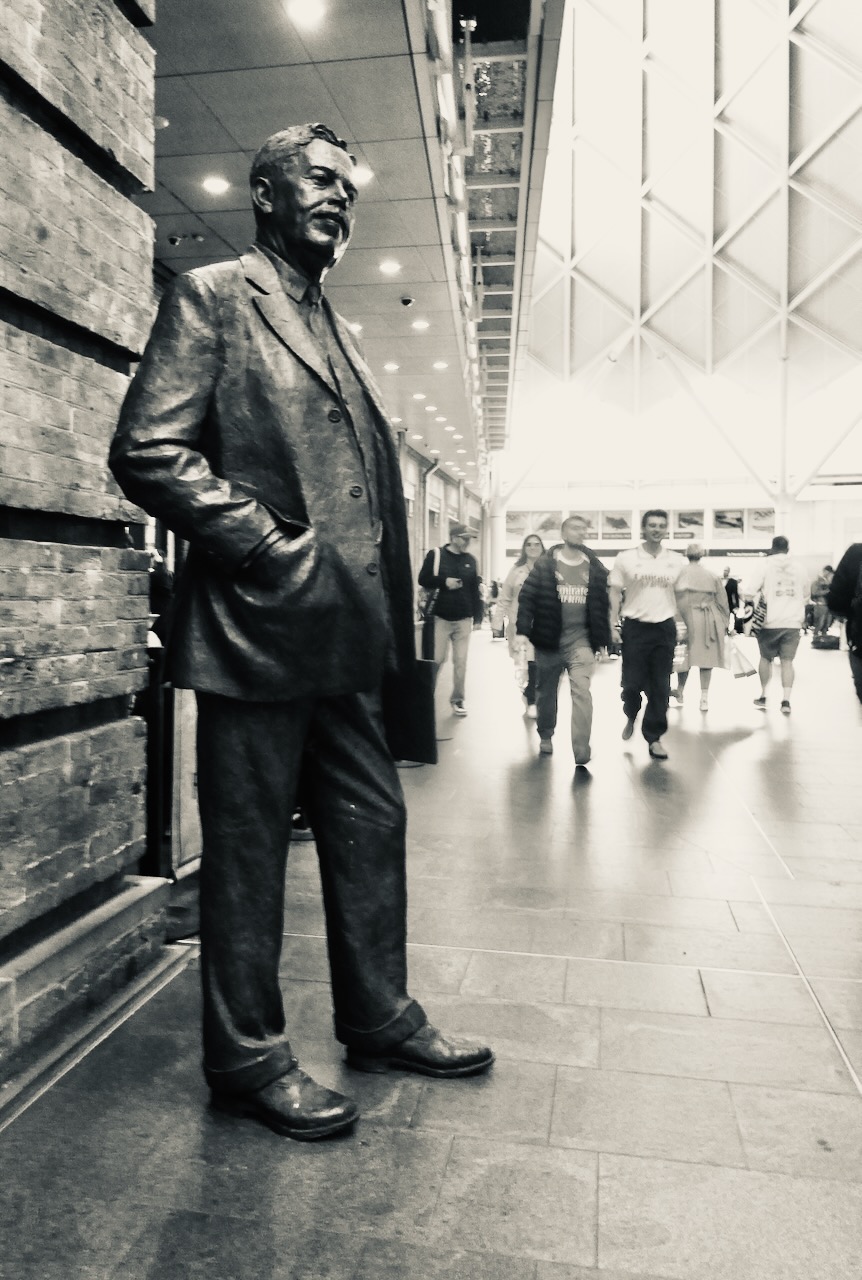
On my regular visits to London I have been walking past this statuesque chap since 2016. The sculpture is of Sir Nigel Gresley, designer of the famous Mallard locomotive, which still holds the speed record for a steam locomotive. The statue is about 7 feet high — Sir Nigel wasn’t, though. Apparently, the design was to have originally featured a duck (that is, a mallard) as well as Sir Nige, but this was left off in the end, after, and I quote the Guardian (via Wikipedia) here; “possibly the most acrimonious argument in the long, pedantic history of the railway hobbyist”.
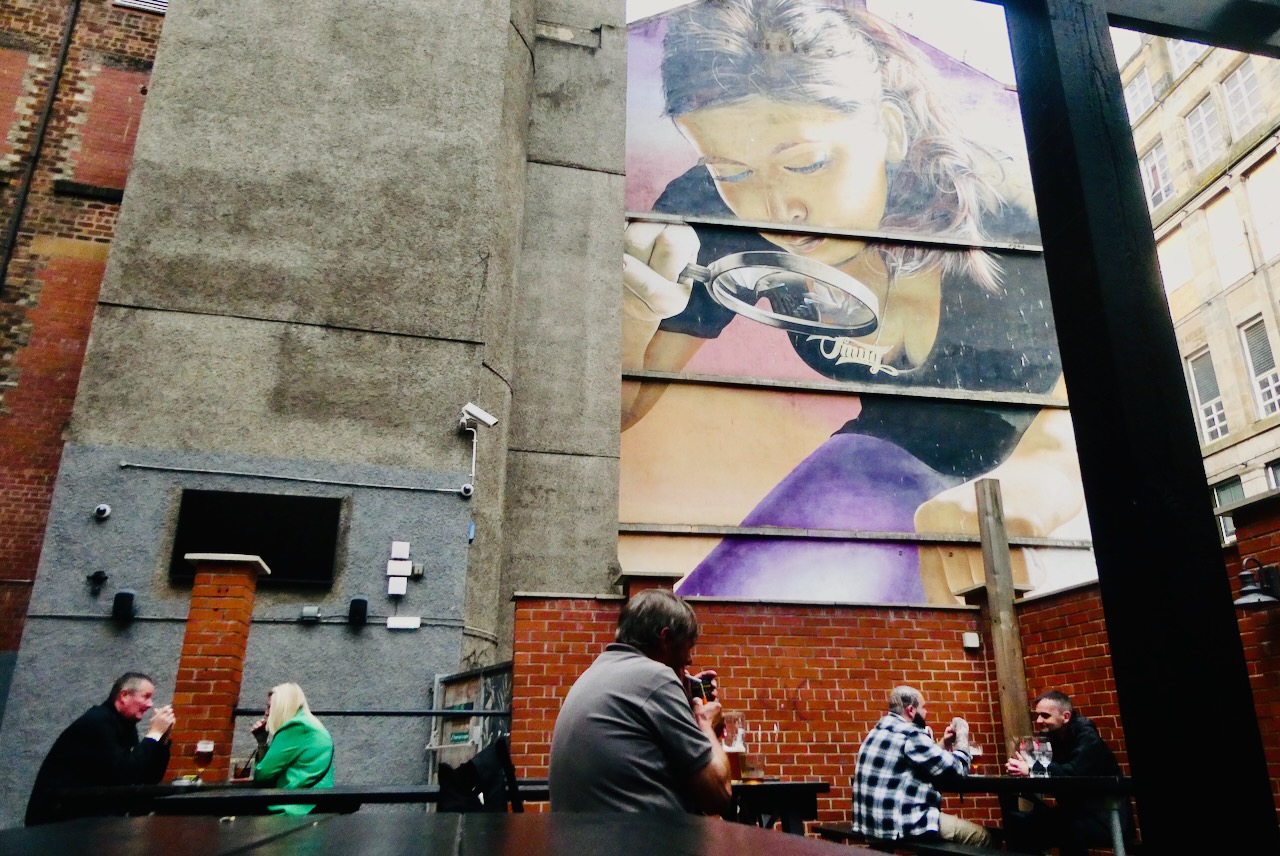
I took a picture of this mural on a visit to Glasgow a couple of years ago, but didn’t use it at the time: in fact, the one I took then was possibly better as from outside the pub courtyard we see her left hand coming down to pick up little insect-like pedestrians on the street. But from the courtyard of O’Neill’s pub the ‘Girl With a Magnifying Glass’ (look it up on Google Maps) seems to be inspecting the drinkers, somewhat scientifically…
I have a feeling this billboard, found under the arch that takes the railway over Princess Street in Manchester city centre, has been subverted before. I don’t see how this can be anything other than guerilla advertising; it’s certainly a valid point.
You could consider this an abstract. Or, a sign that I didn’t particularly leave the house today and so was needing to point the camera at something that could be seen from within it. Or that I’m spying on the neighbours again. Either way, that’s been nearly four weeks at home, and 18 of the last 26 photos in Hebden. Time to go somewhere else for a bit.
My counting of different places featured on this blog — see the stats page (and marvel at its anal retentiveness) — is just as personal and subjective as everything else on here. I could, for example, have split up London and the Lake District, designations which cover areas the size of whole counties. Meanwhile, there are at least 50 shots where I’ve been unable to specify a location for one reason or another (like, being taken from aeroplanes, or the back of minibuses after waking up in the middle of nowhere in Tanzania).
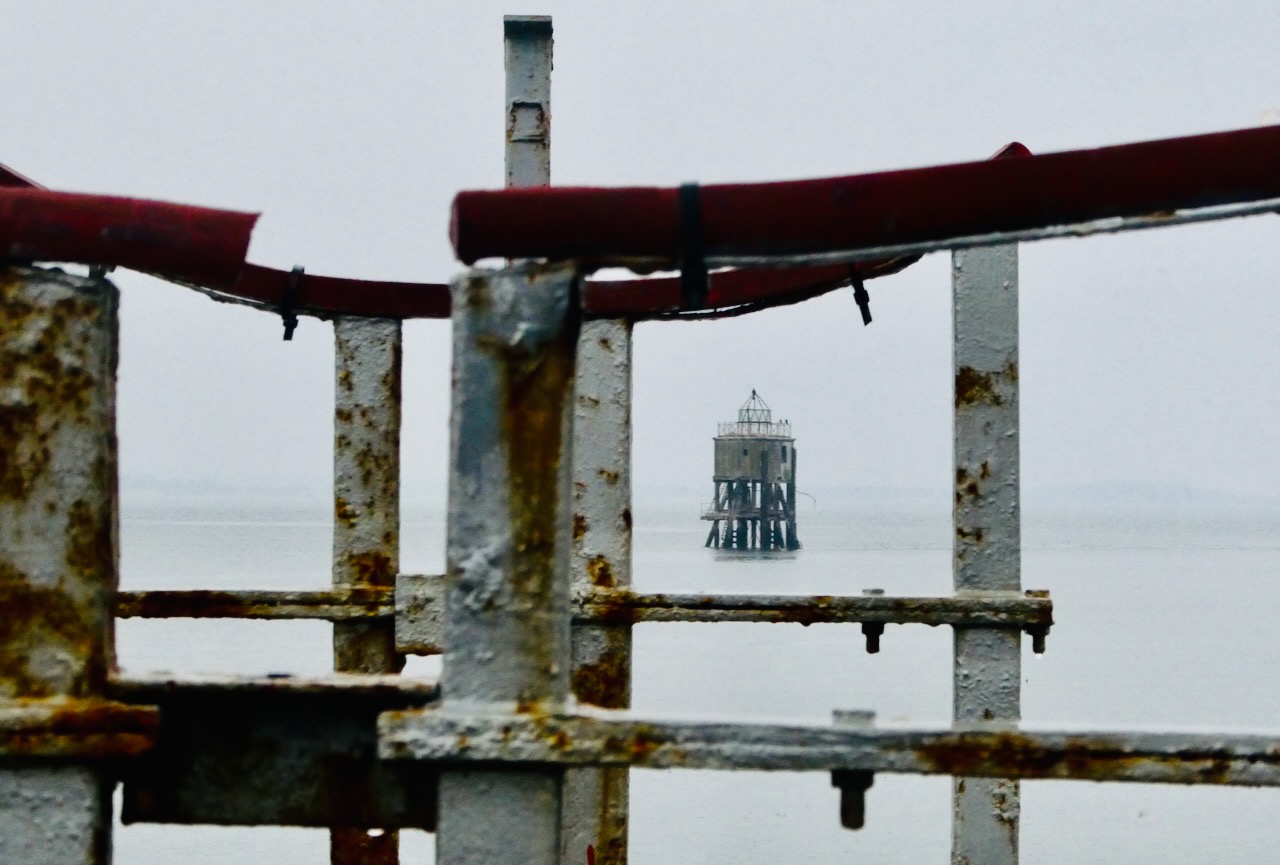
However, the fact is that by this ‘official count’, Galashiels yesterday was place number 499, and so this melancholy little harbour (even more morose in the day’s constant drizzle) gives to the town of Tayport, on the other side of the estuary from Dundee, the distinction of becoming number 500. This means nothing at all in the grand scheme of things, but so what.
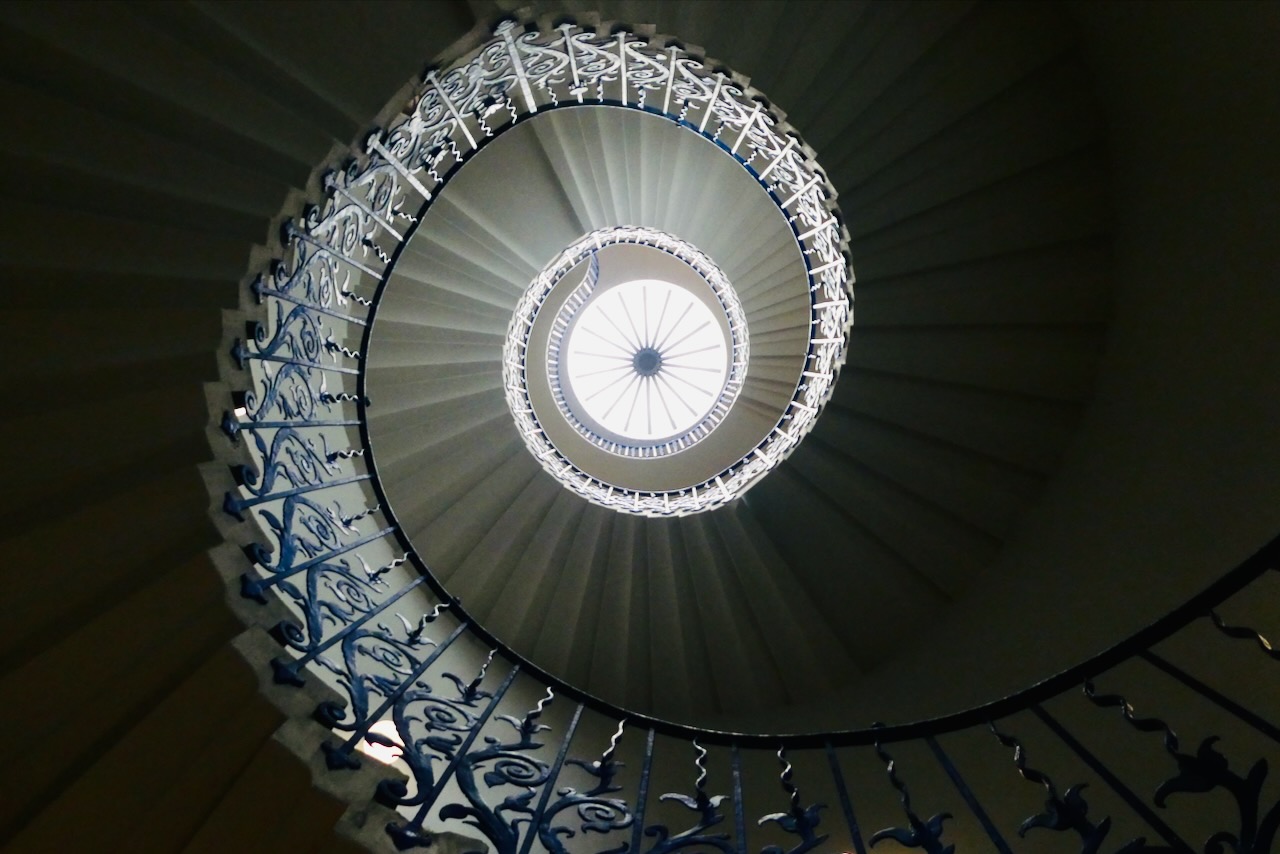
Queen’s House in Greenwich, London was built by Inigo Jones in the 17th century. As he was rather good at this kind of thing, it turned out to be an architectural masterpiece, bringing classical style to English architecture for the first time. The Great Hall is a perfect cube and this staircase — the first ever built in the country that lacks a central pillar — is just gorgeous. (Although not quite perfect, do you notice? There is a wider step up there forming the landing of the next floor up, and the spiral ‘kinks’ as a result.) Apparently it ‘holds itself up’, meaning that the steps cantilever out from the wall and the weight of each is supported by the one below, and eventually the ground.
It’s a bit of a shame that only a decade or so after the house was finished, the English Civil War meant there was no Queen for a while. By the time the monarchy was restored, they never used it much. But it remains a very nice house. With paintings in it.




 Being 42